

Close Menu
Gofishe News
  • Home
  • Entertainment
  • National
  • International
  • Tech
  • Politics
  • Sports
  • PMNI
  • More
    • Business
    • Culture
    • Education
    • History
    • Health
  • Featured
    • Govima Travel
    • Govima Media
    • Govima TV
Facebook X (Twitter) Instagram
Trending
  • Premier League Matchday Review: Saturday, 30 August 2025 – Thrills And Drama Across Stadia
  • Anambra Community Celebrates Rescue And Restoration After 15-Hour Security Operation
  • PDP South-West Chairman Defiant As Wike’s Threats Fail To Derail National Convention
  • Katsina State Allocates ₦20m Per Local Government For Graveyard Renovations
  • UK Government Bars Over 100 Job Roles From Foreign Recruitment in Immigration Crackdown
  • ASUU Slams Federal Government Over Inaction, Demands Concrete Action On 2009 Agreement
  • Nigeria Mourns Ruth Elton, Oldest Serving Missionary, Who Passed Away At 91
  • Shea Industry Poised For Growth As Stakeholders Rally Behind Nigeria’s Export Ban
X (Twitter) Instagram
Gofishe NewsGofishe News
Subscribe
Saturday, December 6
  • Home
  • Entertainment
  • National
  • International
  • Tech
  • Politics
  • Sports
  • PMNI
  • More
    • Business
    • Culture
    • Education
    • History
    • Health
  • Featured
    • Govima Travel
    • Govima Media
    • Govima TV
Gofishe News
Home»Culture

The Rich Colours Of Aso-Oke

Onyinyechi NwanunobiBy Onyinyechi NwanunobiJanuary 3, 2023 Culture No Comments3 Mins Read
Share Facebook Twitter LinkedIn Email WhatsApp

Cotton is a major cash crop that has considerable social and economic importance to Nigeria and other countries of the world.

Among the Yorubas’ (one of the major ethnic groups in Nigeria), cotton is hand-processed to make thread which, along with other kinds of fabrics, is used to make Aso-Oke. It is said that cloth weaving was introduced into Yorubaland in the 15th century.

From there, it spread to many Yoruba towns and cities like Iseyin, Oyo, and Ibadan. However, a school claims that it is from Iseyin that it spread. For the Yoruba people, cotton is an important raw material.

Most important is Aso-Oke, a prestigious hand-woven cloth created by the Yoruba people of West Africa.



Aso oke means “top cloth” in the English language, denoting a cloth of high status. Usually woven by men and women, the fabric is used to make men’s gowns, called agbada and hats, called fila, as well as women’s wrappers, called Iro, and head tie known as Gele.

Aso-Oke is more than just a fabric, Aso-Oke is one of the cultural vehicles through which tangible aspects of Yoruba clothing tradition can be experienced. Over the years, it has successfully held its own as the special occasion fabric of the Yoruba people.

Its weavers are renowned craftsmen that weave intricate colours to meet Nigerians fashion taste. The women especially engage in the production of woven cloth such as Aso-Oke in order to meet their domestic needs.

It also affords them the opportunity to do other domestic work and offered them the chance to teach their female children how to weave.

The way of making the cloth has remained the same for centuries. However, in order to eliminate the weight and thickness of the Aso-oke, and to make it more accessible for casual wear, new techniques and production methods have been looked into.

Festivals, coronations, and weddings are not complete without Aso-oke. The aesthetic of Yoruba”Owambes’ can not be complete without it.

Aso-oke can also be referred to as “Ebi” which means “friends or family”. When many people wear similar colours, they are referred to as Aso-ebi to symbolise solidarity or unity for an event.

The men wear the complete Aso-oke that is, the Shokoto (loose fit trousers), agbada (a large robe worn over the Buba), Fila (a soft cap), and the Buba (a loose fit top/shirt).

On the other hand, the complete outfit for the women is Gele (a head-tie), Pele (a shawl that goes around the waist or over the shoulder), Iborun (a scarf), Iro (a large wrapper tied like a wrap-around skirt) and a Buba.

Its major significance is the colourful beauty it adds to ceremonies through the different unified colours worn by friends and family members in a particular event.

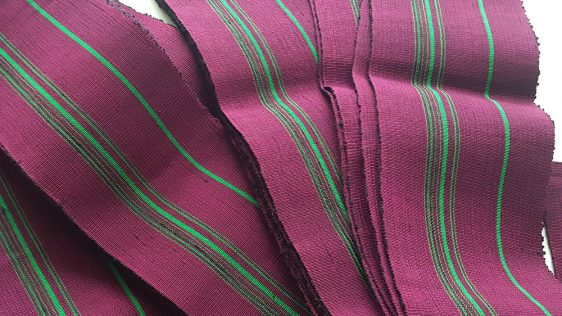
The Aso-oke fabrics come in three major types- Etu, Sanyan, and Arari. The Etu stands for guinea fowl- an indigo and dyed deep blue that comes with tiny light blue stripes often and is said to take the colour of a guinea fowl.

The Sanyan is a pale brown and woven beige silk that is obtained from the cocoons of the Anaphe moth. It is often used for funerals and weddings. Arari is a deep red colour and is woven with magenta waste silk.

With time, Aso oke has been modified to come in various designs and colours and is not limited to the above types of Aso-oke. You can even customise your design and colour according to your taste. Today, it is a remarkable work of art and a collector’s delight.

Share. Facebook Twitter LinkedIn WhatsApp
Onyinyechi Nwanunobi
  • Website

Keep Reading

5 Strongest Warrior Tribes In Africa

Navigating Nigeria’s Peak Season: Insights Into Ever-changing Consumer Habits – Aleph Group

NNPC Partners Stakeholders To Revitalise Nigerian Football

5 Most Prominent Ancient African Kingdoms

“None Of Us Can Change Our History”: King Charles Calls For Justice And Reflection At Commonwealth Summit

5 Best Places To Hike In Nigeria

Add A Comment

Comments are closed.

Here is spotlighting many benefits of journeying with either Lagos State’s Blueline or Redline rails for a hassle-free day, week, month and year. Thank God for the Igbega Eko. Together we rise.
https://youtu.be/V67GV8wgyjw

Latest Posts

  • Premier League Matchday Review: Saturday, 30 August 2025 – Thrills And Drama Across Stadia
  • Anambra Community Celebrates Rescue And Restoration After 15-Hour Security Operation
  • PDP South-West Chairman Defiant As Wike’s Threats Fail To Derail National Convention
  • Katsina State Allocates ₦20m Per Local Government For Graveyard Renovations
  • UK Government Bars Over 100 Job Roles From Foreign Recruitment in Immigration Crackdown
Featured
About Govima

Govima was founded with the goal of helping clients thrive in today’s highly competitive marketing environment. While other companies rush to abandon traditional marketing in favour of digital techniques, we’ve bolstered our offline marketing capabilities while also equipping our team with seasoned professional knowledge to support our clients’ digital needs.

Through creative designs, we enhance our clients’ products and services the right way that would attract their target audience, thus, making the perception of their company a reality.

  • LTV 8, Agidingbi Road, Alausa, Ikeja, Lagos.
  • +234 806 003 7277
  • info@govima.com
Govima, Your Best Plug For Bus Stop Shelter Ad

LATEST POSTS

Premier League Matchday Review: Saturday, 30 August 2025 – Thrills And Drama Across Stadia

August 31, 2025

Anambra Community Celebrates Rescue And Restoration After 15-Hour Security Operation

August 31, 2025

PDP South-West Chairman Defiant As Wike’s Threats Fail To Derail National Convention

August 31, 2025

Katsina State Allocates ₦20m Per Local Government For Graveyard Renovations

August 31, 2025

UK Government Bars Over 100 Job Roles From Foreign Recruitment in Immigration Crackdown

August 31, 2025
Featured

Subscribe to Updates

Get the latest news from Govima about politics, economy, health ad business.

Facebook X (Twitter) Instagram Pinterest
© 2025

Type above and press Enter to search. Press Esc to cancel.

Go to mobile version