


PDP Faces More High-Profile Defections, But Grassroots Remain Steadfast, Says Saraki.
Former Senate President and Chairman of the Peoples Democratic Party (PDP) Reconciliation Committee, Dr Bukola Saraki, has warned that Nigeria’s main opposition party is bracing for further high-profile defections, potentially including one or two governors and several senators. Despite these challenges, Saraki remains optimistic, emphasising the PDP’s enduring strength at the grassroots level as the party gears up for the 2027 general elections.
In an exclusive interview on ARISE News’ Prime Time programme on Friday, Saraki addressed the ongoing internal crises rocking the PDP, which has been grappling with a wave of defections and leadership disputes since the 2023 elections. “The PDP would likely see one or two more defections, and we should prepare ourselves for that. We haven’t seen the worst of the defections yet,” Saraki stated, acknowledging the possibility of significant exits, including figures like Rivers State Governor Siminalayi Fubara.

Recent high-profile defections, such as Delta State Governor Sheriff Oborevwori and his predecessor Ifeanyi Okowa to the ruling All Progressives Congress (APC), have intensified the PDP’s challenges. Saraki described Okowa’s defection, as the party’s former vice-presidential candidate, as “unprecedented and disappointing,” reflecting a broader decline in leadership values within Nigeria’s political sphere. He also noted the defection of three Kebbi senators—Adamu Aliero, Yahaya Abdullahi, and Garba Maidoki—to the APC, further underscoring the party’s turbulent phase.
Despite these setbacks, Saraki remains confident in the PDP’s resilience, particularly at the grassroots. “When you go round the country, the state chapters, the local government chapters, the party is still very strong in the grassroots,” he said. “In some areas, they are not even aware of what is happening at our level in Abuja”. He highlighted that many grassroots members remain fiercely loyal, with some expressing lifelong commitment to the PDP, undeterred by elite-driven defections.
Saraki, who leads a seven-member reconciliation committee comprising governors and former governors, views the current turmoil as an opportunity for renewal. “Those who want to leave, let them leave. Maybe it’s an opportunity… those who are staying are clearly committed. Let’s use this to rebuild for the future,” he urged. The committee, including members like Zamfara Governor Dauda Lawal and Plateau Governor Caleb Mutfwang, is tasked with addressing defections and resolving disputes, such as the ongoing controversy over the PDP’s National Secretary position, which the Independent National Electoral Commission (INEC) recognises as held by Senator Samuel Anyanwu.
The timing of the crisis, Saraki noted, offers a strategic advantage. “This happening early in PDP is an advantage. We are lucky this is not happening, let’s say, late 2026, as we would not have had time to recover and regroup,” he explained. With just under two years until the 2027 elections, Saraki believes the PDP has ample time to unify and present a credible presidential candidate, dismissing notions that the party is a “sinking ship”.
Saraki also addressed the recent reconciliation between Rivers State Governor Siminalayi Fubara and FCT Minister Nyesom Wike, brokered by President Bola Tinubu, which has fuelled speculation of further defections. While welcoming the resolution for the benefit of Rivers State’s residents, Saraki cautioned that leadership decisions driven by political elites without grassroots consensus threaten the party’s cohesion.
In Ilorin, Saraki recently reaffirmed the PDP’s status as Nigeria’s only viable opposition, noting an influx of new members and renewed enthusiasm at the ward and local government levels. “People are returning to the party, and new members are joining. This speaks volumes about the enduring strength of our platform,” he said during a stakeholder engagement. He urged the party’s youth and women to lead revitalisation efforts, viewing the defections as a chance to rebuild with loyalists.
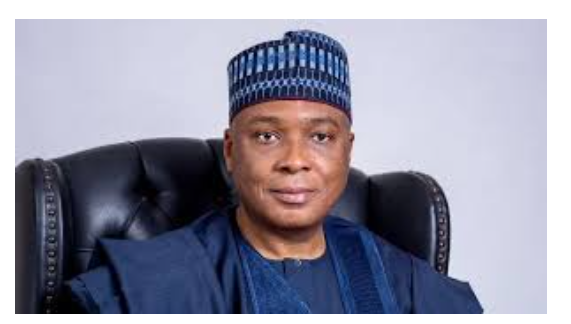
Saraki also warned against the dangers of a one-party state, stressing that a vibrant opposition is critical for Nigeria’s diverse, multi-ethnic society. “A one-party state will not augur well for a multi-cultural, multi-religious society like ours,” he cautioned, calling for unity and strategic reorganisation to maintain democratic balance.
As the PDP navigates these challenges, Saraki’s reconciliation committee is working to resolve internal disputes, including the National Secretary issue, to ensure legal compliance and avoid litigation that could jeopard the party’s 2027 aspirations. “We are laying the foundation to make PDP a good and attractive platform,” Saraki affirmed, expressing confidence in the party’s ability to rebound.
With grassroots loyalty intact and reconciliation efforts underway, the PDP, under Saraki’s leadership, is poised to transform its current challenges into a springboard for a stronger, more united opposition by 2027.
