


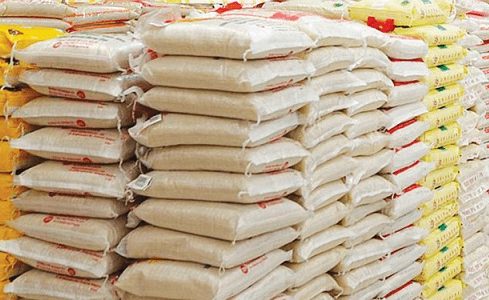
Nigeria’s Rice Industry Faces Collapse Amid Cheap Imports And Insecurity, Farmers Warn.
Nigerian rice farmers have sounded the alarm over the dire state of the country’s rice industry, warning that local mills are shutting down and thousands of jobs are being lost due to a flood of cheap imported rice, ongoing insecurity, and insufficient government support. The crisis, which threatens the livelihoods of millions and Nigeria’s food security, has sparked urgent calls for action to revive the beleaguered sector.
According to stakeholders in the rice industry, the influx of inexpensive rice, primarily smuggled from neighbouring Benin, has driven down prices and made it nearly impossible for local producers to compete. A recent report highlighted that India exported approximately 4.9 million metric tonnes of rice to West Africa between April 2024 and January 2025, with Benin as the largest importer. As Nigeria remains the primary market for rice imported into Benin, much of this stock is illegally smuggled across the border, leading to a sharp decline in local rice prices. A 50kg bag of local rice, which once sold for ₦80,000–₦90,000, now fetches as little as ₦60,000, while imported Indian parboiled rice has dropped to ₦80,000. Despite these lower prices, demand remains stagnant as consumers adopt a cautious approach, awaiting price stabilisation.

The situation has been exacerbated by widespread insecurity, particularly in Nigeria’s northern states, which are critical to the nation’s agricultural output. Banditry, kidnappings, and violence have rendered vast swathes of farmland inaccessible, severely disrupting rice production. A report from the Telegraph noted that north-west Nigeria, a key agricultural region, is grappling with a “wildfire of insecurity,” leaving farmers unable to cultivate their fields safely. Flooding has further compounded the crisis, with an estimated 1.6 million hectares of crops, including rice, destroyed last month, potentially resulting in a loss of 1.1 million tonnes of production.
Farmers have also pointed to a lack of adequate government support as a significant factor in the industry’s decline. Despite efforts by the Nigerian government to bolster agricultural productivity, including a $134 million loan from the African Development Bank to support 250,000 wheat farmers and 150,000 rice farmers, stakeholders argue that these measures are insufficient. The government’s plan to provide subsidised agricultural inputs and establish a minimum guarantee price for crops has yet to yield tangible results for rice farmers struggling to stay afloat.
“Local rice production has plummeted from 8 million to 5.3 million metric tonnes,” lamented a representative from the Rice Farmers Association of Nigeria. “The combination of cheap imports flooding the market, insecurity disrupting farming, and inadequate government intervention is killing our industry. Mills are closing, and workers are losing their jobs. We need urgent action to protect local production and ensure food security.”
The crisis has also been compounded by consumer fears, with rumours of “deadly rice” in circulation sparking panic in parts of Lagos and Ogun states. These unfounded claims, which allege that smuggled rice was cursed by a foreign trader, have led to a boycott of rice, further depressing demand and prices. Although the Nigeria Customs Service debunked these rumours, the damage to consumer confidence has lingered, adding to the industry’s woes.
Economic challenges, including inflation rates nearing 30% and the plummeting value of the naira, have made it increasingly difficult for Nigerians to afford even locally produced rice. A 50kg bag, sufficient to feed a household of eight to ten for a month, now costs around ₦77,000, a 70% increase since mid-2024. This has forced many families, particularly in northern Nigeria, to resort to consuming “afafata” rice—grains typically discarded or used as animal feed.
Despite these challenges, there is hope that targeted interventions could reverse the industry’s fortunes. Experts suggest that strengthening border controls to curb smuggling, investing in rural infrastructure to improve security, and providing more robust subsidies for local farmers could help stabilise the market. The government’s commitment to reducing reliance on imports and boosting domestic production remains critical, particularly as Nigeria grapples with one of its worst hunger crises, with over 33 million people projected to face food insecurity by August 2025.
As the festive season approaches, traders anticipate a potential uptick in rice demand, which could provide temporary relief for the industry. However, without comprehensive reforms and immediate action, Nigeria’s rice sector risks further collapse, threatening both the economy and the nation’s food security.
For more information on agricultural support programmes, visit the Nigerian Ministry of Agriculture’s official website or contact local farming associations.
