


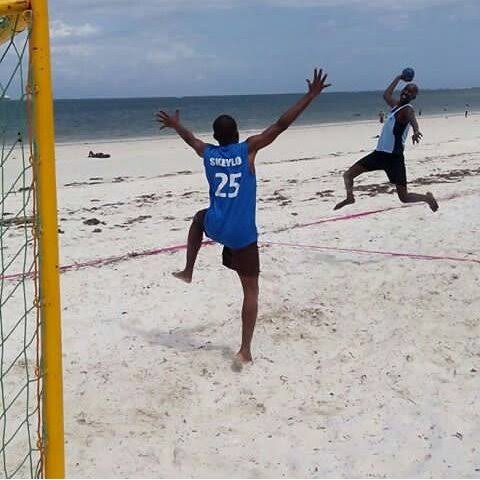
Nigeria’s Beach Handball: A Sport On The Brink, Starved Of Funding And Vision.
In Nigeria, a nation blessed with a sprawling coastline and a passion for sports, beach handball—a dynamic, sand-based variant of the traditional game—should be thriving. Yet, this Olympic sport, governed by the Handball Federation of Nigeria (HFN) since at least 2003, teeters on the edge of obscurity. The promise of international glory, youth development, and socio-economic impact is being choked by a chronic lack of funding and what some call a “lackadaisical attitude” from those tasked with its growth. If urgent action isn’t taken, beach handball risks fading into irrelevance, robbing young Nigerian athletes of a future in a game that could elevate the nation’s global sporting profile.
A Flicker of Potential, Dimmed by Neglect
Beach handball’s roots in Nigeria trace back to the early 2000s, with the HFN overseeing domestic and global competitions by 2003, as reported by allAfrica.com. The sport gained traction, culminating in Nigeria’s debut at the 2019 Africa Beach Handball Championships, where the team secured its first-ever win, a historic moment celebrated by The Busy Buddies. This milestone hinted at a bright future, with Nigeria’s coastal resources and athletic talent poised to make beach handball a continental force. The sport’s inclusion in events like the African Beach Games, as noted by leadership.ng in 2023, further underscored its potential to inspire and unite communities.

But potential alone doesn’t win medals or sustain programs. “Lack of funds threatening Nigeria’s participation in Africa beach handball championship.” This isn’t a one-off crisis but a symptom of deeper systemic issues.
The HFN, established in 1972 and affiliated with the African Handball Confederation (CAHB) and International Handball Federation (IHF), has failed to secure the resources needed to nurture beach handball. The result? Missed opportunities, disillusioned players, and a sport struggling to survive.
A Devastating Blow to Young Athletes
The consequences of this neglect are starkly illustrated by a recent missed opportunity. In an interview with our correspondent, an anonymous source close to the sport shared a heartbreaking account of lost potential:
“We were supposed to be in Zanzibar, Tanzania, for the CAHB Africa U-17 Beach Handball Championship, which was to serve as a qualifier for the IHF World U-17 Beach Handball Championship in Hammamet, Tunisia, in June this year. But the Handball Federation of Nigeria (HFN) refused to push the proposal through. And I was later told the National Sports Commission (NSC) said there was no money to execute the project. If we had gone to Tanzania, we would have qualified to represent Africa in Tunisia at the Cadet World Cup and the World Youth Games in Dakar, Senegal, in 2026. We could have kept these players together to represent us at the Olympic qualifiers in 2027. But they destroyed the programme with their lackadaisical attitude. They have succeeded in destroying the future of young players who could have represented Nigeria in Zanzibar, Tanzania, Hammamet, Tunisia, Dakar, Senegal, and, by God’s special grace, if we qualify for the Olympics, presented a team at the 2028 Los Angeles Olympic Games.”
This testimony paints a grim picture of bureaucratic inertia and financial starvation. The failure to fund the U-17 team’s participation in Zanzibar didn’t just cost Nigeria a shot at a continental title; it derailed a pathway to global competitions and, potentially, the 2028 Olympics. For young athletes, many from underserved communities where sports offer a lifeline, this betrayal is nothing short of catastrophic.
Broader Challenges: A Sport Starved of Support
The funding crisis is just the tip of the iceberg. Beach handball, like its indoor counterpart, grapples with challenges that mirror Nigeria’s broader sports landscape. A 2014 Daily Trust article on Nigerian handball highlighted persistent issues: poor international rankings, lack of continental success, and inadequate infrastructure. Beach handball, requiring specialized coastal facilities, faces even steeper hurdles. Nigeria’s beaches, while abundant, lack the investment needed for proper training grounds. Sponsorship is scarce, and public awareness of the sport remains low, overshadowed by football’s dominance.
Globally, beach handball is gaining traction, with the IHF promoting its socio-economic benefits, as seen in Kenya’s community-driven programs. Nigeria, with its vibrant youth and coastal assets, could follow suit—but only with deliberate investment. The HFN’s apparent inability to prioritize beach handball, coupled with the NSC’s reported refusal to fund critical projects, raises questions about commitment and accountability. Are Nigeria’s sports authorities willing to let a sport with Olympic potential wither?
A Call to Action: Save Beach Handball
The time for half-measures is over. Beach handball in Nigeria is at a crossroads, and without immediate intervention, it risks becoming a footnote in the nation’s sports history. The HFN must step up and do the needful. This means aggressively pursuing funding, whether through government allocations, private sponsorships, or international grants from bodies like the IHF. It means prioritizing youth development, ensuring teams like the U-17 squad aren’t left stranded. It means building infrastructure—dedicated beach handball courts—and raising awareness to make the sport a household name.
The federal government, through the NSC, must also recognize beach handball’s value. Investing in the sport isn’t just about medals; it’s about creating jobs, empowering youth, and showcasing Nigeria’s coastal heritage on the global stage. The 2028 Los Angeles Olympics are three years away—a tight but achievable timeline to build a competitive team, provided action starts now.
To the private sector, this is a golden opportunity. Sponsoring beach handball offers visibility and aligns with corporate social responsibility goals. Imagine the pride of seeing Nigerian athletes, trained on local beaches, competing in Dakar or Los Angeles. That vision is within reach, but only if stakeholders act.
The Stakes Are High
Beach handball isn’t just a game; it’s a pathway to opportunity for Nigeria’s youth. Every missed tournament, every unfunded trip, is a dream deferred for players who could carry the green-and-white flag to new heights. The HFN, NSC, and all stakeholders must heed this wake-up call. Fund the sport. Build the facilities. Inspire the next generation. Let’s not allow beach handball to die on Nigeria’s shores. The future of young athletes—and Nigeria’s Olympic aspirations—depends on it.
