


Nigerian Military Strikes Insurgents’ Camp In Gwoza, Hits ISWAP Commander.
The Nigerian military conducted a successful operation on 17 June 2025, striking an insurgents’ camp in Gwoza, Borno State, and neutralising a senior commander of the Islamic State’s West Africa Province (ISWAP).
The operation, led by the Nigerian Army’s 7 Division, targeted a hideout in the Mandara Mountains, where ISWAP has been regrouping after losing territory in 2023. The military confirmed the death of Mallam Idris, a key ISWAP logistics coordinator, whose elimination disrupts the group’s supply chain for weapons and explosives. The strike is part of ongoing counterterrorism efforts in Nigeria’s northeast, where Boko Haram and ISWAP continue to pose significant threats.

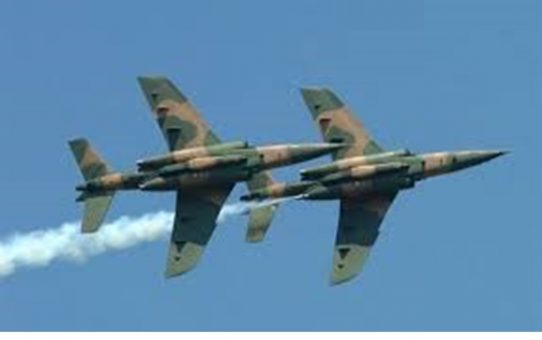
The operation involved coordinated ground and air assaults, with the Nigerian Air Force providing aerial support to dislodge insurgents from fortified positions. Troops recovered a cache of arms, including AK-47 rifles, improvised explosive devices, and motorcycles, which ISWAP uses for rapid attacks. The military’s statement described the strike as a “significant blow” to ISWAP’s operations, noting that Idris was responsible for coordinating attacks on civilian communities and military convoys in Borno and Yobe states. The operation follows a January 2025 attack in Borno, where ISWAP killed 20 soldiers, highlighting the group’s renewed aggression.
Residents of Gwoza, a town repeatedly targeted by insurgents since 2014, expressed relief but called for sustained military presence to prevent reprisals. The operation comes amid broader security challenges, with Amnesty International reporting over 10,000 deaths from armed groups across northern Nigeria since May 2023. Critics, including Senator Iroegbu, argue that while such strikes are impactful, the lack of accountability for military abuses, such as alleged extrajudicial killings, undermines public trust. The military has denied claims of a secret abortion programme in the northeast, as reported by Reuters, insisting on its commitment to human rights.
The Gwoza strike demonstrates Nigeria’s resolve to combat insurgency, but analysts warn that ISWAP’s resilience, bolstered by regional affiliations, requires a multi-faceted approach. President Tinubu’s directive to security chiefs in Benue suggests a similar aggressive stance in the north-central region.
As the military plans further operations, the focus will be on sustaining momentum while addressing civilian concerns about collateral damage. The death of the ISWAP commander is a tactical victory, but long-term success hinges on disrupting the group’s recruitment and financing networks.
