


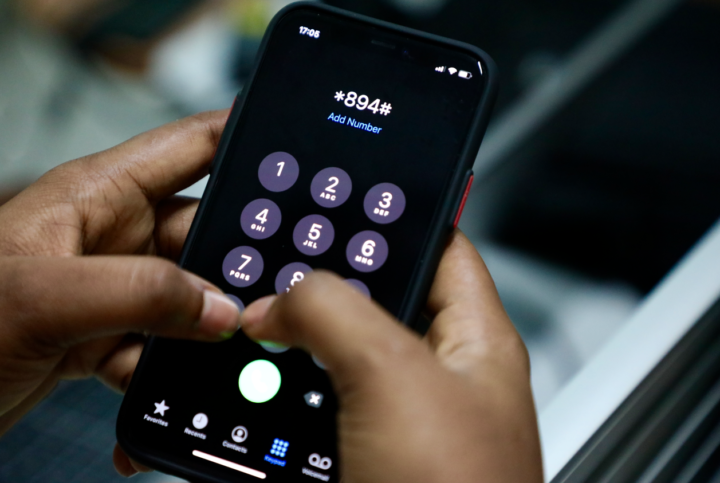
NCC Mandates Banks To Deduct USSD Transaction Fees From Mobile Airtime Starting 3 June 2025.
In a significant shift in Nigeria’s banking sector, the Nigerian Communications Commission (NCC) has directed Deposit Money Banks (DMBs) to cease deducting Unstructured Supplementary Service Data (USSD) transaction fees directly from customers’ bank accounts. Effective from 3 June 2025, these charges will now be deducted from users’ mobile airtime balances, aligning with the NCC’s End-User Billing (EUB) model.
The directive, announced through a statement from United Bank for Africa (UBA) to its customers, marks a pivotal change in how USSD banking services are billed. “In line with the directive of the Nigerian Communications Commission, please be informed that effective 3 June 2025, charges for USSD banking services will no longer be deducted from your bank account,” UBA’s statement read. “Going forward, these charges will be deducted directly from your mobile airtime balance in accordance with the NCC’s EUB model.”

Under the new billing structure, each USSD session will incur a flat fee of ₦6.98 per 120 seconds, charged directly by mobile network operators (MNOs). Customers will receive a consent prompt at the start of each session, ensuring transparency, with airtime deductions only occurring upon confirmation. Those who prefer to avoid these charges can opt for alternative banking channels such as mobile apps, internet banking, or ATMs.
This move is seen as part of ongoing efforts to resolve the long-standing USSD debt dispute between MNOs and commercial banks, which had escalated to a reported ₦250 billion by December 2024. The NCC and the Central Bank of Nigeria (CBN) have been working to address this issue, with previous directives in December 2024 urging both parties to settle outstanding debts. In January 2025, the NCC threatened to disconnect nine banks over unpaid USSD invoices, some dating back to 2020.
The shift to airtime deductions aims to streamline billing, reduce disputes, and ensure sustainable USSD service delivery. Industry experts suggest this could stabilise the relationship between banks and telecom operators, preventing service disruptions. For instance, MTN Nigeria confirmed in February 2025 that it had recovered ₦32 billion of the ₦72 billion owed by banks, highlighting progress in debt resolution.
However, the change has sparked mixed reactions. While some customers appreciate the transparency of the consent prompt, others worry about the impact on low-income users who rely heavily on USSD for banking due to limited internet access. “This could discourage frequent USSD use, especially for small transactions like airtime top-ups,” said Chidi Okeke, a Lagos-based trader. “I’ll need to keep my airtime topped up, which adds another cost to monitor.”
The NCC has assured customers that airtime and data purchases via USSD will remain exempt from the ₦6.98 charge, a policy in place since 2021. Banks such as First City Monument Bank (FCMB) and GTBank have reiterated this exemption in customer communications, encouraging users to explore digital alternatives to avoid additional costs.
As Nigerians adapt to this new billing model, the NCC and CBN continue to engage stakeholders to ensure seamless access to financial services. The transition to airtime deductions is expected to enhance transparency and foster collaboration between banks and telecom providers, ultimately benefiting millions of USSD users across the country.
