


Nasarawa State To Pioneer Nigeria’s First Electric Vehicle Assembly Plant.
In a groundbreaking move set to transform Nigeria’s automotive and clean energy landscape, Nasarawa State is poised to host the country’s first electric vehicle (EV) assembly factory. Governor Abdullahi Sule announced the ambitious initiative during a celebratory event organised by the Abdullahi Sule Gidan-Gidan Support Group in Lafia on Sunday, 25 May 2025, marking his six years in office. The project, which leverages the state’s abundant lithium deposits, aligns with the federal government’s push for clean energy and reduced reliance on fossil fuels.
The announcement follows the recent commissioning of a state-of-the-art lithium processing plant in Nasarawa, built by Avatar New Energy Materials Company Limited in collaboration with the state government. Speaking at the event, Governor Sule emphasised the state’s commitment to ensuring all mineral resources, particularly lithium, are processed locally before export or distribution to other parts of Nigeria. “Nasarawa is the lithium headquarters of Nigeria,” said Deputy Governor Dr Emmanuel Akabe, highlighting the state’s vast lithium reserves across several local government areas, which have attracted significant national and global attention.

The EV assembly factory represents the second stage of Nasarawa’s lithium processing ambitions, following the initial phase of raw material processing. “We will continue to engage investors and strategic partners to ensure battery production and vehicle assembly take place here in the state,” Sule stated. He expressed hope that the project would be realised within his administration’s remaining two years, but vowed that his successor would carry it forward if necessary. The initiative is expected to create jobs, boost local manufacturing, and position Nasarawa as a hub for clean energy innovation in West Africa.
The governor credited President Bola Tinubu’s economic reforms for creating an enabling environment for such investments, pledging to align Nasarawa’s development agenda with federal policies. The project dovetails with the Tinubu administration’s broader mining reforms, which have attracted over $800 million in processing projects and boosted solid minerals revenue from ₦6 billion in 2023 to ₦38 billion in 2024, as revealed by Minister of Solid Minerals Development, Dr Dele Alake.
Hajiya Hussaina Sule, Chairperson of the Gidan-Gidan Support Group and the governor’s daughter, lauded the administration’s achievements, including the construction of over 600 kilometres of urban and rural roads, flyovers and underpasses in Lafia and Akwanga, and a new State Secretariat complex. She also highlighted the employment of over 4,000 youths into the civil service and the resolution of long-standing promotion issues, underscoring the state’s focus on development and welfare.
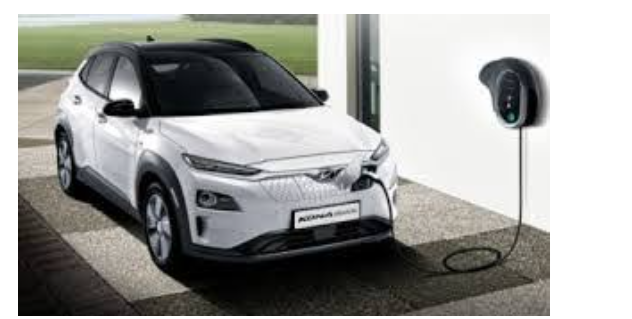
While Nasarawa’s EV factory is hailed as Nigeria’s first, it builds on earlier strides in the country’s EV sector. In 2020, Stallion Group’s Hyundai Kona became the first locally assembled EV, followed by Innoson Vehicle Manufacturing’s unveiling of its own electric vehicle in 2024. However, Nasarawa’s project stands out for its integration with local lithium processing, aiming to produce EV batteries and assemble vehicles entirely within the state. The initiative has sparked optimism, with posts on X describing it as a “game-changer” for Nigeria’s automotive industry.
As Nasarawa gears up to lead Nigeria’s transition to sustainable transportation, the project is expected to attract further investment and inspire other states to tap into the growing global demand for electric vehicles. With lithium-ion battery sales projected to reach $109.72 billion by 2026, Nasarawa’s strategic vision positions it as a potential powerhouse in Africa’s clean energy revolution.
