


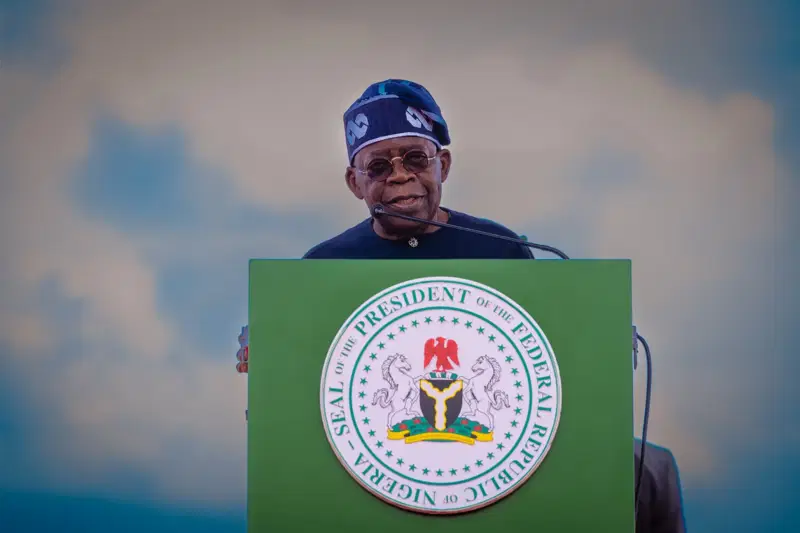
I Learn Governance Lessons From Those Who Insult Me, Says Tinubu.
President Bola Tinubu, during a town hall meeting in Makurdi, Benue State, on 18 June 2025, revealed that he draws valuable governance lessons from critics, including those who insult him. Speaking amidst the backdrop of the recent Yelewata massacre, which claimed over 200 lives, Tinubu addressed stakeholders at the Benue State Government House, emphasising his openness to constructive criticism as a tool for improving leadership. “I learn governance lessons from those who insult me,” he said, reflecting on his tenure as Lagos State governor, where he faced similar challenges but transformed crises into opportunities for economic prosperity. His remarks were part of a broader call for unity and responsible governance to address the escalating violence in Benue.

Tinubu’s comments came as he advised Governor Hyacinth Alia to adopt a collaborative approach to governance, urging him to act as a “father to all” and work with federal authorities to restore peace. He stressed the importance of stakeholder engagement, proposing a peace committee comprising former governors, traditional rulers, and non-indigenes to tackle the root causes of the conflict. Drawing from his Lagos experience, Tinubu recounted how he navigated security challenges to drive development, suggesting that Benue could similarly turn its tragedy into prosperity. He encouraged Alia to allocate land for ranching, a proposal aimed at reducing farmer-herder tensions, and promised federal support for peace initiatives.
However, Tinubu’s remarks about learning from insults sparked varied reactions. Some analysts praised his humility and willingness to engage with dissent, viewing it as a sign of adaptive leadership in a polarised nation. Others, including Benue’s diaspora leaders, expressed scepticism, arguing that the administration’s delayed response to the Yelewata attack and its initial framing as a “farmer-herder conflict” undermined its credibility. Critics like Rommy Mom of Lawyers Alert called for a clearer acknowledgment of the violence as a “genocide,” warning that mischaracterising the crisis could lead to inadequate solutions. The president’s openness to criticism, while commendable, faces scrutiny over whether it will translate into tangible policy changes.
The broader context of Tinubu’s statement highlights Nigeria’s complex socio-political landscape, where public discourse often involves sharp criticism of leaders. His call for responsible governance and peace-building resonates with the need for dialogue in Benue, but the lack of arrests following the massacre has fuelled public frustration.
Tinubu’s pledge to meet stakeholders again in Abuja to “fashion out a framework for lasting peace” suggests a long-term commitment, but the success of this approach will depend on addressing systemic issues like land disputes and security lapses. For now, his willingness to learn from detractors offers a glimpse of hope for more inclusive governance, but only time will tell if it yields results
