


Global Postal Services Halt US Deliveries As Trump’s Tariff Rules Spark Uncertainty.
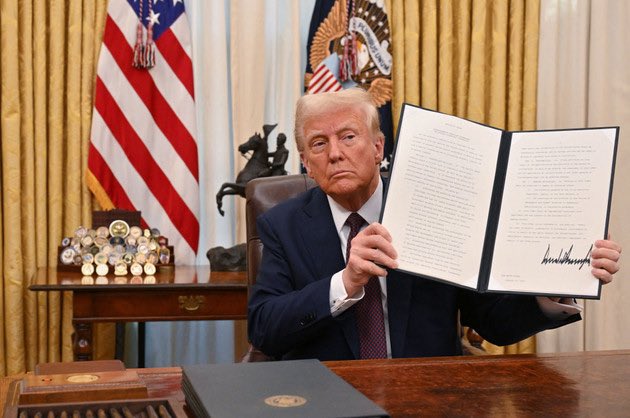
At least 25 countries, including major economies like the UK, Germany, France, India, and Australia, have suspended package deliveries to the United States due to new tariff rules set to take effect on 29 August 2025, according to the United Nations’ Universal Postal Union (UPU). The move follows US President Donald Trump’s executive order, signed in July, which eliminates the “de minimis” exemption that previously allowed packages valued under $800 to enter the US duty-free, a decision that has disrupted global postal networks and e-commerce supply chains.
The UPU, representing 192 member states, reported that postal services in nations such as Japan, Italy, Sweden, and New Zealand have paused shipments, citing a lack of clarity on how the new rules will be enforced. From Friday, all packages, except personal gifts under $100 and letters, will face tariffs ranging from 10% for countries like Australia to 50% for India, alongside temporary fixed fees of $80 to $200 per item, depending on the country’s tariff rate. The abrupt change has left postal operators scrambling, with many, including the UK’s Royal Mail and Germany’s Deutsche Post, halting deliveries to ensure compliance.

The decision, part of Trump’s broader trade policy to bolster US manufacturing and curb illicit imports, has drawn criticism for its timing and lack of preparation. France’s La Poste, which sends 1.6 million packages annually to the US, noted that US authorities provided details only on 15 August, leaving an “extremely limited timeframe” to adapt. India’s communications ministry highlighted unresolved issues around duty collection and the designation of “qualified parties” responsible for remitting tariffs, prompting a suspension of all postal items except letters and gifts under $100.
The White House defends the move, arguing that the de minimis exemption, which facilitated 1.36 billion packages worth $64.6 billion in 2024, was a “catastrophic loophole” exploited to ship low-cost goods and illicit drugs like fentanyl. However, the policy shift has sparked concerns about rising costs for consumers and small businesses, particularly those relying on e-commerce platforms like Etsy, Amazon, and Shein. Etsy has suspended shipping label purchases for affected postal services, advising sellers to arrange alternative shipping with duty-paid options.
European and Asian postal operators, including DHL and PostNord, have expressed frustration over unresolved questions about data requirements and duty collection processes. Australia Post, while exempting letters and gifts under $150, described the suspension as “disappointing but necessary” to develop workable solutions. The Australian government echoed this sentiment, warning that the tariffs would drive up costs for American families and businesses.
As global postal services work to adapt, the suspensions are expected to cause delays and higher prices for US-bound goods. The UPU has urged US authorities to provide clearer guidance to minimize disruptions, while analysts predict significant impacts on small and medium-sized enterprises reliant on low-value exports. With the tariff changes set to reshape international trade, businesses and consumers brace for a new era of costlier cross-border commerce.
