


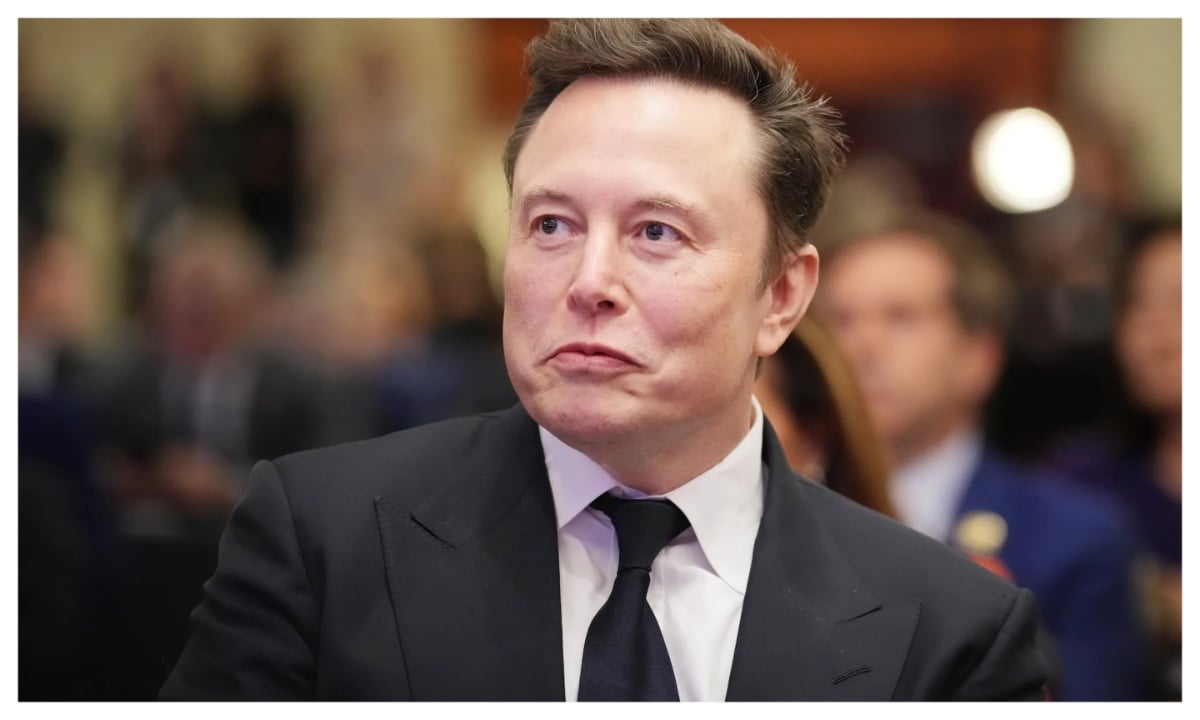
Elon Musk Exits Trump Administration After Clash Over ‘Big, Beautiful Bill’.
Elon Musk, the billionaire entrepreneur and former head of the Department of Government Efficiency (DOGE), announced his departure from the Trump administration on Wednesday, 28 May 2025, just hours after publicly criticising the president’s flagship domestic policy legislation. The move marks a dramatic end to Musk’s brief but contentious tenure in Washington, where he spearheaded efforts to slash federal spending and streamline government operations.
In a post on his social media platform X, Musk expressed gratitude to President Donald Trump for the opportunity to lead DOGE, a White House initiative tasked with reducing bureaucratic waste. “As my scheduled time as a Special Government Employee comes to an end, I would like to thank President @realDonaldTrump for the opportunity to reduce wasteful spending,” Musk wrote. “The @DOGE mission will only strengthen over time as it becomes a way of life throughout the government.”

Musk’s exit follows his outspoken criticism of Trump’s “One Big, Beautiful Bill Act,” a sweeping domestic policy package that passed the House last week and is now under Senate scrutiny. Speaking to CBS’s Sunday Morning programme, Musk described the legislation as a “massive spending bill” that would balloon the federal deficit by an estimated $600 billion in the next fiscal year, according to independent analysts. “I was disappointed to see the massive spending bill, frankly, which increases the budget deficit, not just decreases it, and undermines the work that the DOGE team is doing,” Musk said, adding, “I think a bill can be big or it can be beautiful, but I don’t know if it can be both.”
The legislation, a cornerstone of Trump’s second-term agenda, includes significant tax cuts, increased defence and border security spending, and reforms to federal health and nutrition programmes. However, nonpartisan estimates from the Congressional Budget Office suggest it could add up to $3.8 trillion to the national debt over a decade, a point of contention for fiscal conservatives and Musk alike.
Musk’s tenure as a special government employee, a temporary role limited to 130 days per year, saw DOGE implement aggressive cost-cutting measures, including the elimination of 260,000 federal jobs through firings, buyouts, and early retirements. The initiative also targeted agencies like the U.S. Agency for International Development (USAID) for closure and slashed diversity, equity, and inclusion (DEI) contracts, which Musk claimed saved taxpayers over $1 billion. However, DOGE’s reported savings of $175 billion have been met with scepticism, with a BBC analysis finding that only $61.5 billion was itemised, and just $32.5 billion was substantiated with evidence.
The billionaire’s efforts were not without controversy. DOGE’s rapid restructuring sparked dozens of lawsuits, with critics accusing Musk of violating civil service protections and union agreements. His access to sensitive Treasury Department payment systems and federal student loan data raised alarms among Democrats, who argued it posed conflicts of interest given Musk’s roles at Tesla, SpaceX, and xAI. Tesla faced boycotts and a reported drop in sales, while Musk’s personal popularity hit record lows amid widespread protests.
Musk’s departure was confirmed by a White House official, who told Reuters that his “off-boarding” began on Wednesday night. Sources indicated that Musk did not discuss his exit with Trump directly, with the decision made at a senior staff level. In recent weeks, Musk had signalled a pivot back to his business empire, telling investors he was recommitting to Tesla, SpaceX, and xAI, where he has resumed working “24/7” and even sleeping in conference rooms.
Despite his exit, Musk insisted that DOGE’s mission would endure, with staff embedded across federal agencies to continue its work. House Speaker Mike Johnson praised DOGE’s efforts, stating that the House would build on its recommendations through a rescissions package and Trump’s 2026 budget. However, with the Senate now grappling with the contentious bill and fiscal hawks like Senator Ron Johnson expressing concerns about its deficit impact, Musk’s criticisms may resonate as the legislation faces further scrutiny.
As Musk returns to his tech ventures, his brief foray into Washington leaves a polarising legacy—one of bold ambition, significant disruption, and unresolved questions about the balance between efficiency and accountability in government.
Published: 30 May 2025
