

Close Menu
Gofishe News
  • Home
  • Entertainment
  • National
  • International
  • Tech
  • Politics
  • Sports
  • PMNI
  • More
    • Business
    • Culture
    • Education
    • History
    • Health
  • Featured
    • Govima Travel
    • Govima Media
    • Govima TV
Facebook X (Twitter) Instagram
Trending
  • Premier League Matchday Review: Saturday, 30 August 2025 – Thrills And Drama Across Stadia
  • Anambra Community Celebrates Rescue And Restoration After 15-Hour Security Operation
  • PDP South-West Chairman Defiant As Wike’s Threats Fail To Derail National Convention
  • Katsina State Allocates ₦20m Per Local Government For Graveyard Renovations
  • UK Government Bars Over 100 Job Roles From Foreign Recruitment in Immigration Crackdown
  • ASUU Slams Federal Government Over Inaction, Demands Concrete Action On 2009 Agreement
  • Nigeria Mourns Ruth Elton, Oldest Serving Missionary, Who Passed Away At 91
  • Shea Industry Poised For Growth As Stakeholders Rally Behind Nigeria’s Export Ban
X (Twitter) Instagram
Gofishe NewsGofishe News
Subscribe
Friday, December 5
  • Home
  • Entertainment
  • National
  • International
  • Tech
  • Politics
  • Sports
  • PMNI
  • More
    • Business
    • Culture
    • Education
    • History
    • Health
  • Featured
    • Govima Travel
    • Govima Media
    • Govima TV
Gofishe News
Home»Culture

Discovering The Nupe People

Onyinyechi NwanunobiBy Onyinyechi NwanunobiJune 7, 2022 Culture No Comments3 Mins Read
Share Facebook Twitter LinkedIn Email WhatsApp

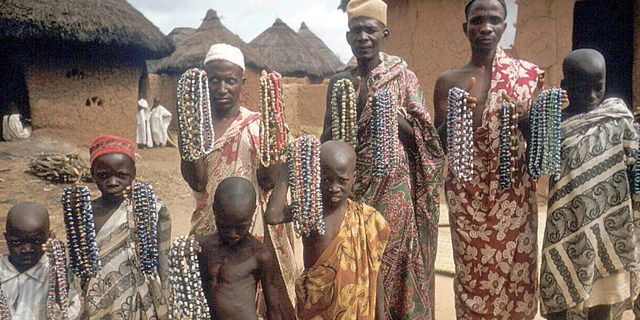
Traditionally called the Tapa by the Yorubas, the Nupes trace their origin to Tsoede who fled the court of Idah.

The Nupe Kingdom occupies the northern part of the Igala Kingdom, an ethnic group located primarily in the Middle Belt and northern Nigeria.

The Nupe call themselves Nupeci and refer to their language as Nupe and are the dominant group in Niger State, an important minority in Kwara State and present in Kogi State as well.

Traditionally called the Tapa by the Yorubas, the Nupes trace their origin to Tsoede who fled the court of Idah and established towns along the Niger in the 15th century.



The Nupe are divided into different subgroups, including Batau, Kyedye, Eghagi, Ebe, and Benu, along with several others that speak related languages. Some Nupe have always lived outside the group’s boundaries, and others have lived in Nupeland.

There are probably about 3.5 million Nupes, mostly in Niger State, although a small but growing diaspora of Nupe can be found in Knowle in the West Midlands of England. The Nupe language is also spoken in Kwara and Kogi States. They are primarily Muslims, with a few Christians and followers of African Traditional Religion.

The Nupe people have several local, traditional rulers. The Etsu Nupe (Bida) is not Nupe and is actually part of the Fula tribe but they came to rule the Bida in 1806.

Many Nupe people often have tribal scars on their faces (similar to an old Yoruba tradition), some to identify their prestige and the family of which they belong as well as for protection, as well as jewellery adornment. But these traditions are dying out in certain areas. Their art is often abstract. They are well known for their wooden stools with patterns carved onto the surface.

Nupe brass smiths (tswata muku) are found mostly in Bida. The woodcarving tradition of the Nupe does not depend on the ceremonial or ritual use of artifacts but is almost entirely “art for art’s sake.”

In Nupe communities religious rituals are relegated to different officials. At Doko the Dibo Saba ritual addressed to an ancestor chief is performed by the chief, while the sako ritual, which involves a small group of hereditary hunters, is performed by the head of that group.

The gunnu priest is known as Gunnuko (Great gunnu) or, more specifically, Ndazo, “the rare man.” In Jebba the Ejuko is the guardian of the lineage of Tsoede. The importance of these rituals has not shielded them from the impact of cultural change. After Islamization these activities were curtailed, and they now are regarded as Satanic worship.

Most Nupe’s are farmers, and the staple crops are millet, guinea-corn, yams, rice, and groundnuts. Cattle rearing is engaged in by the Bororo Fulani, who move their herds from one pasture to another as necessity dictates.

#nupe people
Share. Facebook Twitter LinkedIn WhatsApp
Onyinyechi Nwanunobi
  • Website

Keep Reading

Alaafín Orompoto: The Fearless Queen Who Rode Into Battle And Shaped Oyo History

5 Strongest Warrior Tribes In Africa

Five Monuments Around The World Dedicated To Women

Navigating Nigeria’s Peak Season: Insights Into Ever-changing Consumer Habits – Aleph Group

NNPC Partners Stakeholders To Revitalise Nigerian Football

5 Most Prominent Ancient African Kingdoms

Add A Comment

Comments are closed.

Here is spotlighting many benefits of journeying with either Lagos State’s Blueline or Redline rails for a hassle-free day, week, month and year. Thank God for the Igbega Eko. Together we rise.
https://youtu.be/V67GV8wgyjw

Latest Posts

  • Premier League Matchday Review: Saturday, 30 August 2025 – Thrills And Drama Across Stadia
  • Anambra Community Celebrates Rescue And Restoration After 15-Hour Security Operation
  • PDP South-West Chairman Defiant As Wike’s Threats Fail To Derail National Convention
  • Katsina State Allocates ₦20m Per Local Government For Graveyard Renovations
  • UK Government Bars Over 100 Job Roles From Foreign Recruitment in Immigration Crackdown
Featured
About Govima

Govima was founded with the goal of helping clients thrive in today’s highly competitive marketing environment. While other companies rush to abandon traditional marketing in favour of digital techniques, we’ve bolstered our offline marketing capabilities while also equipping our team with seasoned professional knowledge to support our clients’ digital needs.

Through creative designs, we enhance our clients’ products and services the right way that would attract their target audience, thus, making the perception of their company a reality.

  • LTV 8, Agidingbi Road, Alausa, Ikeja, Lagos.
  • +234 806 003 7277
  • info@govima.com
Govima, Your Best Plug For Bus Stop Shelter Ad

LATEST POSTS

Premier League Matchday Review: Saturday, 30 August 2025 – Thrills And Drama Across Stadia

August 31, 2025

Anambra Community Celebrates Rescue And Restoration After 15-Hour Security Operation

August 31, 2025

PDP South-West Chairman Defiant As Wike’s Threats Fail To Derail National Convention

August 31, 2025

Katsina State Allocates ₦20m Per Local Government For Graveyard Renovations

August 31, 2025

UK Government Bars Over 100 Job Roles From Foreign Recruitment in Immigration Crackdown

August 31, 2025
Featured

Subscribe to Updates

Get the latest news from Govima about politics, economy, health ad business.

Facebook X (Twitter) Instagram Pinterest
© 2025

Type above and press Enter to search. Press Esc to cancel.

Go to mobile version