


Baltasar Engonga Sentenced To 18 Years For Embezzlement In Equatorial Guinea.
Baltasar Ebang Engonga, the former Director-General of Equatorial Guinea’s National Financial Investigation Agency (ANIF), has been sentenced to 18 years in prison for embezzling government funds. The verdict, delivered by a court in Malabo on 2 July 2025, marks a significant development in a case that has gripped the nation and drawn international attention due to its political and social ramifications.
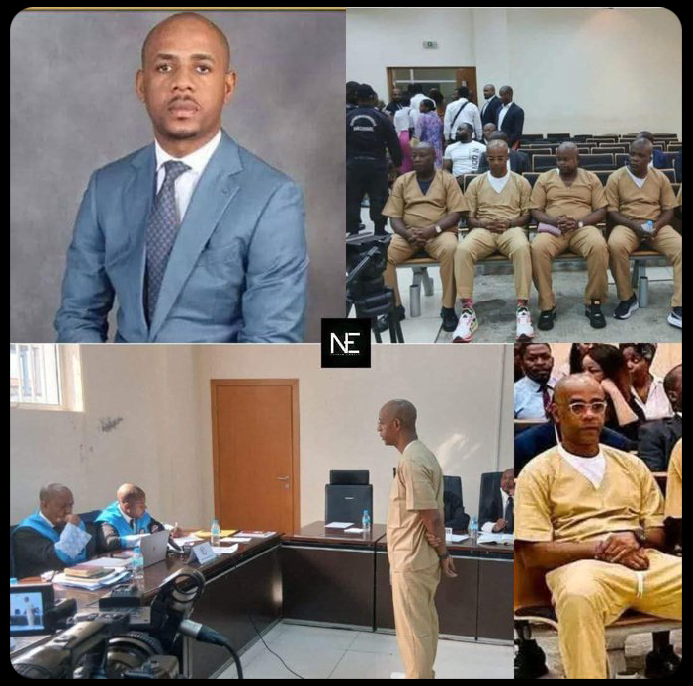

Engonga, a great-nephew of President Teodoro Obiang Nguema, was found guilty following an investigation that uncovered substantial sums of money traced to secret accounts linked to him. The trial, which began on 30 June 2025, focused on allegations of corruption and financial mismanagement during his tenure at ANIF, an agency tasked with combating financial crimes such as money laundering. Authorities seized Engonga’s phones and computers during a search of his home, revealing evidence that led to his conviction.
The case initially gained notoriety in November 2024 when over 400 explicit videos featuring Engonga surfaced online, sparking a global scandal. These videos, allegedly recorded with the consent of the women involved, included encounters with prominent figures’ spouses and were filmed in various locations, including Engonga’s office. While the Supreme Court of Equatorial Guinea acquitted him of charges related to the videos in November 2024, citing lack of evidence and consent of all parties, the corruption charges proved more substantial.
The court’s ruling has divided public opinion. Some view the 18-year sentence as a step towards accountability in a country often criticised for opaque governance and human rights abuses. Others, however, speculate that the trial reflects internal power struggles within Equatorial Guinea’s elite, given Engonga’s familial ties to President Obiang, who has ruled since 1979. The sentencing comes amidst ongoing scrutiny of the government, with allegations of torture and arbitrary detentions at Malabo’s Black Beach prison, where Engonga has been held since his arrest in October 2024.
Following his conviction, Engonga announced plans to pursue legal action against those responsible for leaking the explicit videos, claiming they violated his privacy and caused irreparable damage to his reputation and family life. The scandal has also prompted broader discussions about privacy, consent, and the ethics of digital content sharing in Equatorial Guinea, a nation where social media has increasingly become a platform for exposing political controversies.
The government has responded to the scandal by tightening restrictions on multimedia sharing over mobile data, citing the need to protect public morality and national image. Vice-President Teodoro Nguema Obiang Mangue has called for the installation of CCTV cameras in government offices to prevent misconduct, describing the affair as a “flagrant violation of the code of conduct” that tarnished the country’s reputation.
As Equatorial Guinea grapples with the fallout, the case underscores the challenges of balancing personal privacy with public accountability in the digital age. Engonga’s sentencing may signal a broader push to address corruption, but it also highlights the complexities of governance in a nation where political power and family ties are deeply intertwined.
The trial’s outcome has resonated beyond Equatorial Guinea, with social media platforms like X abuzz with reactions. Posts on X indicate mixed sentiments, with some users focusing on the embezzlement charges and others referencing the salacious details of the video scandal. As the story continues to unfold, it remains a focal point for debates about justice, morality, and the role of technology in shaping public discourse.
