


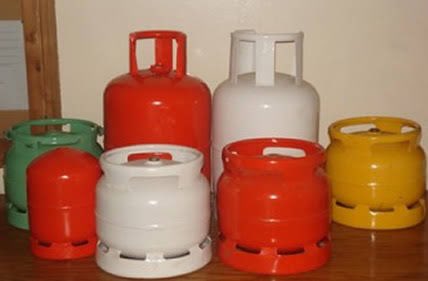
Cooking Gas Prices In Nigeria Surge, NBS Reports.
The cost of cooking gas in Nigeria has seen a sharp increase in June 2025, placing additional strain on households across the country. According to the National Bureau of Statistics (NBS), the average retail price for refilling a 12.5kg cylinder of Liquefied Petroleum Gas (LPG) rose by 33.52% year-on-year, reaching ₦21,010.56, up from ₦15,736.27 in June 2024. Similarly, the price for refilling a 5kg cylinder increased by 19.49% to ₦8,323.95, compared to ₦6,966.03 in the same period last year.
The NBS report highlights significant regional and state-level variations in prices. For 12.5kg cylinders, Delta State recorded the highest average price at ₦23,108.44, followed closely by Cross River at ₦22,982.89 and Rivers at ₦22,971.27. Yobe State offered the lowest average price at ₦19,000.00, with Niger and Jigawa also reporting relatively affordable rates at ₦19,242.48 and ₦20,025.94, respectively. Regionally, the South-South zone saw the highest average price for 12.5kg refills at ₦22,179.08, while the South-West recorded the lowest at ₦20,402.42.

For 5kg cylinders, Delta again topped the list with an average price of ₦9,243.38, followed by Cross River at ₦9,193.16 and Rivers at ₦9,188.51. Oyo State reported the lowest price at ₦7,100.00, with Plateau and Yobe close behind at ₦7,200.00 and ₦7,600.00, respectively. The South-South zone led with an average price of ₦8,871.63, while the South-West remained the most affordable region at ₦7,960.42.
On a month-on-month basis, the price of a 12.5kg cylinder increased by 1.46% from ₦20,709.11 in May 2025, while the 5kg cylinder saw a 1.92% rise from ₦8,167.43. The NBS attributes these increases to ongoing economic pressures, including high inflation and supply chain challenges, which continue to impact the cost of energy for Nigerian households.
The report comes amid broader concerns about the affordability of essential commodities, with the rising cost of cooking gas adding to the financial burden on low and middle-income families. The Nigerian Midstream and Downstream Petroleum Regulatory Authority (NMDPRA) recently closed 19 illegal LPG outlets in Delta State, a move aimed at regulating the market but which may also contribute to supply constraints driving prices higher.
As Nigerians grapple with these escalating costs, the NBS data underscores the need for targeted interventions to stabilise energy prices and alleviate the economic pressures facing households across the nation.
