


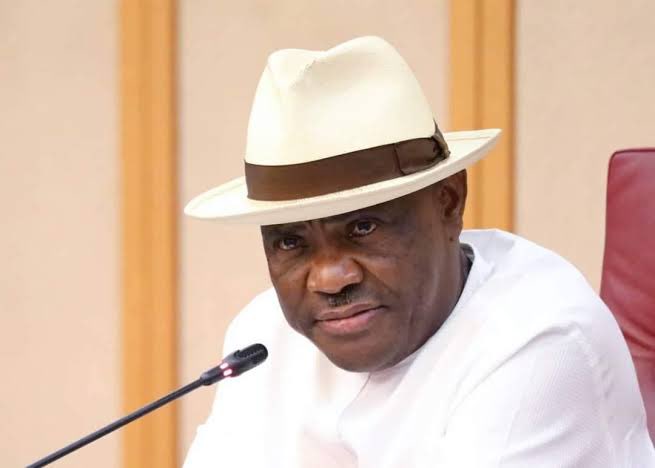
Wike Claims Credit For PDP’s Rise As Party Faces Internal Strife.
Nyesom Wike, the Minister of the Federal Capital Territory and former Rivers State Governor, has declared himself instrumental in transforming the Peoples Democratic Party (PDP) into a major political force in Nigeria, firing back at critics within the party. Speaking at an end-of-year thanksgiving event organised by PDP stakeholders in Ahoada East and Ahoada West at Ukpata community in Ekpeye Kingdom, Wike challenged detractors to match his contributions, asserting, “I have not seen anybody who will have the guts to tell me, ‘Wike, you are not a member of the party.’ Who is that? What is his contribution to the party that is more than me?”
Wike’s remarks, reported by Premium Times and Blueprint Newspapers, were a direct response to former PDP Board of Trustees member Bode George, who accused him of undermining the party. Wike highlighted his role in elevating the PDP’s prominence, notably by supporting Uche Secondus as national chairman in 2017 and later orchestrating his removal in 2021 when Secondus backed a rival candidate for Rivers State governor. “I kicked out Secondus as PDP chairman when he wanted to make his cousin Tele Ikuru to be governor,” Wike stated, underscoring his influence over party decisions.

The former governor’s comments come amid escalating tensions within the PDP, which remains deeply factionalised. Wike, a key figure in the now-defunct G5 group that opposed the PDP’s 2023 presidential candidate Atiku Abubakar, has been accused of aligning with the ruling All Progressives Congress (APC) while maintaining PDP membership. His decision to serve in President Bola Tinubu’s APC-led government and his public support for Tinubu’s 2027 re-election bid have fuelled criticism, with Bauchi State Governor Bala Mohammed labelling him a “transactional politician” whose loyalty shifts for personal gain.
The PDP’s internal crisis has been exacerbated by Wike’s feud with his successor, Rivers State Governor Siminalayi Fubara, and his perceived control over the party’s National Working Committee (NWC), led by acting National Chairman Umar Damagum. Over 60 PDP House of Representatives members have called for Damagum’s removal, citing his ties to Wike, while the party’s national secretariat in Abuja was sealed over unpaid ground rent—a move some attribute to Wike’s influence as FCT Minister.
Despite these controversies, Wike remains defiant, daring the PDP to suspend him and dismissing claims of disloyalty. The party’s leadership faces a critical test as it prepares for a National Executive Committee meeting in February, with stakeholders urging a clear stance on the 2027 presidential ticket to avoid a repeat of the 2023 electoral setbacks.
As the PDP grapples with its identity as Nigeria’s main opposition, Wike’s bold claims underscore his enduring influence, even as they deepen the party’s divisions. With the 2027 elections looming, the PDP must navigate these internal rifts to mount a credible challenge against the APC.
