


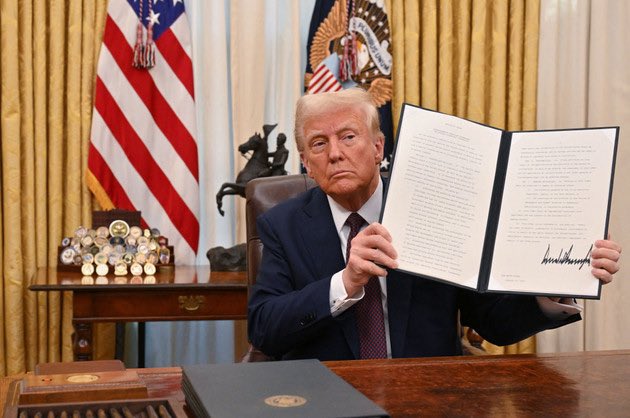
Trump Administration Permits Bibles And Crosses In Federal Workplaces.
In a significant move to bolster religious expression, the Trump administration has issued new guidance allowing federal employees to display religious items such as Bibles, crosses, and other symbols in their workplaces. The directive, announced on 28 July 2025, also permits workers to engage in religious conversations and organise prayer groups during non-working hours, marking a notable shift in workplace policy.
The guidance, issued by the U.S. Office of Personnel Management (OPM) under Director Scott Kupor, clarifies protections under the First Amendment and existing federal law, including Title VII of the Civil Rights Act of 1964. It ensures employees can keep religious items like Bibles, crucifixes, mezuzahs, or rosaries at their desks or wear religious symbols, such as crosses, without fear of disciplinary action. The memo also allows employees to discuss their faith, including attempts to persuade colleagues of their beliefs, provided such conversations remain non-harassing and cease if a colleague objects.

Federal workers are further permitted to form prayer or religious study groups in empty office spaces during breaks, with the guidance citing examples such as reading a Bible during downtime or posting notices for religious services on communal boards. Public-facing employees, such as park rangers or Veterans Affairs doctors, may also join members of the public in prayer, reinforcing the administration’s stance on religious liberty.
OPM Director Scott Kupor stated, “Federal employees should never have to choose between their faith and their career. This guidance ensures the federal workplace is welcoming to Americans of all faiths.” The policy follows President Trump’s executive order aimed at addressing perceived anti-Christian bias in government, a move that has sparked both praise and criticism.
Supporters, including religious advocacy groups, have hailed the directive as a victory for constitutional freedoms. Michael Ross of the Alliance Defending Freedom told Catholic News Agency, “No American should have to check their faith at the door when they walk into the workplace.” CatholicVote President Kelsey Reinhardt echoed this sentiment, describing the policy as a reaffirmation of America’s founding principles, where faith is “boldly woven into the fabric of public life.”
However, the guidance has drawn sharp criticism from advocates of church-state separation. The Freedom From Religion Foundation labelled the policy “outrageous and unconstitutional,” arguing it enables workplace evangelising and could pressure employees, particularly when supervisors promote their faith. Critics, including Mikey Weinstein of the Military Religious Freedom Foundation, expressed concerns about the potential for coercion, questioning how employees might fare in career advancement if they resist proselytising efforts.
The administration noted that similar guidelines were issued under President Bill Clinton in 1997, though the current policy is seen as broader in scope. It also aligns with recent Supreme Court rulings, including the 2023 Groff v. DeJoy decision, which expanded workplace religious accommodations, and a 2022 case supporting a high school coach’s right to pray with players.
While the policy applies to all faiths, some conservative voices on social media expressed unease that it extends to non-Christian symbols, such as Jewish mezuzahs or Islamic items. Nonetheless, the administration maintains that the guidance fosters an inclusive environment for all religious expressions, provided they adhere to legal boundaries against harassment or disruption.
This development comes amid broader efforts by the Trump administration to integrate religious values into federal operations, including the establishment of a White House Faith Office and a presidential commission on religious liberty. As agencies review their policies to align with the new standards, the debate over balancing religious freedom and workplace neutrality is likely to intensify.
