


Thousands Of Palestinians Return To Northern Gaza Amid Hope And Devastation.
Hundreds of thousands of Palestinians have begun their return to northern Gaza after Israeli authorities opened routes through the Netzarim Corridor. Drone footage captured the powerful sight of countless people walking along the coastal route, as they made their way back to their homes. However, those travelling by car face extensive delays, with checkpoints causing waits that could last for days.
The return had been anticipated on Saturday, but a dispute over the fate of an Israeli hostage, Arbel Yehud, delayed the movement. Now, many are making the long journey on foot, carrying with them a mix of hope and trepidation.

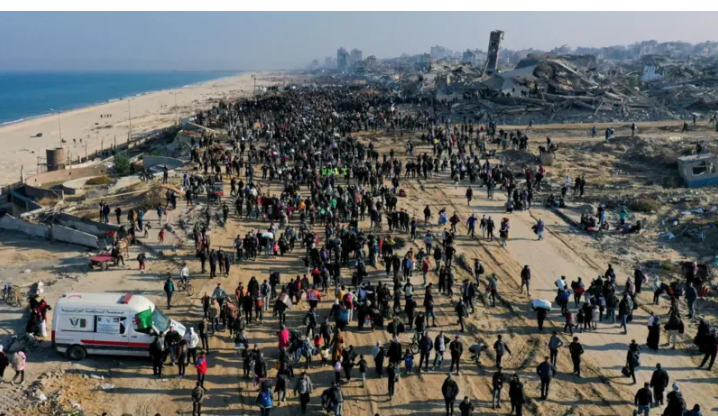
Reports from Gaza reveal the profound destruction left in the wake of recent conflict. Satellite imagery indicates that northern Gaza, especially Gaza City, is the most heavily damaged area in the region, with an estimated 74% of buildings either damaged or completely destroyed. Stories of devastation are emerging as people return. One man arrived to find his house burned down and his business looted, while another woman discovered her husband living in a tent.
Fatima el-Helo, a 55-year-old displaced woman from Khan Younis in southern Gaza, shared her bittersweet feelings about returning north. “We are very happy to be going back. We have suffered a lot,” she said. Fatima, whose son was killed in an Israeli strike last year, broke into tears as she reflected on the significance of this moment. “Thank God we are going back safe, and that God stopped the war and stopped the waterfall of blood.” She added that while they had dismantled everything in preparation, the lack of transportation meant they would be walking the journey home.
The international response to the crisis remains sharp. Over the weekend, US President Donald Trump proposed resettling Palestinians in Jordan and Egypt as part of what he referred to as a “clean out” of Gaza. The suggestion was met with immediate rejection from both countries, along with widespread criticism. A member of Hamas’ political bureau told the BBC that Gazans would resist any displacement or alternative homeland plans.
Germany’s foreign ministry joined the condemnation, emphasising that the European Union, Arab partners, and the United Nations agree that the Palestinian population must not be expelled from Gaza. A German spokesperson reiterated that Gaza should neither be permanently occupied nor recolonised by Israel.
As Fatima and others take the first steps towards rebuilding their lives, the weight of loss and the hope for peace remain palpable. Despite the challenges, the resilience of the people of Gaza shines through in their determination to reclaim their homes and future.
