


South Korean Presidential Office Raided Amid Martial Law Controversy.
South Korea’s political landscape remains in turmoil as police raided the presidential office in Seoul, escalating the crisis surrounding President Yoon Suk Yeol’s attempt to impose martial law last week.
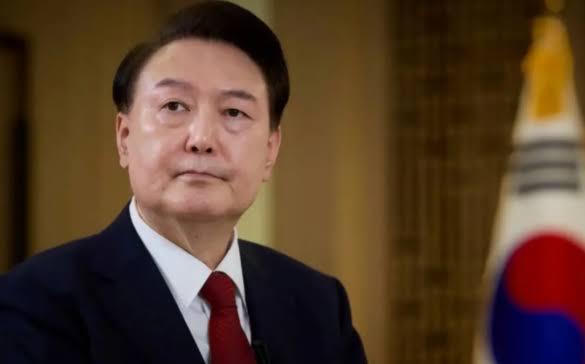
The raid, which took place on Wednesday, was part of a broader investigation into allegations of insurrection and treason against President Yoon, who has resisted mounting calls for his resignation despite facing an impeachment vote. Local media reported that 18 investigators were dispatched to seize records from a cabinet meeting held on the night the martial law was declared.

President Yoon, named as a suspect on the search warrant, was not present in his office during the operation. Experts have suggested that the raid signals increased pressure on Yoon and his allies. Mason Richey, a professor at Hankuk University of Foreign Studies, stated that the investigation appears to be gaining momentum, with impeachment and potential criminal charges looming for the president.
The fallout from the attempted martial law has already led to significant political upheaval. Former Defence Minister Kim Yong-hyun, who took responsibility for the declaration, was arrested on Sunday. While in detention, Kim reportedly attempted suicide but is now under medical observation and has no critical health issues, according to the Defence Ministry.
Several officials close to Yoon have resigned in the wake of the incident, and the country is in a state of political flux. Lawmakers from the ruling party have rallied to support Yoon by boycotting a vote to impeach him after he agreed to shorten his term and refrain from participating in domestic and foreign affairs. However, the opposition Democratic Party, which holds a parliamentary majority, has denounced the agreement as unconstitutional, with its floor leader, Park Chan-dae, labelling it a “second insurrection.”
Protests have continued across the country, with demonstrators calling for Yoon’s resignation. The president’s authority remains uncertain, with experts suggesting he may face arrest and questioning as the investigations proceed.
The situation has drawn comparisons to previous political scandals in South Korea. The last time a presidential office was searched was in December 2019 during a corruption probe under then-President Moon Jae-in. Unlike the current raid, the material in that case was handed over to investigators as per protocol, avoiding a physical search of the office grounds.
President Yoon, who took office in 2022, now faces the most significant challenge of his presidency as South Korea’s political stability hangs in the balance.
