


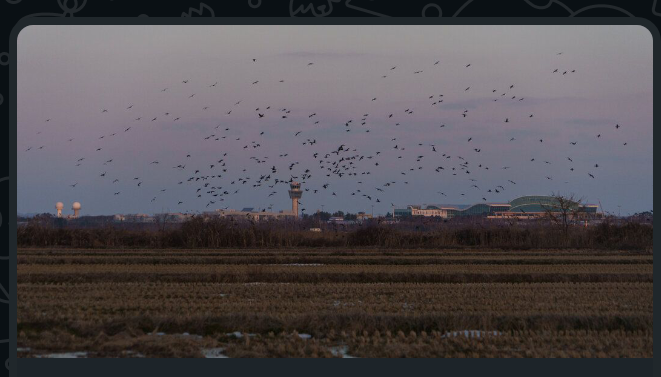
South Korea To Deploy Drones Against Birds Strike In Aviation Safety Overhaul Following Deadly Jeju Air Crash.
South Korea has unveiled a comprehensive set of aviation safety measures, including the deployment of drones to deter birds at airports, in response to the tragic Jeju Air Flight 2216 crash that claimed 179 lives last December. The initiative, announced by the government on Wednesday, aims to bolster safety protocols and prevent future disasters at the nation’s airports.
The Jeju Air crash occurred on 29 December at Muan International Airport in southwest South Korea, when the pilots reported a bird strike during descent and declared a “Mayday.” The aircraft, after a sharp turn, crash-landed on its belly, slid down the runway, and collided with a concrete localizer antenna, erupting into a fireball. Only two of the 181 people on board survived. While investigators have yet to determine the exact cause of the crash, bird feathers and blood found in both engines have pointed to a possible bird strike as a contributing factor.

To address such risks, South Korea’s transport ministry revealed plans to deploy drones at airports starting in the first half of 2025 to prevent birds from nearing flight paths. By the end of 2026, advanced drones capable of identifying birds and releasing repellents will be developed, with a nationwide rollout planned for 2028. Muan International Airport, located near wetlands that attract large bird populations, had been flagged for bird strike risks for years, according to a New York Times investigation.
The government also committed to upgrading infrastructure at six airports by year-end, including replacing concrete localizers—such as the one involved in the Muan crash—with frangible structures designed to break apart on impact, reducing the risk of catastrophic collisions. Additional measures include tackling pilot fatigue and increasing the number of safety supervisors to enhance oversight.
Aviation safety experts have welcomed the use of drones, noting their effectiveness in scaring away flocks of birds, a common practice at airports worldwide. The transport ministry’s swift response underscores South Korea’s determination to strengthen aviation safety following the nation’s deadliest air disaster.
As investigations into the Jeju Air crash continue, these proactive steps signal a commitment to protecting passengers and preventing future tragedies, offering hope for safer skies in South Korea.
