


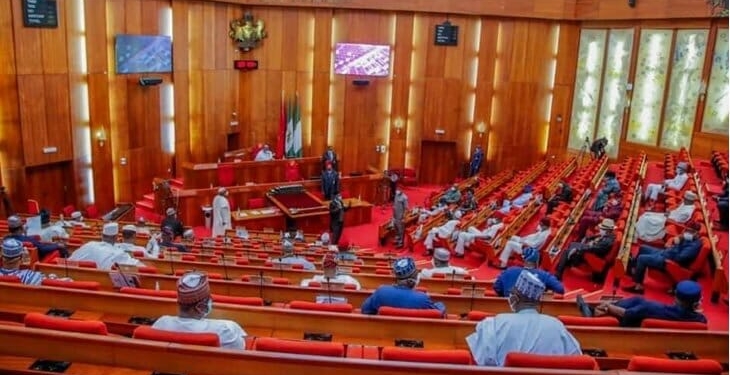
Senate Advances Bill To Streamline Asset Recovery, Stripping EFCC And ICPC Of Management Powers.
The Nigerian Senate has passed the Proceeds of Crime (Recovery and Management) Amendment Bill 2025 for its second reading on Tuesday, 20 May 2025. The legislation, sponsored by Senator Idiat Adebule (APC, Lagos West), seeks to strip the Economic and Financial Crimes Commission (EFCC), the Independent Corrupt Practices and Other Related Offences Commission (ICPC), and other anti-graft agencies of their authority to manage assets recovered from unlawful activities, proposing instead the creation of a centralised, independent agency to oversee the process.
The bill aims to address inefficiencies in the current system, where up to 18 agencies, including the EFCC, ICPC, Nigeria Customs Service, and National Drug Law Enforcement Agency (NDLEA), share overlapping responsibilities for investigating, recovering, and managing proceeds of crime. Speaking during the Senate debate, Senator Adebule highlighted that this fragmented framework has led to poor coordination, lack of transparency, and potential for mismanagement. “The existing structure results in operational gaps and financial leakages. A dedicated agency will ensure accountability and streamline asset recovery,” she stated.

A key feature of the bill is the establishment of a Confiscated and Forfeited Properties Account, to be managed by the Accountant General of the Federation at the Central Bank of Nigeria. This account would serve as a transparent repository for all recovered funds, enhancing accountability. The proposed agency would also coordinate with international governments to recover assets, aligning with existing laws like the Mutual Assistance in Criminal Matters Bill recently passed by the Senate.
However, the bill has sparked debate. Senator Emmanuel Udende (APC, Benue North-East) opposed the legislation, arguing that agencies like the EFCC are already equipped to manage recovered assets. “Creating another agency risks redundancy and wasteful expenditure,” he cautioned. In contrast, Senator Isah Jibrin (APC, Kogi East) supported the bill, asserting that a centralised body would close loopholes and curb inefficiencies.
The bill’s passage for second reading follows its first reading on 14 February 2024. It has now been referred to the Senate Committee on Judiciary, Human Rights, and Legal Matters for further scrutiny, with a report expected within four weeks. Critics of the bill, including voices from the EFCC and ICPC, have previously expressed concerns about similar proposals, noting that stripping existing agencies of their powers could undermine their mandates and duplicate roles already covered under laws like the EFCC Act.
Proponents, however, see the legislation as a bold move to modernise Nigeria’s anti-corruption framework. The Proceeds of Crime Act 2022, which this bill seeks to amend, was hailed as a step towards better asset management, but challenges such as inadequate funding and manpower have hindered its implementation. The creation of a dedicated agency could align Nigeria with international best practices, ensuring recovered assets directly benefit the nation’s coffers and its people.
As the bill progresses, stakeholders are watching closely to see how it will balance the need for efficiency with the preservation of existing anti-graft agencies’ roles. If passed into law, this reform could mark a turning point in Nigeria’s fight against corruption, promising greater transparency and accountability in the management of recovered assets.
