


Russian Delegation Arrives In Istanbul For Ukraine Peace Talks Without Putin.
A Russian delegation has landed in Istanbul to engage in the first direct peace talks with Ukraine in over three years, though notably without President Vladimir Putin, despite calls from world leaders for his attendance. The negotiations, set to take place at the historic Dolmabahce Palace, mark a significant moment in the ongoing conflict, which has claimed countless lives and destabilised the region since Russia’s full-scale invasion in February 2022.

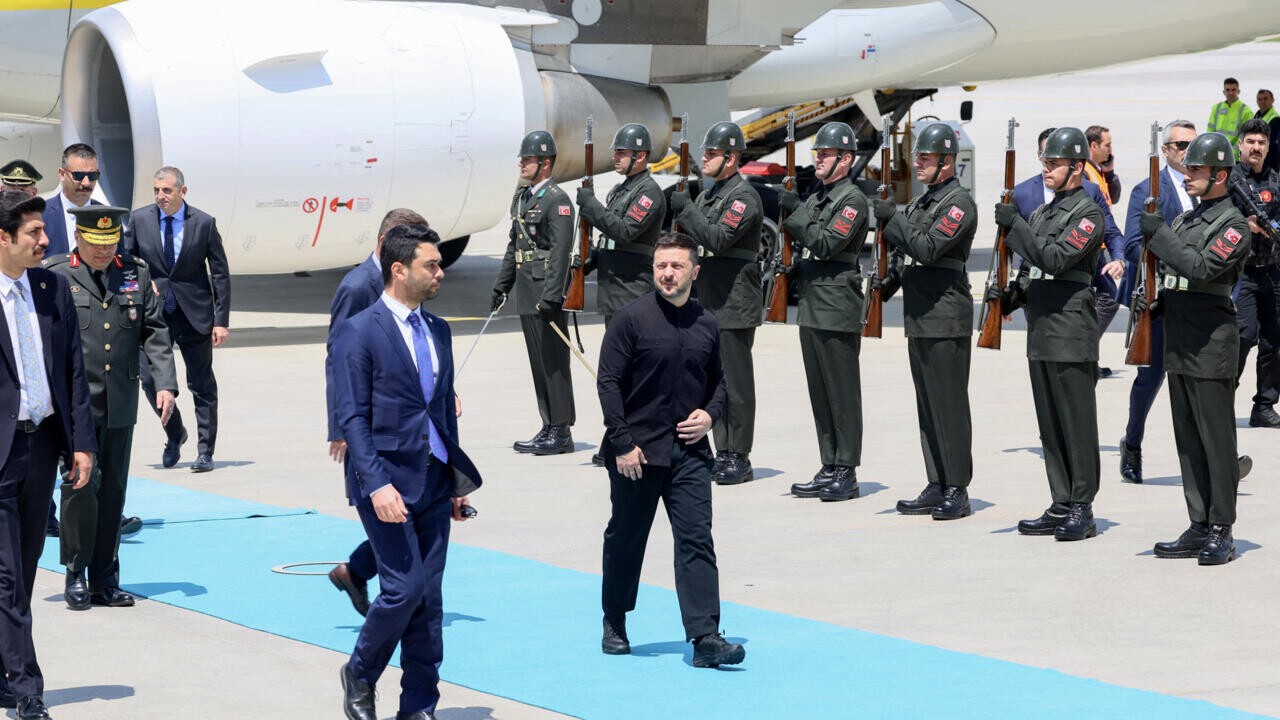
The Kremlin confirmed that Putin would not attend, opting instead to send a delegation led by presidential aide Vladimir Medinsky, a hardline figure who previously headed failed talks in 2022. The team includes Deputy Foreign Minister Mikhail Galuzin, Deputy Defence Minister Alexander Fomin, and Igor Kostyukov, head of Russia’s military intelligence agency. The absence of high-ranking officials such as Foreign Minister Sergei Lavrov has drawn criticism, with Ukrainian President Volodymyr Zelenskyy describing the delegation as “more theatrical than substantive” upon his arrival in Ankara for discussions with Turkish President Recep Tayyip Erdogan.
Zelenskyy, who had challenged Putin to attend in person, expressed scepticism about Russia’s intentions, stating, “We all know who makes decisions in Russia.” He confirmed that Ukraine would send a high-level delegation to Istanbul, led by Defence Minister Rustem Umerov and including Foreign Minister Andrii Sybiha and presidential adviser Andriy Yermak, though they remained in Ankara as of midday, awaiting the outcome of Zelenskyy’s meeting with Erdogan. “We can’t be running around the world looking for Putin,” Zelenskyy told reporters, underscoring his frustration at the lack of a clear agenda or high-level Russian representation.
The talks follow Putin’s surprise proposal on Sunday for direct negotiations, a counteroffer to a Western-backed call for a 30-day unconditional ceasefire. European leaders, including German Chancellor Friedrich Merz and French President Emmanuel Macron, have insisted that a ceasefire must precede any meaningful discussions, with Merz warning against a “dictated peace” imposed by Moscow. NATO Secretary General Mark Rutte, speaking from a meeting in Antalya, expressed cautious optimism but stressed that progress depends on Russia’s willingness to engage constructively.
U.S. President Donald Trump, who has pushed for a swift resolution to the conflict, cast doubt on the talks’ prospects, stating, “Nothing’s going to happen until Putin and I get together.” Trump, currently on a Middle East tour, will not attend, though his envoys Steve Witkoff and Secretary of State Marco Rubio are expected in Istanbul on Friday. Trump’s earlier endorsement of the talks had raised hopes, but his absence, coupled with Putin’s no-show, has tempered expectations.
Turkey, a NATO member with a history of mediating between Moscow and Kyiv, has positioned itself as a neutral host. Erdogan, who has maintained a “special relationship” with Putin, reaffirmed Turkey’s readiness to facilitate peace, having previously brokered the Black Sea Grain Initiative in 2022. However, confusion over the talks’ schedule emerged, with Russia’s state news agency TASS claiming a morning start, a report dismissed by Ukraine as “fake news.” The Turkish Foreign Ministry clarified that no meeting was officially scheduled, adding to the uncertainty.
Analysts suggest Putin’s decision to send a lower-level delegation signals a continuation of Russia’s hardline stance, with demands including Ukraine’s permanent neutrality, demilitarisation, and recognition of Russian-occupied territories. Kyiv, in contrast, insists on an immediate ceasefire and refuses to cede territory. Russian political analyst Vladimir Pastukhov described the delegation as a sign that Putin has “chosen war over de-escalation,” while Estonian Foreign Minister Margus Tsahkna called it a “slap in the face” to diplomatic efforts.
As the delegations prepare to meet, the world watches closely. The talks, if they proceed, could lay the groundwork for a ceasefire or reveal the depth of the divide between the two sides. For now, the absence of key leaders and the lack of a clear agenda cast a shadow over hopes for a breakthrough in Istanbul.
