


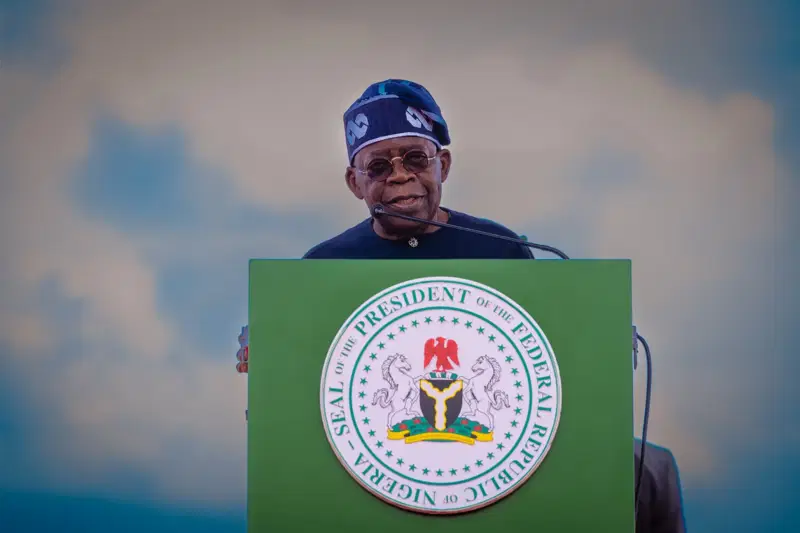
President Tinubu Leads With 4.5 Million Followers As Ministers Struggle With Digital Visibility.
President Bola Tinubu dominates Nigeria’s digital landscape with a staggering 4.5 million followers across major social media platforms, but a new report reveals a stark contrast in the online presence of his cabinet, with most ministers failing to engage effectively with the public. The Nigerian Cabinet Social Media Report 2025, published by UK-based digital strategy firm Column, highlights a significant gap in digital engagement, raising concerns about transparency and accessibility in governance.

The report, released on July 17, 2025, indicates that Nigeria’s 51 ministers collectively command an audience of approximately 17 million followers across five key platforms: Twitter (X), Facebook, Instagram, TikTok, and LinkedIn. However, over 60% of this digital footprint is concentrated among just five individuals, with President Tinubu alone accounting for 26.6% of the cabinet’s total reach. Following him are Chief of Staff Femi Gbajabiamila with 1.6 million followers, Health Minister Muhammad Ali Pate with 1.46 million, Aviation Minister Festus Keyamo with 1.37 million, and FCT Minister Nyesom Wike with 1.33 million. In contrast, two ministers have no social media presence at all, and several others have fewer than 500 followers or maintain dormant accounts.
Twitter (X) remains the platform of choice, with the cabinet amassing 9.4 million followers, followed by Facebook with 4.8 million and Instagram with 2.2 million. However, only seven ministers are active on TikTok, which has just 537,000 followers, and 17 on LinkedIn, with a mere 117,000 followers, despite these platforms’ growing relevance among Nigeria’s youth and professionals. Hannatu Musawa, Minister of Arts, Culture, and Creative Economy, stands out as the only minister active on all five platforms, showcasing a model for digital engagement. Meanwhile, ministries with public-facing mandates, such as Youth, Education, and Information, are among the least visible, despite their critical role in addressing Nigeria’s challenges like youth unemployment and public distrust.
The report underscores the importance of digital presence in modern governance, particularly in a country with a population exceeding 236 million, where 39% are active internet users and social media penetration is projected to reach 103 million by 2026. “Visibility is not about vanity; it’s a core part of public service,” said Dr. Mo Shehu, CEO of Column. “If ministers aren’t where the people are, trust and transparency suffer.” The study warns that the lack of engagement on platforms like TikTok and LinkedIn represents a missed opportunity to connect with Nigeria’s youthful and professional demographics.
Health Minister Muhammad Ali Pate’s consistent updates and multi-platform strategy during public health campaigns have earned him praise for transparency, while others, including ministers of Justice, Finance, and Petroleum Resources, fall below the median reach of 64,600 followers. The report flags 22 ministers with missing or unverified social media accounts, noting that inactive or unverified profiles risk misinformation and impersonation. It also highlights the absence of links to ministers’ accounts on ministry websites, further limiting public access.
The findings have sparked calls for ministers to adopt platform-specific strategies to bridge the digital divide. With Nigeria facing economic challenges and a growing demand for accountability, the report argues that a robust online presence is essential for fostering dialogue and rebuilding trust. President Tinubu’s digital dominance sets a high bar, but the report urges his cabinet to follow suit, ensuring that governance is as accessible and responsive as the digital age demands.
