


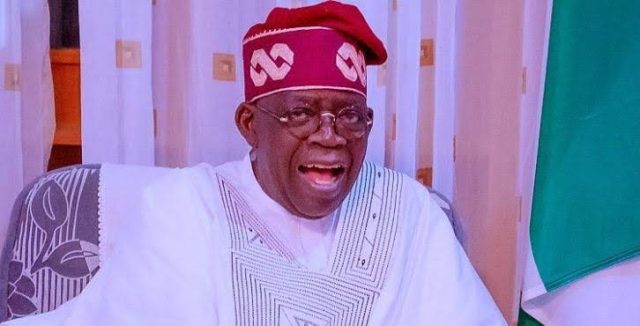
President Tinubu Celebrates Two Years Of Transformative Governance In Nigeria.
President Bola Ahmed Tinubu has marked the second anniversary of his administration with a comprehensive statement highlighting significant achievements that have reshaped Nigeria’s economic and social landscape. Reflecting on his tenure, the President outlined a series of milestones that underscore his commitment to economic renewal, infrastructure development, and security enhancements.
Among the standout accomplishments is the Presidential Loan and Grant Scheme, which has empowered over 900,000 Nigerians with financial support to foster entrepreneurship and economic growth. Additionally, the Students’ Loan Scheme has provided opportunities for over 300,000 young Nigerians to access tertiary education, reinforcing the administration’s focus on human capital development.

In a bold move to stabilise the economy, President Tinubu’s government cleared over $10 billion in foreign exchange debt, a critical step towards restoring fiscal discipline. The administration also reported a remarkable increase in Net Foreign Exchange Reserves, rising from $3.99 billion in 2023 to $23.11 billion in 2024, bolstering Nigeria’s economic resilience.
Infrastructure development has been a cornerstone of the President’s agenda, with over 440 ongoing road projects, including 2,700km of superhighways, aimed at improving connectivity and boosting regional trade. These projects, such as the Lagos-Calabar Coastal Highway and the Sokoto-Badagry Super Highway, are set to enhance economic activity and accessibility across urban and rural areas.
Economic indicators reflect the impact of these reforms. Nigeria achieved a 3.84% GDP growth in the fourth quarter of 2024, the highest in three years, with full-year growth reaching 3.4%. The World Bank projects a 3.6% growth rate for 2025, attributing this to Tinubu’s fiscal and monetary policies.
The administration’s commitment to workers’ welfare was evident in the introduction of a new national minimum wage of N70,000, a significant step towards improving living standards. Furthermore, the passage of four landmark tax bills has increased the tax-to-GDP ratio from 10% to 13.5% in 2024, streamlining the tax system and reducing the burden of multiple taxation on small businesses.
Security remains a priority, with over 13,500 terrorists neutralised and more than 8,000 kidnap victims rescued in 2024. These efforts have restored order in parts of the northwest, enabling farmers to return to their lands and boosting agricultural productivity.
The oil and gas sector has seen a resurgence, with over $8 billion in new investments committed, alongside a 400% increase in rig counts compared to 2021. The solid minerals sector also flourished, attracting over $800 million in processing investments, contributing to a six-fold increase in revenue.
President Tinubu’s administration has also established five new Regional Development Commissions to address Nigeria’s diverse regional challenges, promoting decentralisation and inclusive growth.
In his address, the President acknowledged the challenges faced, including a temporary rise in the cost of living due to bold reforms like fuel subsidy removal and exchange rate unification. However, he noted that inflation is easing, with prices of staples like rice declining, and the fiscal deficit has narrowed from 5.4% of GDP in 2023 to 3.0% in 2024.
Deputy Speaker of the House of Representatives, Hon. Benjamin Kalu, praised the President’s achievements, expressing confidence in the administration’s ability to drive further progress. He urged Nigerians to support the government’s Renewed Hope Agenda, which continues to lay the foundation for a prosperous Nigeria.
As President Tinubu’s administration looks ahead, the focus remains on sustaining economic growth, enhancing security, and empowering Nigerians through innovative policies. With these achievements, Nigeria is transitioning from reform to recovery, positioning itself as an investor-friendly destination with a bright future.
