


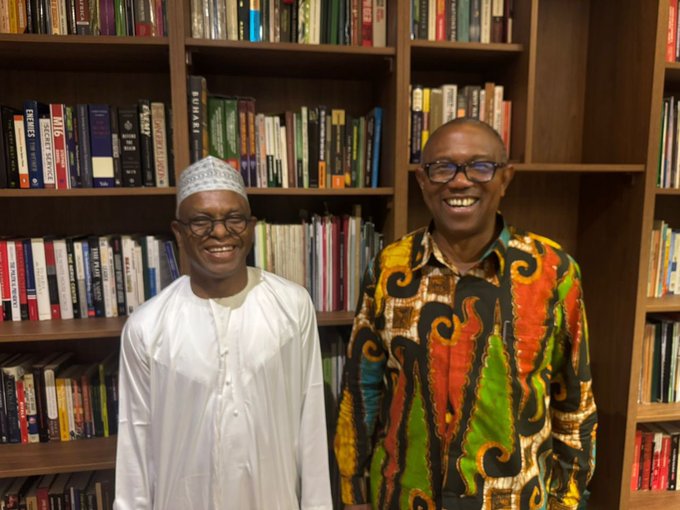
Peter Obi Meets Nasir El-Rufai In Abuja, Sparking Political Speculation.
Peter Obi, the Labour Party’s 2023 presidential candidate and former Governor of Anambra State, paid a visit to Malam Nasir El-Rufai, the former Governor of Kaduna State, at his residence in Abuja on Friday 25th. The meeting, confirmed by multiple sources including posts on X, has ignited widespread discussion about its potential political implications as Nigeria approaches the 2027 general elections.

The private meeting between Obi and El-Rufai, both prominent figures in Nigerian politics, comes amid reports of their involvement in an opposition coalition aimed at challenging President Bola Tinubu’s All Progressives Congress (APC) in 2027. El-Rufai, who recently defected from the APC to the Social Democratic Party (SDP) and later joined the African Democratic Congress (ADC), is a key player in this coalition. Obi, still a member of the Labour Party, has publicly declared his intention to contest the presidency again in 2027. The coalition, which also includes former Vice President Atiku Abubakar, is reportedly grappling with internal debates over its presidential candidate, with El-Rufai advocating for a southern candidate until 2031.
While the specifics of their discussion remain undisclosed, analysts suggest the meeting could be part of ongoing efforts to strengthen the opposition’s strategy. The coalition, spearheaded by the ADC, has been navigating challenges, including disagreements over leadership and candidacy, with some members reportedly hesitant due to Atiku’s insistence on securing the presidential ticket. Obi and El-Rufai’s engagement may signal attempts to resolve these tensions and consolidate support for a unified front.
This is not the first time the two have crossed paths recently. Both were among opposition leaders who visited Daura, Katsina State, on 16 July 2025, to pay condolences to the family of the late former President Muhammadu Buhari. Their continued interactions highlight a growing alignment among opposition figures, despite past tensions. Notably, El-Rufai had previously claimed that Obi detained him for 48 hours during a 2013 visit to Anambra for election monitoring, a claim debunked by Labour Party chieftain Aisha Yesufu as baseless propaganda aimed at disrupting the coalition’s unity.
The meeting has drawn mixed reactions online. Some Nigerians view it as a positive step towards building a robust opposition, with one X user describing Obi’s diplomatic approach as “strategic and calculated.” Others, however, expressed scepticism, questioning the secrecy of the talks and demanding greater transparency from political leaders. The visit follows Obi’s meeting earlier that day with former Niger State Governor Babangida Aliyu, also in Abuja, suggesting a busy day of political consultations for the Labour Party stalwart.
As Nigeria grapples with economic challenges and political uncertainty, the Obi-El-Rufai meeting underscores the dynamic nature of the country’s political landscape. With the 2027 elections looming, such engagements could shape the opposition’s ability to present a formidable challenge to the ruling party. For now, Nigerians await further clarity on the outcomes of these high-stakes discussions, hopeful that they will contribute to a stronger, more inclusive democratic process.
