


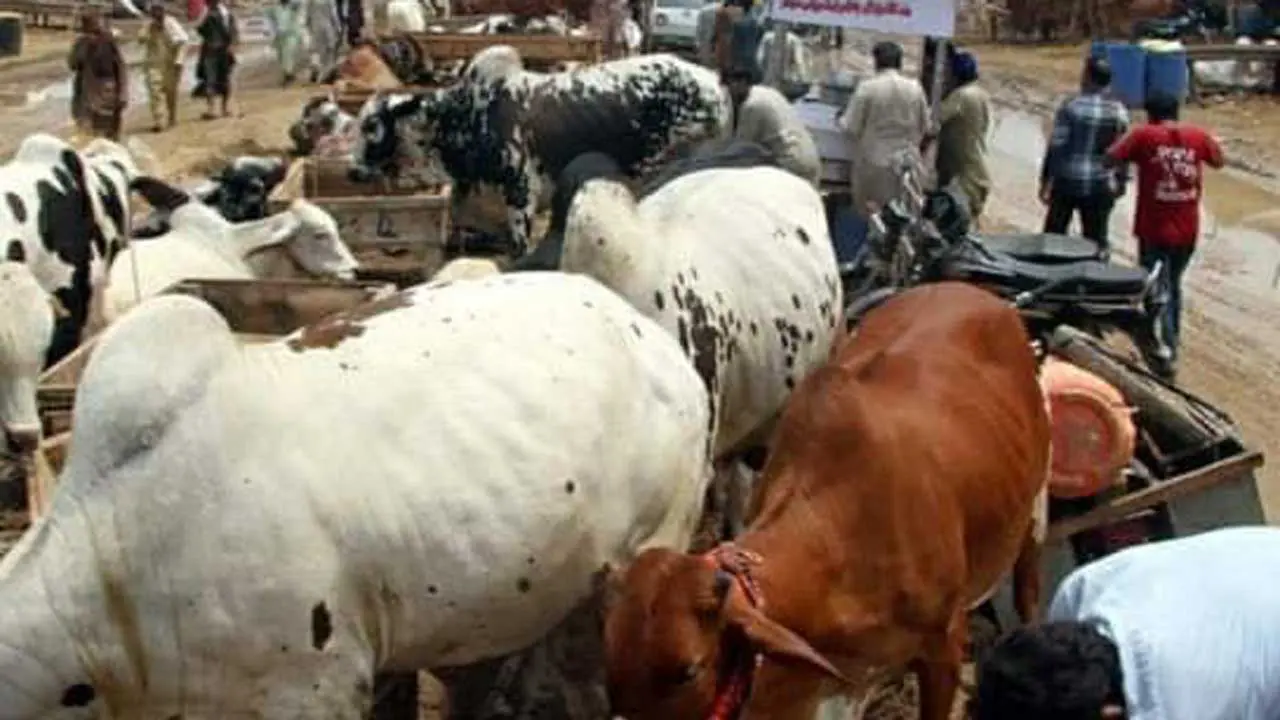
Oyo State Cracks Down On Open Grazing, Seizes 58 Cows In Two Years.
The Oyo State Government has reaffirmed its commitment to enforcing its anti-open grazing law, with over 58 cows seized and numerous herdsmen prosecuted over the past two years for breaching the regulation. The announcement, made by the state’s Commissioner for Agriculture and Rural Development, Barrister Olasunkanmi Olaleye, underscores the government’s determination to protect farmlands and ensure food security in the region.
Speaking at an inter-ministerial press briefing in Ibadan on Thursday, 19 June 2025, Olaleye declared that the anti-open grazing law, passed by the Oyo State House of Assembly in 2019 and signed into law by Governor Seyi Makinde, remains in full force. “More than 58 cows have been arrested in the last two years, and several herdsmen have been charged in court for violating the law,” he stated, warning that anyone found flouting the regulation would face the full weight of legal consequences.

The enforcement of the law is part of a broader effort to curb the recurring clashes between herders and farmers, which have disrupted agricultural activities and threatened food security across Nigeria. In Oyo, the government has prioritised creating a safe environment for farmers, with Olaleye asserting, “Oyo State is the safest for farmers. We have vast arable farmlands and the highest number of Amotekun personnel to ensure security.”
To bolster these efforts, the state has established a security post at the Ijaye Farm Settlement, aimed at strengthening protection for agricultural communities. The commissioner highlighted that these measures have made Oyo an attractive destination for commercial farming, encouraging farmers to invest in large-scale agricultural ventures.
The anti-open grazing law has been hailed as a critical step in addressing the destruction of crops caused by unchecked cattle grazing, a problem that has fuelled tensions in several Nigerian states, including Benue, Plateau, and Nasarawa. In Oyo, the government’s proactive stance has been welcomed by farmers, who have long called for stricter measures to protect their livelihoods. “This law is a lifeline for us,” said Mrs. Adeola Fasuyi, a farmer in Iseyin. “Our crops were being destroyed by cattle, but now we feel the government is listening.”
The enforcement actions have not been without controversy, however. Some herders argue that the law unfairly targets their traditional practices, calling for dialogue to find sustainable solutions. Nonetheless, the Oyo State Government remains steadfast, with Olaleye reiterating that violators will face prosecution to deter further breaches.
The crackdown on open grazing aligns with broader efforts to modernise agricultural practices in Nigeria. Analysts have urged states to adopt policies that promote ranching and designated grazing zones to reduce conflicts and enhance productivity. Oyo’s approach, combining legal enforcement with security measures, is being closely watched as a potential model for other states grappling with similar challenges.
As Oyo State continues to enforce its anti-open grazing law, the government has called on all stakeholders to support its efforts to create a peaceful and prosperous agricultural sector. With food security a pressing national concern, such measures are seen as vital to ensuring stability and economic growth in the region.
