


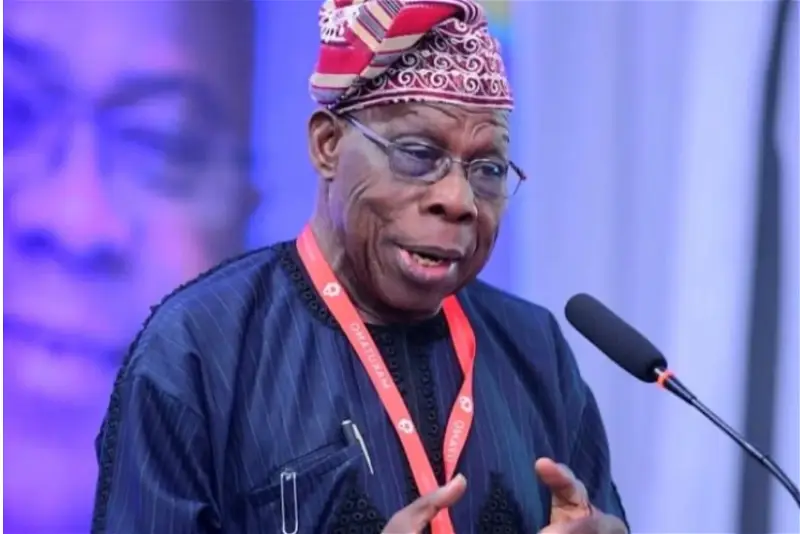
Obasanjo Urges African Leaders To Break Free From Foreign Aid Dependency.
Former Nigerian President Olusegun Obasanjo has called on African leaders to end the continent’s reliance on foreign aid, citing it as a major barrier to sustainable development. Speaking at the 32nd Annual Meeting of the African Export-Import Bank (Afreximbank) in Abuja, Obasanjo delivered a passionate critique of Africa’s economic stagnation, attributing it to overdependence on external loans, poor leadership, and a lack of economic literacy among the continent’s political elite.
Obasanjo, addressing a panel titled “African Renaissance in an Era of Turbulence: Are the Lions Still on the Move?”, lambasted the continent’s so-called “giants” – Nigeria, Egypt, Ethiopia, the Democratic Republic of Congo, and South Africa – for failing to leverage their demographic and resource advantages to drive meaningful growth. “Africa’s lions are not pulling their weight,” he stated, noting that while Egypt has shown some progress, others, including Nigeria, are “moving in circles – two steps forward, one step back.

The former president highlighted Africa’s “addiction to foreign help” as a critical impediment to progress. He pointed out that African nations frequently seek loans from countries like China, with sums as large as $20 billion, despite the continent’s capacity to generate such funds domestically. “One African country alone can generate that kind of money if well-governed,” Obasanjo remarked, urging leaders to harness internal wealth and resources instead of relying on external assistance.
Obasanjo also criticised the lack of economic understanding among African leaders, arguing that many are ill-equipped to navigate the complexities of the global economy. “How many of our leaders even understand basic economics to run the affairs of their country?” he asked, linking this deficiency to widespread corruption and wasteful borrowing. He called for policies rooted in African realities and a re-evaluation of governance systems, particularly Western liberal democracy, which he described as a “borrowed system” ill-suited to the continent’s needs.
In a positive note, Obasanjo praised Ethiopia’s transformation into a wheat-exporting nation as a model for other African countries. He estimated that achieving food self-sufficiency could save Africa $40 billion annually, reducing reliance on imports and bolstering food security, employment, and economic independence. He also commended Afreximbank’s Pan-African Payment and Settlement System (PAPSS), which enables cross-border transactions in local currencies, as a step towards reducing dependence on the US dollar and promoting financial sovereignty.
The former president advocated for deeper collaboration among African leaders to address cross-border challenges and drive regional development. He stressed the need for an agricultural revolution and the adoption of local currencies for intra-African trade to strengthen economic resilience. “For what reason do I have to look for euros or dollars when buying milk in Uganda? The producer wants Ugandan shillings, not foreign currency,” he said.
Obasanjo’s remarks come at a time when Africa faces significant challenges due to global aid cuts, particularly from Western nations. The recent dismantling of the United States Agency for International Development (USAID) has sparked debates about self-reliance, with some African leaders viewing it as an opportunity to reduce dependency. An Afrobarometer survey of 34 African countries found that 65% of respondents want their governments to finance development with domestic resources rather than external loans.
Concluding his address, Obasanjo urged African leaders to embrace bold reforms and unity. “We need internal reflection and the political courage to change the systems that are failing us,” he said. “Until the lions begin to move, the rest of the continent will remain stuck in place.” His call to action resonates with growing sentiments across Africa for a homegrown development agenda that prioritises economic independence, good governance, and regional cooperation.
As Africa navigates a turbulent global landscape, Obasanjo’s words serve as a rallying cry for leaders to take ownership of the continent’s future, harnessing its vast potential to achieve lasting prosperity.
