


Nigeria’s School Feeding Programme Faces Uncertain Future, Impacting Millions.
The National Home Grown School Feeding Programme (NHGSFP), a cornerstone of Nigeria’s efforts to combat child hunger and boost school attendance, remains suspended, leaving over nine million pupils and approximately 250,000 jobs at risk. The programme, which provides daily nutritious meals to primary school children, was halted in January 2024 by President Bola Tinubu due to alleged irregularities, casting uncertainty over its resumption and threatening significant educational and economic setbacks.

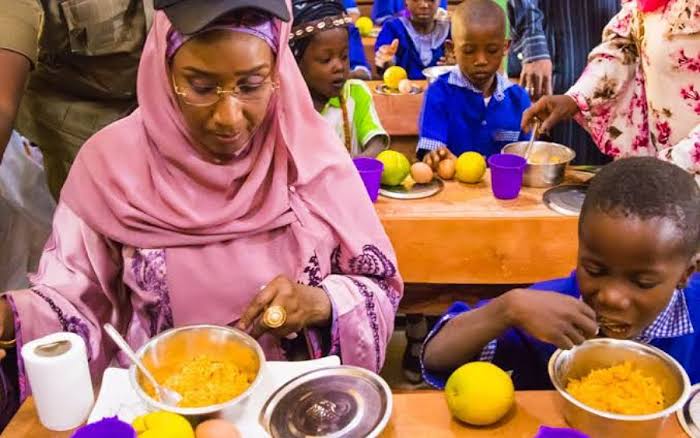
Launched in 2016, the NHGSFP aimed to enhance pupils’ nutrition, increase school enrolment, and support local economies by sourcing meals from smallholder farmers. At its peak, it served over 9.4 million children across 54,619 schools in 31 states, employing 107,000 cooks and engaging 150,000 farmers. The initiative was credited with a 20% rise in primary school enrolment, improved academic performance, and reduced malnutrition among young learners, while also creating jobs for women as cooks and food vendors.
The suspension, announced as part of a broader pause on programmes under the National Social Investment Programme Agency (NSIPA), has raised concerns about its impact on vulnerable children. In Enugu, headteacher Ugwuoke Patricia reported a noticeable drop in attendance and concentration among pupils at Community Primary School Ama-Agu, with many students unable to afford lunch and returning home hungry. “The absence of meals has led to malnutrition and poor academic performance,” she noted, highlighting the programme’s critical role in keeping children in school.
Economic repercussions are equally significant. The programme’s halt threatens the livelihoods of over 250,000 workers, including cooks, farmers, and vendors who rely on it for income. With N160 billion budgeted for 2025, rising food prices and delays in restarting the initiative could exacerbate food insecurity and disrupt local agricultural markets. The programme’s design, which links farmers directly to schools, has been praised for stimulating rural economies, with 594 cattle, 138,000 chickens, and 6.8 million eggs used weekly to feed pupils.
Despite the suspension, there is hope for revival. President Tinubu has expressed commitment to scaling the programme to reach 20 million children by 2025, with a USD 100 million budget allocated for 2024 to feed 10 million pupils. Dr Yetunde Adeniji, Senior Special Assistant to the President on School Feeding, has been engaging stakeholders to reform the programme, including partnerships with organisations like the Partnership for Child Development and the Maple Leaf Foundation to support displaced children. A recent roundtable led by Vice President Kashim Shettima discussed the “Nutrition 774 Initiative” to enhance meal quality and programme sustainability.
However, challenges persist. Reports of corruption, poor meal quality, and payment delays to vendors have plagued the programme, contributing to its suspension. Experts like Peter Udosen, a UK-based education specialist, advocate for stronger local government involvement to address these issues and ensure consistent implementation. The government is also urged to secure additional funding from international partners, such as UNICEF and the World Bank, to bolster the programme’s financial stability.
As Nigeria grapples with 20 million out-of-school children and a serious hunger crisis, ranked 109 out of 125 on the Global Hunger Index, the NHGSFP’s revival is critical. The programme’s potential to nourish young minds, reduce dropout rates, and empower communities remains a beacon of hope, but swift action is needed to restore its impact and secure a brighter future for millions of Nigerian children.
