


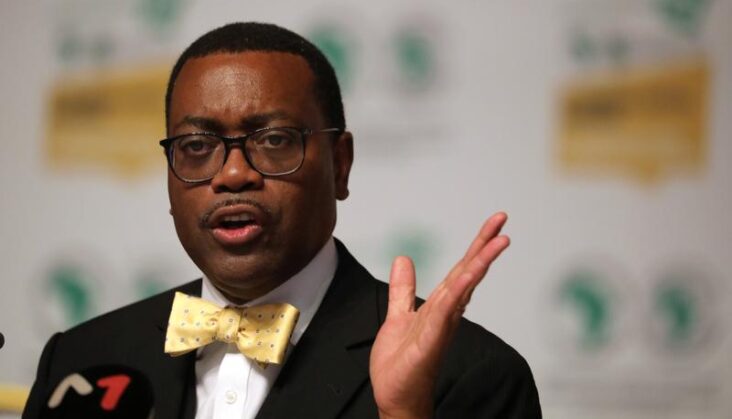
Nigerians Poorer Today Than In 1960, Warns AfDB President Adesina.
Nigerians are now earning less than they did at the time of independence in 1960, according to a stark warning from Dr. Akinwumi Adesina, President of the African Development Bank (AfDB). Speaking at the 20th anniversary dinner of Chapel Hill Denham in Lagos on Thursday, Adesina revealed that Nigeria’s GDP per capita has plummeted to $824, a significant drop from the $1,847 recorded 64 years ago.
Adesina described Nigeria’s economic decline as far graver than commonly recognised, urging an immediate and radical restructuring of the nation’s economic framework to ensure global competitiveness by 2050. “Today, Nigerians are worse off than they were at independence,” he said, attributing the downturn to poor policy choices, weak institutions, an over-reliance on oil, and chronic underinvestment in critical sectors.

Despite Nigeria holding the title of Africa’s largest economy by overall GDP, Adesina labelled its economic structure “fragile and unsustainable.” He drew a striking comparison with South Korea, which in 1960 had a lower GDP per capita than Nigeria but now boasts over $36,000 per person due to strategic industrialisation. “Nigeria has the potential to join the ranks of developed nations, but we must change our mindset and drive rapid growth,” he insisted. “Underdevelopment is not our destiny.”
To reverse the decline, Adesina proposed five urgent reforms: achieving universal electricity access, developing world-class infrastructure, accelerating industrialisation, fostering innovation-driven growth, and building a competitive agricultural sector. He pointed to the Dangote Refinery as a shining example of the kind of large-scale, private-sector-ledក; led industrial projects Nigeria should pursue. Adesina also called for the mobilisation of pension funds, diaspora expertise, and capital markets to finance transformative initiatives.
However, Adesina stressed that meaningful change hinges on robust institutions, consistent policies, and transparent governance. “Without a credible reform agenda, Nigeria risks falling further behind,” he cautioned, urging leaders to shape a “deliberately developed, and corruption-free” Nigeria by 2050.
The AfDB president’s sobering remarks have sparked renewed debate about Nigeria’s economic trajectory, with many calling for bold action to address the deepening crisis. As the nation grapples with these challenges, Adesina’s vision offers a roadmap for a brighter, more prosperous future – if Nigeria can rise to the challenge.
