


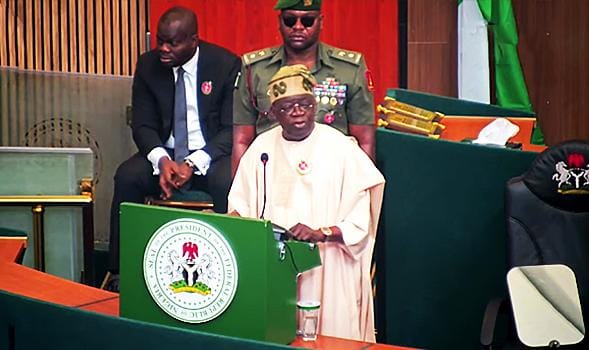
Nigerian Senate Approves President Tinubu’s £16.8 Billion Borrowing Plan For 2025–2026.
The Nigerian Senate has granted approval for President Bola Tinubu’s ambitious proposal to borrow over $21 billion (£16.8 billion) from external sources to fund critical development projects across the country for the 2025–2026 fiscal years. The decision, made during a plenary session on Tuesday, paves the way for the full implementation of the 2025 Appropriation Act, marking a significant step in Nigeria’s economic strategy.
The comprehensive borrowing package includes $21.19 billion in direct foreign loans, €4 billion, ¥15 billion, and a $65 million grant. Additionally, the plan allows for domestic borrowing through government bonds worth approximately ₦757 billion and the raising of up to $2 billion via a foreign currency-denominated instrument in the domestic market. The approval followed a detailed report presented by Senator Aliyu Wamakko, Chairman of the Senate Committee on Local and Foreign Debt, who noted that the proposal was initially submitted on 27 May but faced delays due to parliamentary recesses and documentation challenges from the Debt Management Office.

Senators supporting the plan highlighted its alignment with Nigeria’s Medium-Term Expenditure Framework (MTEF) and the 2025 budget, emphasising its focus on transformative projects. Senator Solomon Adeola, Chairman of the Senate Committee on Appropriations, described the approval as a procedural necessity, stating, “The borrowing is already embedded in the 2025 Appropriation Act, ensuring all revenue sources are in place to fully fund the budget.” He underscored that the funds would drive national development in key sectors, including infrastructure, security, agriculture, health, and human capital development.
The borrowing plan, which spans a six-year disbursement period, was defended by Senator Sani Musa, who argued that no economy grows without strategic borrowing. “Nigeria has not defaulted on any existing loan repayments, and this approach aligns with global best practices,” he said. Senator Adetokunbo Abiru, Chairman of the Senate Committee on Banking, Insurance, and Other Financial Institutions, reassured lawmakers that the loans comply with the Fiscal Responsibility Act and the Debt Management Act. “These are long-term, concessional loans with tenors of up to 35 years, tied strictly to capital and human development projects,” Abiru noted.
A notable highlight of the plan is the allocation of $3 billion for revitalising the Eastern Rail Corridor, which Senator Victor Umeh praised as a justification for his support, citing its potential to boost regional connectivity. Deputy Senate President Jibrin Barau, presiding over the session, commended the inclusiveness of the plan, stating, “No region is left out. This reflects the Renewed Hope Agenda working for all Nigerians.”
However, the approval was not without concerns. Senator Abdul Ningi raised questions about transparency, calling for a detailed breakdown of how the funds would be allocated and repaid. “We must inform our constituents exactly how much is being borrowed and for what purpose,” he urged, citing the need for greater accountability.
The Senate’s decision comes as Nigeria’s total public debt stood at ₦149.39 trillion as of March 2025, a 22.8% increase from the previous year. Despite this, proponents of the borrowing plan argue that it is essential to bridge the nation’s infrastructure deficit and stimulate economic growth. President Tinubu has previously stated that the funds will support critical sectors, including education, healthcare, and agriculture, while reducing reliance on borrowing through recent tax reforms aimed at boosting revenue.
With the borrowing plan now approved, the Senate leadership has stressed that all funds must be used strictly for capital and developmental projects, in line with public finance regulations. The move is seen as a bold step towards securing Nigeria’s economic future, with the government pledging to ensure prudent management and tangible outcomes for its citizens.
