


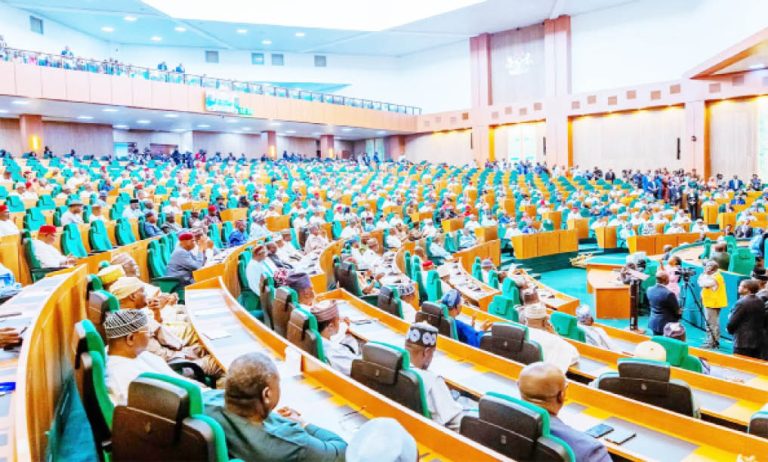
Nigerian House Of Representatives Launches Probe Into N200 Billion CBN Loan For National Mass Metering Programme.
The House of Representatives has announced a thorough investigation into the disbursement and utilisation of a N200 billion loan provided by the Central Bank of Nigeria (CBN) for the National Mass Metering Programme (NMMP). The initiative, aimed at providing free electricity meters to Nigerian consumers, is under scrutiny to ensure transparency and accountability in the management of public funds.
Rep. Uchenna Okonkwo (LP-Anambra), Chairman of the 19-member investigative committee, revealed the probe in a statement issued on Wednesday in Abuja. The committee, recently inaugurated, will examine the NMMP, launched in 2020 by the CBN in collaboration with the Nigeria Electricity Regulatory Commission (NERC) and key stakeholders in the Nigerian Electricity Supply Industry (NESI).

The NMMP was designed to bridge metering gaps, eliminate arbitrary billing, and enhance network monitoring by supplying free electricity meters to consumers. The programme, structured in three phases, also sought to reduce collection losses and improve market remittances within the industry. “The aim was to manage conflicts between energy users and distribution companies while fostering a more efficient electricity supply system,” Okonkwo explained.
Under the pilot phase in 2020, the CBN allocated N59.28 billion for the procurement and installation of one million meters, with a 9 per cent interest rate and a two-year moratorium. However, preliminary findings indicate that only N55.4 billion was disbursed, resulting in the installation of 962,832 meters—falling short of the target. Additionally, the eleven Electricity Distribution Companies (DISCOs) that received the loan have reportedly repaid N54.4 billion without accounting for the 9 per cent interest, raising questions about the programme’s financial management.
Concerns also surround the subsequent phases of the NMMP. Phase 1, intended to be funded by the CBN and Deposit Money Banks (DMBs) for 1.5 million meters, and Phase 2, backed by the World Bank for 4 million meters, remain unaddressed. “These discrepancies necessitate a detailed explanation of how the funds were handled in the national interest,” Okonkwo stated.
Citing its constitutional powers under Sections 88(1) and (2) of the 1999 Constitution, the House established the sub-committee to investigate the N200 billion loan’s disbursement and utilisation. The probe aims to assess the programme’s impact on Nigeria’s economic and social development while ensuring accountability.
The committee comprises notable representatives, including Rep. Obed Shehu, Rep. Ali Shettima, Rep. Abel Fuah, Rep. Salisu Koko, Rep. Ahmed Munir, Rep. Sani Umar Bala, Rep. Gbefwi Jonathan, Rep. Abdulmaleek Danga, Rep. Chinedu Obika, Rep. Okunlola Lanre, Rep. Abass Adekunle, Rep. Akinosi Akanni, Rep. Obuzor Victor, Rep. Peter Akpanke, Rep. Ngozi Lawrence, Rep. Ogah Amobi Godwin, and Rep. Ikeagwuonu Onyinye, among others.
As Nigeria strives to improve its electricity supply infrastructure, this investigation underscores the government’s commitment to ensuring public funds are used effectively for the benefit of citizens. The committee’s findings are expected to shed light on the NMMP’s challenges and pave the way for stronger oversight in future initiatives.
