


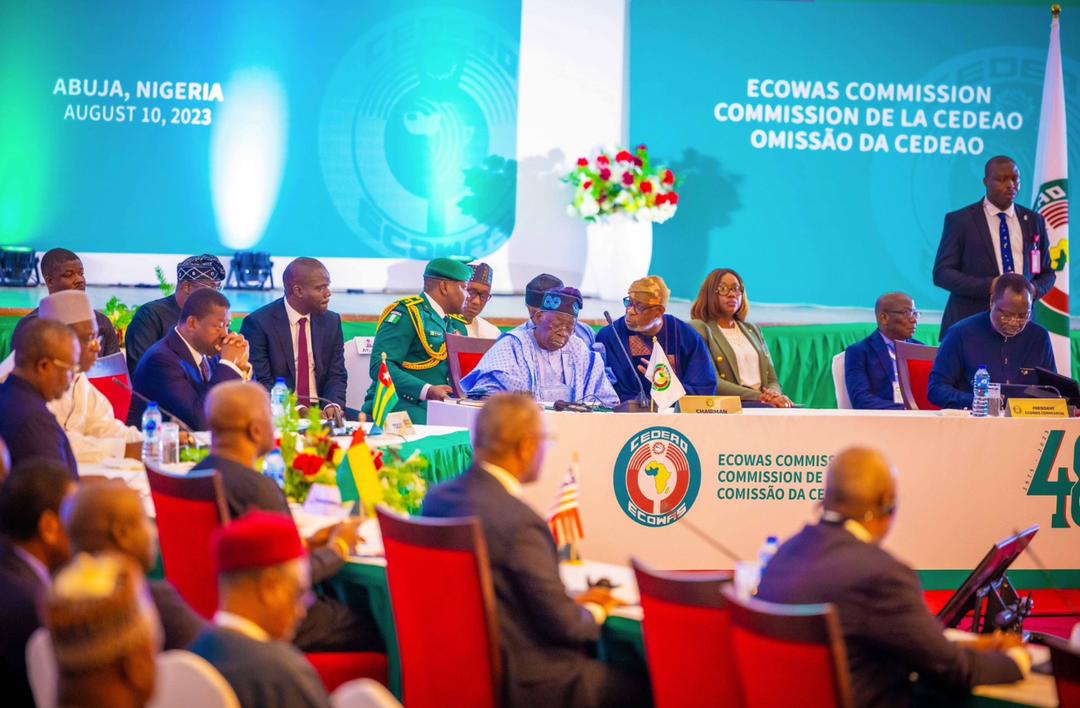
Nigeria Commits $100 Million To ECOWAS Bank To Bolster Regional Development.
Nigeria is poised to strengthen its pivotal role in West African economic integration with a substantial $100 million capital contribution to the ECOWAS Bank for Investment and Development (EBID). The announcement, made during the First Ordinary Session of the ECOWAS Parliament in Abuja, underscores Nigeria’s commitment to fostering sustainable development and regional cooperation across West Africa.
The pledge was revealed by MacDonald Goanue, EBID’s Director of Research and Strategic Planning, representing the bank’s President, Dr George Agyekum Donkor. Nigeria, already the largest shareholder in EBID with approximately 33% of total shares, is set to reinforce its leadership within the regional financial institution. “Nigeria is the biggest contributor. Nigeria is in the process of paying $100 million to the bank,” Goanue stated, highlighting the significant influence such financial commitments afford within the institution.

The ECOWAS Bank for Investment and Development, headquartered in Lomé, Togo, plays a critical role in financing transformative projects across the 15 ECOWAS member states. Unlike commercial banks, EBID does not accept deposits but relies on contributions from member states and international partners to fund initiatives in infrastructure, energy, agriculture, healthcare, and transport. Since its inception in 1999, the bank has disbursed over $2.5 billion to support approximately 300 projects, significantly advancing regional integration and economic resilience.
Nigeria’s latest contribution is expected to enhance EBID’s capacity to deliver on its mandate, which aligns with ECOWAS’ Vision 2050 for regional integration, social inclusion, and economic transformation. Notable EBID initiatives include the interconnection of electricity networks between Mali and Côte d’Ivoire, the provision of solar electricity to 750 community facilities in Benin, and the construction of a vital bridge linking Senegal’s AIBD to Blaise Diagne Airport. Additionally, EBID has supported small and medium enterprises (SMEs) through partnerships with Nigerian institutions like the Bank of Industry and commercial banks, fostering private sector growth.
The $100 million injection comes at a strategic time, as West Africa grapples with economic challenges, including high inflation and currency instability. Nigeria, facing its own economic headwinds with inflation projected to reach 26.3% in 2024, views this investment as a means to secure both political leverage and access to regional development funding. Other ECOWAS member states, such as Ghana and Côte d’Ivoire, have also increased their contributions, with Ghana completing its second tranche of payments and Côte d’Ivoire earning praise for its consistent financial commitments.
International support has further bolstered EBID’s efforts, with India providing approximately $1 billion in credit lines since 2006 to fund infrastructure, energy, and private sector development across the region. This growing global confidence in EBID underscores its role as a cornerstone of West Africa’s economic aspirations.
The announcement has been met with enthusiasm across the region, with lawmakers urging greater transparency in project funding to ensure equitable benefits for all member states. The contribution is expected to support high-impact projects, such as the Kano-Maradi railway, which will connect northern Nigeria to Niger, creating over 100,000 jobs during construction and 20,000 permanent jobs upon completion. Such initiatives align with the United Nations Sustainable Development Goals, particularly SDG 9 (Industry, Innovation, and Infrastructure) and SDG 13 (Climate Action).
As ECOWAS approaches its 50th anniversary, Nigeria’s renewed commitment to EBID signals a robust push towards a more integrated and prosperous West Africa. The region’s leaders and citizens alike will be watching closely to see how this investment translates into tangible economic and social advancements.
