


Nigeria And Saint Lucia Forge New Diplomatic Ties In Historic Agreement.
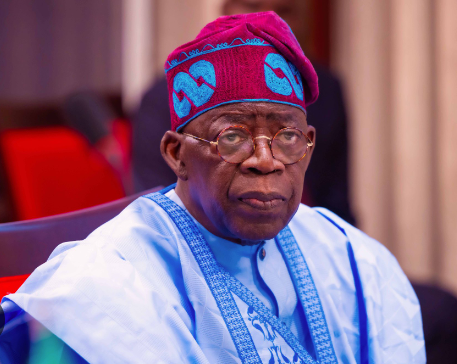
In a landmark move to strengthen ties between Africa and the Caribbean, Nigerian President Bola Tinubu and Saint Lucian Prime Minister Philip J. Pierre have pledged to establish formal diplomatic relations between their nations. The commitment was announced during President Tinubu’s courtesy visit to the Prime Minister’s official residence in Castries on the second day of his state visit to the Caribbean island, which began on 28 June 2025.
The agreement marks a significant step in deepening cooperation between Nigeria, Africa’s most populous nation, and Saint Lucia, a key member of the Caribbean Community (CARICOM) and the Organisation of Eastern Caribbean States (OECS). Both leaders expressed enthusiasm for the potential of this partnership to foster mutual prosperity through enhanced trade, investment, and cultural exchange.

President Tinubu highlighted the deep historical and cultural connections between Nigeria and Saint Lucia, noting that the two nations are “bound by history, culture, and common aspirations.” He emphasised Nigeria’s commitment to building a robust relationship that would serve as “a bridge between Africa and the Caribbean,” paving the way for cooperation in areas such as agriculture, tourism, manufacturing, education, and consular services. “This is a pathway to deepen economic ties and foster mutual understanding,” Tinubu stated, underscoring Nigeria’s support for Small Island Developing States (SIDS) on global issues like climate change, disaster response, and development financing.
Prime Minister Pierre echoed Tinubu’s sentiments, recalling his pledge in August 2021 to strengthen Saint Lucia’s ties with Africa. He described the Nigerian President’s visit as a “timely opportunity” to advance collaboration between the two nations. “There is a need for countries in the Global South to consolidate existing relationships and create new ones where they do not exist. Saint Lucia is seeking to do just that with Nigeria,” Pierre said. He also highlighted the historical contributions of Saint Lucians to Nigeria, notably Sir Darnley Alexander, who served as Nigeria’s Chief Justice from 1975 to 1979.
The announcement comes as part of Nigeria’s broader foreign policy agenda, known as the “Four D’s” – Democracy, Development, Diaspora, and Demography – which seeks to leverage the African diaspora as a key partner in development. Saint Lucia, with its significant population of African descent, shares strong ancestral links with Nigeria, dating back to 19th-century migrations that brought Nigerian cultural and religious traditions to the island.
During his visit, President Tinubu also met with Saint Lucia’s Governor-General, Cyril Charles, at Government House in Morne Fortune. Their discussions focused on leveraging their shared Commonwealth membership to address pressing issues such as climate change, technical assistance, and socio-economic challenges. Tinubu reaffirmed Nigeria’s commitment to advocating for smaller states, expressing readiness to explore trade and economic opportunities that could benefit both nations.
The state visit, which runs from 28 June to 4 July 2025, is a rare and historic occasion for Saint Lucia, which has hosted fewer than ten official state visits since gaining independence in 1979. The last visit by an African head of state was by Nelson Mandela in 1998, making Tinubu’s trip a significant diplomatic milestone.
On Monday, 30 June, President Tinubu is set to address a special joint session of Saint Lucia’s bicameral Parliament at the William Jefferson Clinton Ballroom, Sandals Grande, Gros Islet. The event will be attended by heads of government from the OECS, senior Saint Lucian officials, members of the diplomatic corps, the Nigerian community in Saint Lucia, and OECS Director-General Dr Didacus Jules. Following the address, Tinubu will participate in a high-level working luncheon with OECS leaders to discuss deepening economic partnerships and cultural solidarity.
The visit has already sparked excitement among Saint Lucians, who see it as an opportunity to reconnect with their African roots. Nigeria’s cultural influence is evident in the island, with Afrobeats music dominating events like the Gros Islet Street Party the night before Tinubu’s arrival. The presence of Nigerian professionals, including healthcare workers and religious figures, further strengthens these ties. For instance, Nigerian medical expertise is already supporting Saint Lucia’s ambitious Universal Health Coverage programme.
A notable moment during the visit was the introduction of Bob Chikwem Amadi, a Nigerian medical student at the American International University in Saint Lucia, to President Tinubu by Prime Minister Pierre. Amadi, a native of Rivers State, described the encounter as “inspiring,” highlighting the significance of people-to-people connections in fostering bilateral relations.
The Presidency of Nigeria has described the visit as a strategic engagement to advance South-South cooperation and expand Nigeria’s global partnerships. It aligns with the African Union’s Sixth Region agenda, which recognises the African diaspora as a vital development partner. As Nigeria and Saint Lucia move towards formalising diplomatic relations, both nations are poised to unlock new opportunities for trade, cultural exchange, and mutual support on the global stage.
“This visit is not just about Saint Lucia – it is about building bridges between two vibrant regions with shared histories and futures,” a statement from Nigeria’s Presidency noted. With both leaders committed to nurturing this relationship, the agreement signals a new era of collaboration that could serve as a model for Africa-Caribbean partnerships.
