


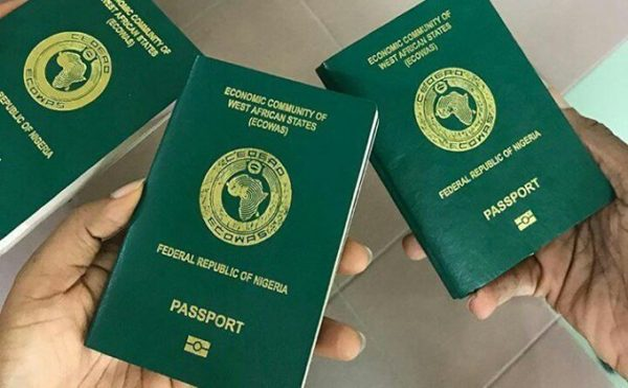
New Passport Office For Senior Officials In Abuja Sparks Scepticism Amid US Visa Policy Shift.
The Federal Government of Nigeria has launched a new passport front office in the capital, heralded as a solution to expedite passport processing for senior public officials and address long-standing delays for ordinary citizens. The initiative, announced today, aims to streamline access to travel documents, a move the government claims demonstrates its commitment to improving public services. However, the timing of this development, juxtaposed against the recent US visa policy changes restricting Nigerians to single-entry, three-month non-immigrant visas, has raised questions about the government’s true priorities.
The new facility, located in Abuja, is designed to prioritise passport issuance for high-ranking officials, including senior civil servants, military officers, and state executives. The government asserts that this will enhance efficiency for those on official assignments abroad, while also promising to alleviate bottlenecks for the wider public. Yet, many Nigerians remain unconvinced, particularly in light of the Nigeria Immigration Service’s (NIS) track record of inefficiencies and stringent new requirements that have stranded applicants across the country.

Critics point to the NIS’s recent automation reforms, which introduced conditions such as mandatory letters of identification from local governments, even for renewals and minors. These measures, intended to align with international standards, have instead caused significant delays, with reports of applicants, including those returning from abroad, unable to secure passports due to inaccessible documentation. An immigration official at the Ikoyi passport office previously lamented that “nothing is working at the passport offices all over the federation,” citing the rejection of applications failing to meet these new criteria.
Scepticism is further fuelled by the US Embassy’s visa policy update, effective 8 July 2025, which limits most non-immigrant visas for Nigerians to single-entry with a three-month validity period. The US cited reciprocity, noting Nigeria’s similar restrictions on American citizens, but the move has been met with dismay by Nigerians, with journalist Eniola Akinkuotu calling it “bad news” for those seeking to travel for tourism, education, or business. The US Embassy emphasized its commitment to working with Nigeria to meet global security and technical benchmarks, yet the policy shift underscores challenges in Nigeria’s passport issuance system, which the new Abuja office claims to address.
Public reaction has been mixed. While some welcome the potential for faster processing, others see the prioritisation of senior officials as evidence of a government more concerned with its elite than the broader populace. “Why should a deputy director or a colonel get their passport in days while ordinary Nigerians wait months?” asked Chinedu Okeke, a Lagos-based trader who has been trying to renew his passport for six months. “This feels like another case of the government looking after itself first.”
The NIS has defended the initiative, arguing that efficient passport services for officials will bolster Nigeria’s international engagements, indirectly benefiting citizens through improved diplomacy and economic ties. However, the lack of transparency around the project’s funding and implementation, coupled with the absence of clear timelines for resolving delays for non-officials, has done little to assuage doubts.
As Nigerians grapple with the practical implications of the US visa restrictions, the new passport office’s focus on senior officials risks deepening public distrust. The government’s claim of caring for its people is under scrutiny, with many questioning whether this is a genuine step towards reform or merely a gesture to placate an influential few. Until tangible improvements reach the average citizen, the initiative may be seen as little more than a symbolic move in a system plagued by inefficiencies.
