


NAFDAC Clarifies Reduced Fees For Reopening Onitsha Drug Market, Easing Traders’ Concerns.
The National Agency for Food and Drug Administration and Control (NAFDAC) has announced clarifications regarding administrative fees imposed on traders at the Onitsha Bridge Head Drug Market, also known as Ogbo Ogwu, following its reopening on 9 March 2025. The move comes amid public outcry and misinformation surrounding the costs for shop owners to resume business after a month-long closure aimed at curbing the sale of counterfeit and substandard pharmaceuticals.
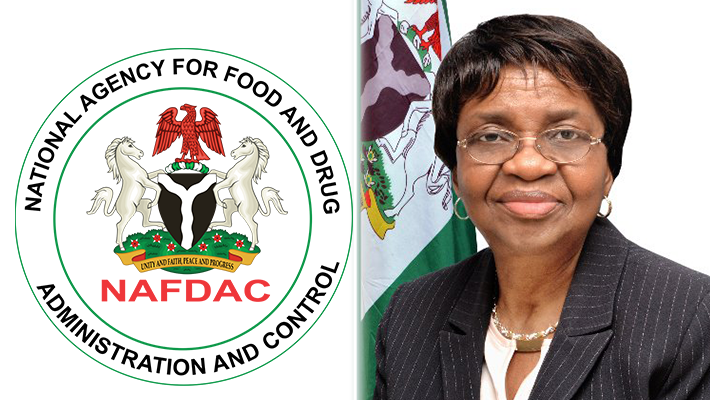
In a statement issued on Tuesday, 27 May 2025, NAFDAC Director-General, Prof. Mojisola Adeyeye, detailed that two key administrative charges were enforced as part of the agency’s regulatory measures. An initial investigative fee of ₦5 million (£2,700) for the sale of unregistered products was reduced to ₦200,000 (£108) following appeals from traders. Additionally, a ₦2 million (£1,080) charge for violations of Good Storage and Distribution Practices was lowered to ₦500,000 (£270) after further pleas. These fees, NAFDAC emphasised, are federally gazetted and were applied uniformly across major open drug markets in Onitsha, Idumota (Lagos), and Ariaria (Aba).

The clarification addresses concerns raised by traders and public figures, including a viral video by social media influencer Martins Otse, known as VeryDarkMan, which alleged that NAFDAC demanded ₦700,000 (£378) per shop owner to reopen their stores. NAFDAC refuted these claims, describing them as misleading and potentially inciting, and warned that such actions could breach the Cybercrime Act, prompting the agency to alert security agencies for investigation.
The Onitsha market, a major pharmaceutical hub, was closed from 10 February to 7 March 2025 as part of NAFDAC’s nationwide crackdown on fake, expired, and substandard drugs. The operation, which also targeted markets in Lagos and Aba, resulted in the seizure and destruction of illicit narcotics and unregistered products worth over ₦1 trillion (£540 million). Since its reopening, over 2,500 traders across 3,500 shops have resumed operations after complying with stringent regulatory requirements, including signing undertakings through their union to prevent future violations.
Prof. Adeyeye reiterated NAFDAC’s commitment to public health, stating, “Pharmaceuticals directly affect national security and public health, and our mandate under the NAFDAC Act is to ensure all drug distribution channels comply with safety and regulatory standards.” The agency has also established a dedicated desk to facilitate compliance and is working with state governments to relocate traders to Coordinated Wholesale Centres for better monitoring.
The announcement has been met with cautious optimism by traders, who had faced significant economic hardship during the closure. However, prominent figures like Peter Obi, the Labour Party’s 2023 presidential candidate, and Senator Tony Nwoye have called for a review of the fees, describing them as “insensitive” and “exploitative” given the economic challenges facing small business owners. Obi urged NAFDAC and the Anambra State Government to prioritise compassion, arguing that the fees exacerbate the burdens on traders already grappling with Nigeria’s economic difficulties.
Despite the controversy, NAFDAC’s efforts to sanitise the pharmaceutical supply chain have been praised for removing dangerous products from circulation, protecting public health across Nigeria and the African sub-region. The agency has assured traders and the public that it will continue to operate within its legal mandate, undeterred by misinformation, while fostering dialogue to address concerns.
As the Onitsha market resumes full operations, the focus remains on ensuring compliance with regulatory standards to prevent the recurrence of counterfeit drug distribution, offering hope for a safer and more transparent pharmaceutical trade in Nigeria.
