


N10 Billion For Presidential Villa Solar Grid: A Misplaced Priority?.
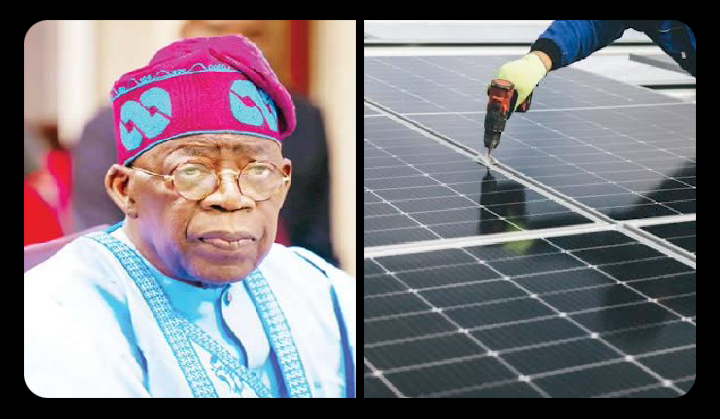
The State House’s decision to earmark N10 billion in the 2025 budget for a solar mini-grid at the Presidential Villa, as reported by The PUNCH, has raised eyebrows and sparked heated debate. While the government touts this as a step towards sustainable energy, critics are questioning the rationale behind funnelling such a colossal sum into a single, already privileged site when millions of Nigerians languish without reliable electricity.
The announcement, circulated widely on X and attributed to The PUNCH, appears legitimate, aligning with Nigeria’s broader push for renewable energy. Recent moves, such as securing $750 million from the World Bank for electrification and allocating N100 billion for a National Public Sector Solarisation Initiative, suggest a concerted effort to embrace solar power. Yet, the decision to prioritise the Presidential Villa—a complex already equipped with backup generators and grid connections—over underserved rural communities is drawing sharp criticism.

Why allocate N10 billion to a site that scarcely feels the brunt of Nigeria’s crippling energy crisis? Posts on X reflect public scepticism, with many arguing that this sum could electrify dozens of villages, where only a fraction of Nigeria’s 200 million citizens enjoy consistent power. The national grid, plagued by inefficiencies, generates just a quarter of its capacity reliably, leaving rural areas in darkness. Couldn’t this budget have been better spent on mini-grids for schools, hospitals, or remote communities?
Transparency concerns further muddy the waters. Nigeria’s history of inflated contracts and mismanaged public funds fuels suspicion. How will the N10 billion be spent? Who will oversee the project? Without clear answers, the initiative risks being perceived as another elite-centric venture cloaked in green rhetoric. Energy experts, like Chibuikem Agbaegbu from the Africa Policy Research Institute, acknowledge the value of mini-grids for remote areas but question whether the Presidential Villa is the most pressing candidate for such an investment.
The government’s narrative of leading by example falls flat when juxtaposed with the stark realities faced by ordinary Nigerians. While global trends, as noted in a recent Bloomberg report, show African nations leveraging affordable solar panels and international funding for mini-grids, Nigeria’s focus on a symbolic project raises questions about its priorities. Is this a genuine commitment to sustainability or a high-profile stunt to bolster the administration’s image?
As the project unfolds, Nigerians deserve clarity on its justification, costs, and benefits. If the State House is serious about renewable energy, it must address these concerns and redirect its focus to where power is needed most. Until then, the N10 billion solar grid plan risks being seen as a glaring misstep in a nation desperate for equitable solutions.
