


Karol Nawrocki Elected Poland’s President In Razor-Thin Victory.
Poland’s National Electoral Commission has confirmed Karol Nawrocki as the country’s new president, securing a narrow victory with 50.89% of the vote in a tightly contested run-off election against Warsaw’s liberal mayor, Rafał Trzaskowski, who garnered 49.11%. The result, announced on Monday morning, marks a significant shift towards nationalism, dealing a blow to Prime Minister Donald Tusk’s pro-EU agenda.
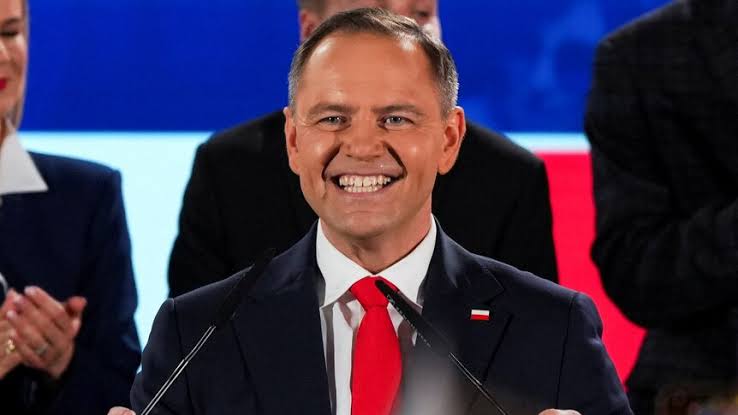
Nawrocki, a 42-year-old historian and amateur boxer backed by the right-wing Law and Justice (PiS) party, campaigned on a platform championing traditional Polish values and sovereignty within the European Union. His victory, which overturned initial exit polls suggesting a slight lead for Trzaskowski, has energised PiS supporters, who lost parliamentary power to Tusk’s Civic Platform coalition in 2023.

The presidential role, while largely ceremonial, wields significant influence through veto powers over legislation. Nawrocki is expected to follow in the footsteps of outgoing President Andrzej Duda, using these powers to block Tusk’s reforms, including efforts to restore judicial independence and liberalise Poland’s strict abortion laws. “We will save Poland,” Nawrocki declared to supporters in Warsaw, framing the election as a referendum on Tusk’s 18-month-old government.
The campaign was marked by intense polarisation, with Nawrocki’s eurosceptic stance contrasting sharply with Trzaskowski’s pro-EU vision. Nawrocki, who met US President Donald Trump during the campaign, drew endorsements from Trump and US Homeland Security Secretary Kristi Noem, who praised him as a “strong leader” at a Conservative Political Action Conference in Poland. His alignment with right-wing figures like Hungary’s Viktor Orbán and Romania’s George Simion has sparked concerns about Poland’s future relations with Brussels.
Trzaskowski, 53, conceded defeat on X, stating, “I’m sorry I didn’t manage to convince the majority of citizens of my vision of Poland,” while congratulating Nawrocki. The record 71.31% voter turnout underscored the election’s significance, reflecting deep divisions between urban, liberal voters and conservative rural communities.
Both candidates pledged continued support for Ukraine amid its ongoing conflict with Russia, but Nawrocki’s opposition to Ukraine’s NATO membership and his criticism of President Volodymyr Zelenskyy have raised eyebrows. His promise to prioritise Polish citizens over Ukrainian refugees for social services further highlighted his nationalist stance.
Tusk, responding to the result, announced plans for a parliamentary vote of confidence in his coalition, a move analysts view as political theatre given his majority. However, Nawrocki’s presidency could deepen political gridlock, with some predicting early elections before the scheduled 2027 vote if legislative paralysis persists.
The election has drawn international attention, with Orbán hailing it a “fantastic victory” and European Commission President Ursula von der Leyen expressing hope for continued cooperation with Poland. As Nawrocki prepares to take office, his presidency is poised to reshape Poland’s political landscape and its role within the EU.
