


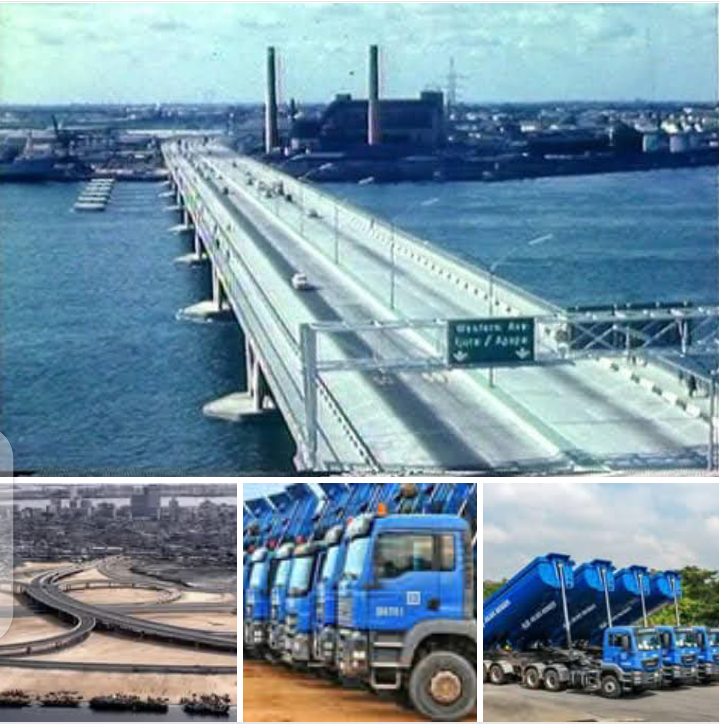
Julius Berger’s ‘Euro 65’ Milestone Marks 60 Years Of Transforming Nigeria’s Infrastructure.
The beginning of Nigeria’s infrastructure development, Julius Berger, the German-founded construction giant, relocated to its newly established “Euro 65” yard in Apapa, Lagos, in 1965, laying the foundation for its enduring legacy in the country. This milestone, celebrated as a pivotal chapter in the company’s Nigerian journey, coincided with the securing of its first major contract in August 1965: the construction of the iconic Eko Bridge, funded by a £6 million European loan. The “Euro 65” name—derived from the European loan and the year the contract was signed—symbolises Julius Berger’s humble beginnings and its strategic partnerships that have shaped modern Nigeria.
The Eko Bridge, a 430-metre marvel spanning the Lagos Lagoon from Ijora on the mainland to Apongbon on Lagos Island, was a groundbreaking project, marking Nigeria’s first use of prestressed concrete in bridge construction. Approved by then-Minister of Works Shehu Shagari during the First Republic, the bridge was constructed in phases between 1965 and 1975, with the first phase completed in 1968. Its 1,350-metre landward extension became a vital artery for vehicular traffic from Apapa and Surulere, easing congestion and connecting Lagos’s bustling commercial hub to the mainland. “The Eko Bridge transformed how Lagosians move and connect,” said a local historian, reflecting on its enduring impact.

The £6 million loan, facilitated through an agreement between the Federal Government of Nigeria, the Government of the Federal Republic of West Germany, and Julius Berger Tiefbau AG, underscored the power of international collaboration. This financial backing, as noted in historical accounts, enabled Julius Berger to establish a foothold in Nigeria, with the Apapa yard serving as a strategic base for operations. The “Euro 65” moniker not only commemorates this pivotal contract but also reflects the company’s commitment to excellence, which earned it further projects, including the repair of the Niger Bridge damaged during the civil war.
Julius Berger’s efficiency in delivering the Eko Bridge’s first phase cemented its reputation as a trusted partner, leading to additional contracts such as the Lagos-Badagry Expressway and the Apapa-Oshodi Expressway. By 1970, the company had incorporated as Julius Berger Nigeria Ltd, and in 1991, it was listed on the Nigerian Stock Exchange as Julius Berger Nigeria Plc. Today, headquartered in Abuja with permanent locations in Lagos and Uyo, the company employs 18,000 people from nearly 40 nations, driving progress across Nigeria’s infrastructure landscape.
The legacy of the “Euro 65” yard and the Eko Bridge continues to inspire. From constructing the Third Mainland Bridge in 1990 to pioneering Nigeria’s first pipe-jacking drainage system in 2011, Julius Berger has shaped the nation’s skyline and connectivity. “The ‘Euro 65’ story reminds us how vision and partnership can build a stronger Nigeria,” said a spokesperson for the company, which celebrated 50 years of construction excellence in 2020. As Lagos thrives as Africa’s most populous city, the Eko Bridge stands as a testament to Julius Berger’s pioneering spirit, fostering hope for continued innovation and growth.
Sources: Wikipedia, Julius Berger Nigeria Plc.
