


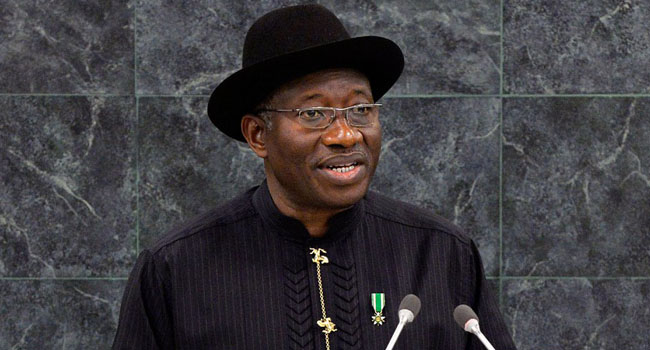
Jonathan Proposes ‘Hall of Shame’ In Abuja To Expose Nigeria’s Troublemakers.
Former Nigerian President Goodluck Jonathan has sparked a national debate with a bold proposal to establish two buildings in Abuja dedicated to displaying images of individuals who have contributed to Nigeria’s socio-political and economic woes. Speaking at the launch of a book by former Inspector General of Police Solomon Arase in Abuja on 18 February 2025, Jonathan suggested that these structures would serve as a stark reminder for future generations, ensuring that the descendants of those responsible for the nation’s challenges recognise their forefathers’ roles.
Jonathan’s remarks came as part of a broader critique of Nigeria’s tolerance for poor leadership. He argued that the country’s political class would only act responsibly when citizens reject bad behaviour. “We Nigerians celebrate the wrong things. I believe one day, the country will reach a point where people reject bad behaviour, and when we do, these issues will not happen again,” he stated. The former president expressed hope that such a cultural shift would deter leaders from misconduct, with the proposed buildings acting as a symbolic deterrent.

The idea of a ‘Hall of Shame’ has ignited varied reactions. Supporters view it as a creative way to hold leaders accountable and educate future generations about the consequences of mismanagement. Critics, however, including activist Omoyele Sowore, argue that those responsible for Nigeria’s problems deserve stronger measures, such as imprisonment, rather than symbolic displays. Sowore, a former presidential candidate, dismissed the proposal, stating that justice should be served through legal consequences rather than public shaming.
Jonathan also used the platform to criticise the heavy military involvement in Nigeria’s elections, contrasting it with practices in countries like Botswana and Senegal, where police and electoral officials manage voting with minimal interference. He argued that Nigeria’s reliance on the military for election security overstretches the armed forces and undermines democratic processes. “In most countries, the military is used to transport election materials to dangerous areas, not to man polling stations,” he noted, calling for reforms to align Nigeria with global standards.
The proposal has reignited discussions about accountability and governance in Nigeria. At the same event, Peter Obi, the 2023 Labour Party presidential candidate, echoed Jonathan’s call for integrity, stressing that credible elections depend on honest leadership. Obi linked electoral malpractice to broader corruption, suggesting that curbing public officials’ misconduct would improve security and governance.
While the feasibility of Jonathan’s ‘Hall of Shame’ remains uncertain, the suggestion has struck a chord, prompting reflection on how Nigeria addresses its history of leadership failures. As the nation grapples with ongoing challenges, from insecurity to economic struggles, the call for accountability resonates strongly. Whether through symbolic buildings or stricter measures, the push for a more responsible political class is gaining momentum, with Jonathan’s words serving as a catalyst for change.
