


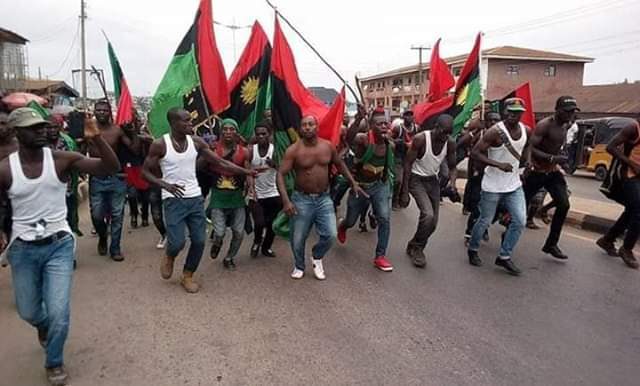
IPOB Rejects Soludo’s Claim Linking Igbo Youths To Kidnapping, Warns Of Danger To South-East.
The Indigenous People of Biafra (IPOB) has strongly condemned Anambra State Governor, Prof. Charles Soludo, for alleging that 99.9% of kidnappers and criminals in the South-East are Igbo youths. In a statement issued on Thursday, IPOB described the governor’s remarks as “inflammatory, baseless, and dangerous,” warning that they could endanger the lives of innocent Igbo youths and incite targeted attacks across the region. The group’s response follows Soludo’s comments during a town hall meeting with Anambra indigenes in the United States, held at the Metro Points Hotel in New Carrollton, Maryland.
Soludo, addressing the diaspora community, asserted that nearly all criminals arrested in Anambra since he took office over three years ago are Igbo, dismissing claims that Fulani herdsmen are primarily responsible for the region’s insecurity. “In my three years and three months in office, 99.99% of the kidnappers and other criminals we’ve arrested are Igbo,” he stated, urging an end to what he called a “dangerous and misleading narrative” blaming external groups. The governor argued that these criminals, often posing as liberators, are Igbo youths engaged in kidnapping and violence for profit, not ideology.

IPOB, through its spokesperson Emma Powerful, rejected Soludo’s claims as unsubstantiated and reckless, accusing him of shifting blame from external actors, such as Fulani militias, to Igbo youths. The group argued that the governor’s statements risk stigmatising an entire generation and could embolden attacks against South-East communities. “We may be under siege, but we must not allow opportunistic leaders to incite violence against their own,” IPOB declared, urging Anambra residents to remain vigilant and discerning in identifying true threats to the region’s progress.
The World Igbo National Union (WINU) echoed IPOB’s sentiments, expressing shock at Soludo’s assertions. In a statement signed by Comrade Ifeanyi Uwakwa, WINU accused the governor of ignoring documented evidence of Fulani herdsmen’s activities in Anambra communities like Mgbakwu, Umueri, and Umunze. The group called Soludo’s claims “bogus” and urged him to adopt a zero-tolerance policy against armed groups, as exemplified by Abia State’s governor, rather than making politically motivated remarks. WINU also cautioned against Soludo’s alleged support for the controversial Waterways/RUGA Bill, warning that any move to introduce RUGA settlements in Anambra would face resistance.
Ohanaeze Ndigbo, the apex Igbo socio-cultural organisation, also challenged Soludo’s narrative, asserting that 99.9% of terrorists in the South-East are non-Igbo, particularly Fulani militias and other external actors. The group’s secretary-general, Okechukwu Isiguzoro, described Soludo’s comments as misleading and detrimental to investor confidence in the region. “The South-East is under siege—not by Igbo youths, but by external militias,” he stated, calling for unity and accountability to address the true causes of insecurity.
The International Society for Civil Liberties and Rule of Law (Intersociety) further countered Soludo, alleging that his administration has shielded Fulani herdsmen since 2022, aligning with federal policies to establish ranching in Anambra. The group claimed that Soludo’s remarks falsely attribute atrocities to IPOB, its Eastern Security Network (ESN), or “unknown gunmen,” while ignoring evidence of external perpetrators operating in the region’s forests.
The controversy comes amid heightened tensions in Anambra, with recent gunmen attacks in Ekwulobia and Oko intensifying fears. Community leaders and rights groups have called for an independent inquiry into the region’s security challenges, urging state and federal authorities to collaborate on transparent investigations. Soludo’s administration, while highlighting achievements in infrastructure and youth empowerment, now faces growing pressure to address these allegations and restore public confidence in its handling of security.
