


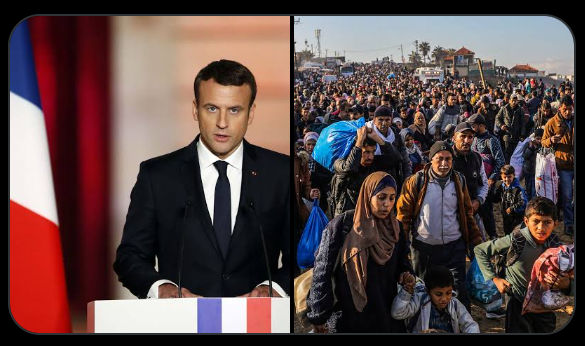
France Opens Doors To Gaza Residents With Landmark Asylum Ruling.
In a groundbreaking decision, France’s National Court of Asylum (CNDA) has ruled that all Palestinians residing in the Gaza Strip are eligible to apply for full refugee status in France, marking a significant shift in the country’s asylum policy. The ruling, which cites the ongoing conflict and alleged persecution in Gaza, has sparked both praise and debate across Europe.
The decision, announced on Friday, stems from an appeal by a Palestinian mother and her son who fled Gaza following the escalation of violence after the Hamas-led attacks on Israel on 7 October 2023. Initially, the French Office for the Protection of Refugees and Stateless Persons (OFPRA) rejected their application for full refugee status, offering only “subsidiary protection,” a temporary four-year residency permit. However, the CNDA overturned this, arguing that the Israeli military’s actions in Gaza constitute “persecution” under the 1951 Geneva Convention, thereby qualifying all Gazans for full refugee protection.

Under this ruling, Gazans physically present in France need only prove their origin to be eligible for asylum, without demonstrating individual persecution. Successful applicants will receive a 10-year renewable residency permit, access to social services such as healthcare and education, family reunification rights, and protection from deportation. This marks a significant departure from previous policies, which limited Gazans to temporary protections.
The CNDA’s decision hinges on the interpretation of Palestinians in Gaza as a persecuted group based on their “nationality,” despite France not officially recognising Palestine as a state. The court highlighted the shared cultural, ethnic, and political identity of Gazans, coupled with the ongoing conflict, as meeting the Geneva Convention’s criteria for refugee status.
While the ruling has been hailed by pro-Palestinian activists as a humanitarian triumph, it has also raised concerns among some French commentators. Critics, including secular activist Henda Ayari, have expressed apprehension about the potential social and security implications, citing cultural differences and existing community tensions in France. Others argue that the decision could strain resources, with estimates suggesting it may affect around 20% of Gaza’s population, as 80% are already registered as refugees with the United Nations Relief and Works Agency (UNRWA).
The ruling comes at a time of heightened international focus on Gaza, where the conflict has led to over 57,000 deaths and 134,000 injuries since October 2023, according to Gaza’s health ministry. The closure of UNRWA operations in Gaza, following Israel’s ban, has further exacerbated the humanitarian crisis, leaving many without critical aid.
France’s decision could set a precedent for other European nations, potentially reshaping asylum policies across the continent. However, some analysts caution that the practical impact may be limited, as the ruling applies only to Gazans already in France, and logistical challenges could hinder large-scale applications.
The French Ministry of Foreign Affairs has indicated that preparations are underway to process applications, with some Gazans expected to arrive in France soon. As the nation navigates this historic policy shift, the world watches closely to see how it will balance humanitarian commitments with domestic concerns.
