


FEC Approves N3.65 Trillion For Major Highway Projects To Boost Connectivity.
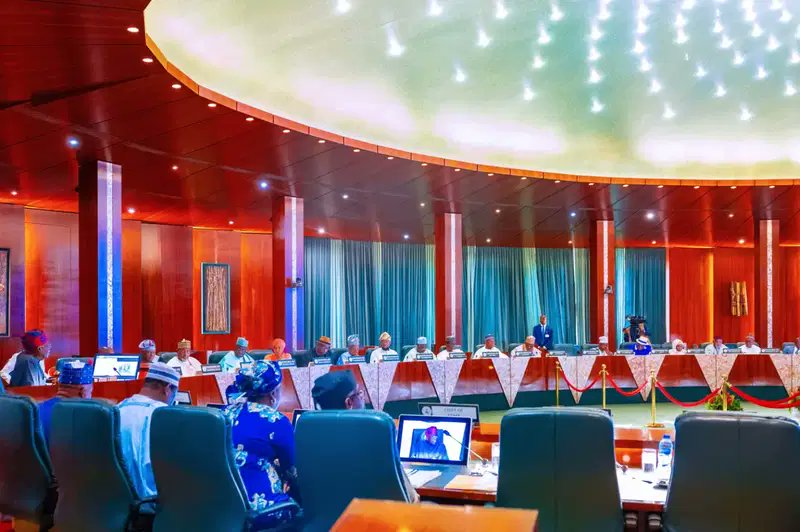
The Federal Executive Council (FEC) has greenlit a substantial investment of N3.65 trillion to advance two transformative infrastructure projects: the Sokoto–Badagry Superhighway and the Lagos–Calabar Coastal Highway. Announced by Minister of Works David Umahi following a recent FEC meeting in Abuja, the funding allocation underscores the government’s commitment to enhancing national connectivity and driving economic growth across Nigeria’s diverse regions.

For the Sokoto–Badagry Superhighway, a total of N2 trillion has been approved to develop key sections of the 1,068-kilometre corridor. This includes N961 billion for a 258-kilometre dual carriageway in Kebbi State, complementing an earlier N947 billion contract awarded in August 2024 for a single carriageway. Additionally, N456 billion will fund a 120-kilometre section in Sokoto, bringing the combined cost for these segments to approximately N2 trillion. The six-lane highway, constructed with durable concrete pavement by Hitech Construction (Nig.) Ltd, will stretch from Illela in Sokoto through Kebbi, Niger, Kwara, Oyo, Ogun, and Lagos, fostering trade, security, and regional integration.
The Lagos–Calabar Coastal Highway, a 700-kilometre project, has secured N1.65 trillion for sections 4A and 4B, covering 80.35 kilometres between Ogun and Ondo States. This six-lane road, also under Hitech Construction, involves significant earthworks and elevation to navigate swampy terrain, ensuring resilience against flooding. The highway, which connects Lagos to Cross River via Ogun, Ondo, Delta, Bayelsa, Rivers, and Akwa Ibom, is designed to enhance access to seaports, boost interstate commerce, and reduce travel costs.
Minister Umahi highlighted the economic significance of these projects, describing them as “strategic enablers” that will stimulate state economies, create jobs, and improve transportation efficiency. The Sokoto–Badagry Superhighway, initially conceived 48 years ago, and the Lagos–Calabar Coastal Highway are part of President Bola Tinubu’s broader infrastructure agenda, which includes plans for rail integration along these corridors. The projects are expected to be partially funded through loans, with 70% of the Lagos–Calabar funding sourced externally under an Engineering, Procurement, and Construction (EPC) framework.
The FEC’s approval has been met with optimism from stakeholders, including Kebbi State Governor Dr. Nasir Idris, who praised the initiative as a “game-changer” for farmers and traders. The projects are anticipated to create significant employment opportunities, particularly for local communities, while improving access to markets and services. With 350 kilometres of work already underway on the Lagos–Calabar project and 756 kilometres on the Sokoto–Badagry corridor, steady progress signals a promising future for Nigeria’s infrastructure landscape.
As these ambitious developments take shape, Nigeria is poised to strengthen its position as a hub for regional trade and connectivity. The government’s investment reflects a bold vision to bridge infrastructure gaps, foster economic prosperity, and deliver lasting benefits to millions of Nigerians across the North and South.
