


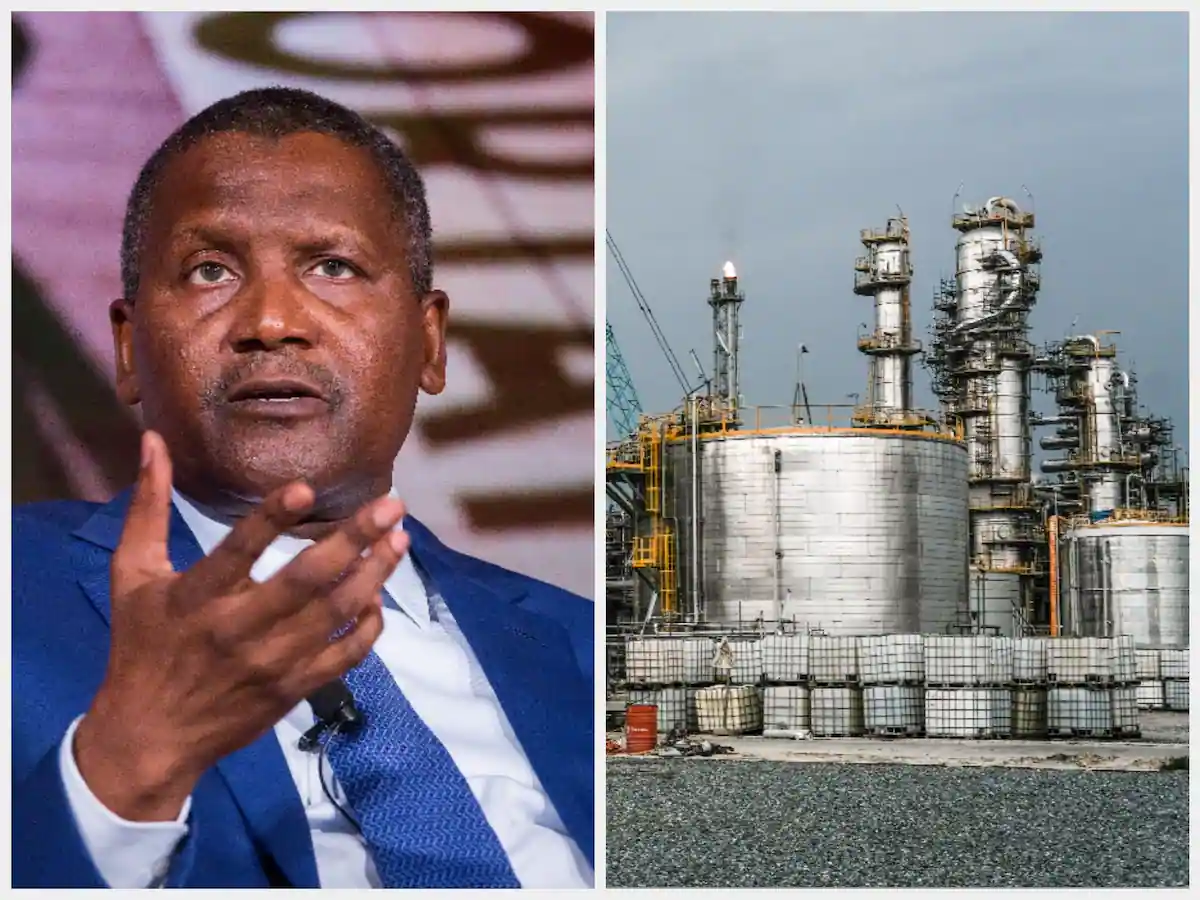
Dangote Refinery To Cease Crude Oil Imports By December 2025, Bolstering Nigeria’s Energy Independence.
The Dangote Petroleum Refinery, Africa’s largest oil refinery, has announced a bold plan to halt all crude oil imports by December 2025, transitioning to a fully domestic supply of Nigerian crude. This significant step, reported by Bloomberg, marks a pivotal moment for Nigeria’s oil industry and its journey towards energy self-sufficiency.
The refinery, a £15.5 billion project spearheaded by Nigerian billionaire Aliko Dangote, has a capacity of 650,000 barrels per day and is located in the Ibeju-Lekki area of Lagos. According to Devakumar Edwin, Vice President of Dangote Industries, the facility currently processes 550,000 barrels daily and is on track to reach full capacity by the end of the year. In June 2025, 53% of the refinery’s crude was sourced from local producers, with the remaining 47% imported, primarily from the United States. The shift to 100% Nigerian crude is expected to replace hundreds of thousands of barrels of imported oil daily, reducing reliance on foreign suppliers and cutting import costs.

Edwin noted that long-term contracts with foreign crude suppliers, including those from the United States, Brazil, Angola, Ghana, and Equatorial Guinea, are set to expire by December 2025. “We expect some of these contracts to lapse, and as a company, we anticipate transitioning fully to local crude by the end of the year,” he stated. Improved collaboration with the Nigerian National Petroleum Company Limited (NNPC), local oil traders, and government authorities is expected to ensure a steady supply of domestic crude, despite challenges such as crude theft, pipeline vandalism, and reduced production due to the withdrawal of some international oil companies from Nigeria’s onshore fields.
The move is a cornerstone of Aliko Dangote’s vision to end Nigeria’s paradox of exporting crude oil only to re-import refined products at a higher cost. The refinery’s gradual ramp-up has already transformed Nigeria into a net exporter of petroleum products, including diesel, petrol, and aviation fuel. In July and August 2025, the refinery is scheduled to receive five shipments of nearly one million barrels each from the NNPC, further supporting its shift to local sourcing.
This development comes amidst efforts to stabilise Nigeria’s domestic crude supply. The Nigerian Upstream Petroleum Regulatory Commission (NUPRC) reported resistance from some oil producers to the government’s Domestic Crude Supply Obligations, which mandate a portion of local crude be allocated to Nigerian refineries. However, Edwin remains optimistic, citing strengthened ties with stakeholders as key to overcoming these hurdles.
The refinery’s transition to Nigerian crude is expected to bolster the country’s economy by reducing foreign exchange expenditure on fuel imports and fostering job creation. With a workforce of 135,000 when fully operational, the facility is poised to drive industrialisation and economic growth in the region. Additionally, the refinery recently reduced the ex-depot price of petrol from £0.65 to £0.63 per litre, reflecting adjustments in global crude oil prices and reinforcing its commitment to affordable fuel for Nigerians.
As Nigeria moves closer to energy independence, the Dangote Refinery’s shift to local crude underscores its role as a game-changer in the nation’s oil sector, paving the way for a more self-reliant and prosperous future.
