


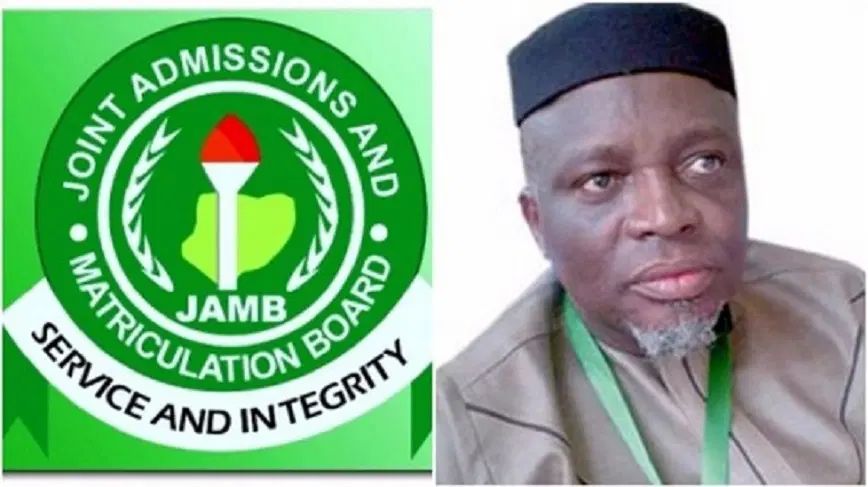
Chinedu Okeke’s Record-Breaking JAMB Score Officially Recognised Amid Calls For Apology.
The Joint Admissions and Matriculation Board (JAMB) has officially recognised Chinedu Okeke, a student from Anambra State, as the highest scorer in the 2025 Unified Tertiary Matriculation Examination (UTME), with an unprecedented 375 out of 400 marks. The confirmation, announced by education advocate Alex Onyia, follows the resolution of a controversy that saw JAMB initially question the legitimacy of Okeke’s remarkable achievement.

Onyia, the CEO of Educare, revealed that all evidence regarding Okeke’s score was submitted to JAMB’s headquarters for verification, confirming the accuracy of his record-breaking performance. The Anambra-born student, who aims to study Mechanical Engineering at the University of Lagos, has now been acknowledged as achieving the highest score in JAMB’s history, surpassing all previously verified records.
The controversy began when JAMB raised concerns about discrepancies in Okeke’s records, alleging he manipulated his identity by changing his state of origin from Lagos to Anambra and attempting dual academic enrolment while still a 400-level medical student at the University of Nigeria, Nsukka (UNN). The board claimed Okeke had exploited Lagos State’s admission quota in 2021, potentially depriving other candidates, and questioned why a medical student would pivot to Mechanical Engineering.
However, Onyia clarified that the discrepancies stemmed from a 2021 technical error involving incorrect data migration from the National Identity Management Commission (NIMC) platform, which was corrected through JAMB’s official data correction process. He explained that Okeke, after struggling with Medicine and failing his second MBBS exams, decided to pursue his true passion for Mechanical Engineering, necessitating a retake of the UTME. Supporters, including lawyer Dele Farotimi, who is representing Okeke pro bono, argued that JAMB’s rules do not prohibit students from retaking the exam to change their course of study, and the public accusations caused significant reputational harm.
Public sentiment, particularly on social media, has been vocal in demanding a formal apology from JAMB for what many perceive as unfair treatment of the young scholar. Critics, including educators and stakeholders, have called for greater transparency and fairness in JAMB’s verification processes, arguing that Okeke’s case highlights systemic issues that need addressing. A university lecturer from Nnamdi Azikiwe University remarked, “Our institutions must stop treating students like adversaries. Chinedu’s resilience is a testament to his character, not a crime.”
JAMB has maintained that it is committed to transparency and integrity in the admissions process, but the board has yet to issue a public apology. Okeke’s supporters continue to press for an official statement to restore his reputation, with Onyia stating, “Chinedu’s brilliance and determination should be celebrated, not questioned.” As Nigeria celebrates this historic academic achievement, the focus remains on ensuring such talents are nurtured and supported, free from undue scrutiny.
