


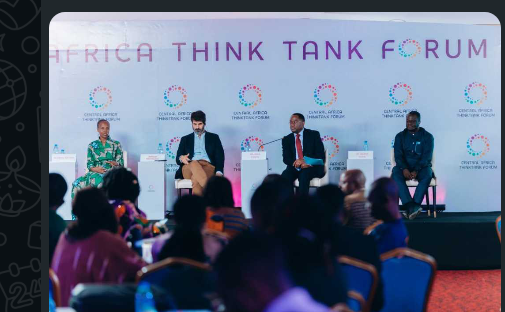
Central Africa Think Tank Forum In Cameroon Champions Collaboration And Inclusive Policymaking.
The Central Africa Think Tank Forum, held in Yaoundé, Cameroon, concluded on 8 August 2025 with a resounding call for enhanced collaboration and inclusive policymaking across the region. Organised by the Nkafu Policy Institute, a think tank under the Denis and Lenora Foretia Foundation, the two-day event brought together policymakers, civil society leaders, researchers, and international development partners to address pressing socio-political, economic, and governance challenges.
Held at the Djeuga Palace Hotel, the forum focused on strengthening the role of think tanks and civil society organisations (CSOs) in shaping public policy. Under the theme “Shaping the Future: Role of Think Tanks and Civil Society in Central Africa Policy Processes,” participants engaged in keynote speeches, panel discussions, and breakout sessions to explore innovative solutions for democratic governance, economic development, and regional integration. The event highlighted the critical role of think tanks and CSOs as bridges between citizens and governments, providing research-based evidence and advocating for inclusive policies.

Key outcomes included a commitment to fostering partnerships between governments, think tanks, and international organisations to ensure policies reflect the needs of Central African communities. The forum also emphasised the importance of data-driven decision-making and transparency to hold governments accountable. Concrete policy recommendations were developed, set to be shared with regional governments and development partners to drive actionable change.
Dr. Denis Foretia, Co-chair of the Denis and Lenora Foretia Foundation, underscored the need for think tanks to expand civic space and support governments in delivering effective policies. “Our goal is to ensure public policies work for the people of Central Africa, catalysing economic transformation and sustainable development,” he said. The forum also addressed regional challenges such as slow democratic reforms and rising inequality, aligning discussions with the African Union’s Agenda 2063 and the United Nations’ Sustainable Development Goals.
The event, attended by a diverse group of thought leaders, policymakers, and private sector representatives, marked a significant step towards building resilient networks and enhancing the visibility of think tanks in Central Africa. Organisers expressed optimism that the forum’s outcomes would pave the way for more inclusive and impactful policymaking across the region.
