


Breaking: MURIC Calls For Sharia Courts And Friday Public Holiday In Nigeria’s South West.
The Muslim Rights Concern (MURIC), an Islamic human rights group, has put forward a bold proposal for constitutional amendments to establish Sharia Courts across Nigeria’s South West states and to designate Fridays as a nationwide public holiday to accommodate Muslim worship practices. The announcement was made by MURIC’s Founder and Executive Director, Professor Ishaq Akintola, during the South West Zonal Public Hearing on constitutional review, sparking widespread discussion across the region.
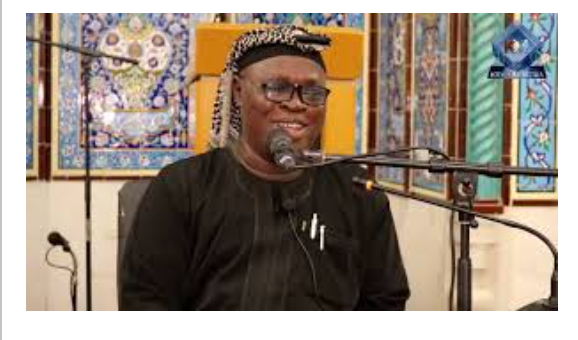

Professor Akintola argued that the establishment of Sharia Courts of Appeal in all South West states, including Edo, would address the needs of the region’s significant Muslim population. He emphasised that these courts would solely handle matters involving Muslims, such as family law, inheritance, and Islamic finance, and would not impact non-Muslims. “No Sharia Court currently exists in South Western Nigeria, despite Muslims arguably forming the majority,” Akintola noted, highlighting the absence of such judicial structures compared to the region’s historical legal systems before British colonisation.
The proposal also includes a call for Fridays to be recognised as a work-free day across Nigeria, reflecting the importance of the Jumu’ah prayer for Muslims. MURIC contends that this move would promote inclusivity and respect for religious diversity, ensuring Muslims can observe their weekly congregational prayers without workplace constraints. Additionally, the group advocated for the Islamic New Year, Hijrah, to be declared a national public holiday, pointing out that some states already observe it officially.
The Muslim Ummah of South West Nigeria (MUSWEN) has voiced strong support for MURIC’s proposals, particularly endorsing the creation of judicial structures to support Islamic finance. MUSWEN representatives argued that such reforms would bolster faith-based economic practices and enhance inclusiveness for Muslims in the region.
The demands have sparked varied reactions. Supporters view the proposals as a step towards equitable representation and religious freedom, while critics argue that introducing Sharia Courts and additional public holidays could pose logistical and social challenges in a multi-religious nation. The National Assembly has yet to respond formally to MURIC’s submission, but the issue is expected to generate further debate as the constitutional review process continues.
As Nigeria navigates its diverse cultural and religious landscape, MURIC’s call for these changes underscores the ongoing conversation about balancing tradition with modernity. The outcome of this proposal could shape the legal and social framework of the South West for years to come.
