


Brazil Joins South Africa’s ICJ Genocide Case Against Israel.
Brazil has announced its decision to formally join South Africa’s genocide case against Israel at the International Court of Justice (ICJ), marking a significant escalation in international scrutiny of Israel’s actions in Gaza. The Brazilian Ministry of Foreign Affairs confirmed on Wednesday, 23 July 2025, that the country is finalising its submission to intervene in the case, which accuses Israel of breaching the 1948 Genocide Convention.
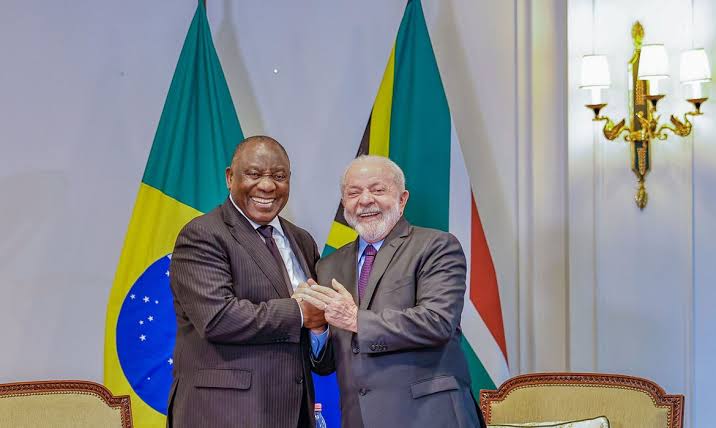
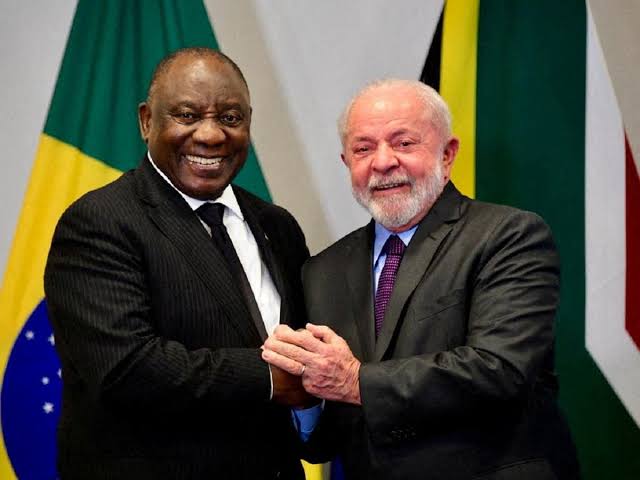

South Africa initiated the case in December 2023, alleging that Israel’s military operations in Gaza, following Hamas’s 7 October attack, constitute genocide against Palestinians. The case argues that Israel’s actions, including strikes on civilian infrastructure such as schools and hospitals, go beyond targeting Hamas militants and violate international law. Brazil’s decision to join the case aligns with similar interventions by countries including Spain, Turkey, Colombia, and Ireland, reflecting growing global concern over the humanitarian crisis in Gaza.
The Brazilian government’s statement condemned Israel for alleged violations, including “the annexation of territories by force” and expressed “deep indignation” at the violence suffered by Gaza’s civilian population. It highlighted the “shameless use of starvation as a weapon of war” as a serious breach of human rights, asserting that the rights of Palestinians to protection from genocidal acts are being “irreversibly impaired.” Brazilian President Luiz Inácio Lula da Silva, a vocal critic of Israel’s actions, reiterated his stance at a recent BRICS summit, labelling Israel’s conduct in Gaza as genocide.
Israel has rejected the accusations as “baseless,” with its embassy in Brasilia arguing that Brazil’s statement uses “harsh words that do not fully portray the reality” in Gaza and ignores Hamas’s role in the conflict. Israel maintains that its military operations target only Hamas and that it takes measures to avoid civilian casualties. Brazil’s National Israeli association, CONIB, called the move a “misguided” shift in foreign policy, warning of damage to Brazil’s long-standing ties with Israel.
The ICJ, based in The Hague, is the United Nations’ highest court for resolving disputes between states. Both Israel and South Africa are signatories to the Genocide Convention, which defines genocide as acts committed with intent to destroy, in whole or in part, a national, ethnic, racial, or religious group. South Africa’s 84-page filing seeks provisional measures, including an immediate halt to Israel’s military operations, though a final ruling could take years. The court’s decisions are legally binding but lack enforcement mechanisms, as seen in past cases like Russia’s disregard of a 2022 ICJ order to suspend operations in Ukraine.
Brazil’s intervention follows earlier expressions of support from President Lula in January 2024, when he backed South Africa’s initiative to hold Israel accountable for alleged genocidal acts. The move has drawn mixed reactions domestically and internationally. While some praise Brazil for taking a stand against perceived atrocities, others, including Israel’s allies, argue it risks straining diplomatic relations, particularly with the United States, which has opposed the case. A Brazilian diplomat, however, told Reuters that the decision is unlikely to impact ties with Washington.
The case has galvanised support from non-Western nations and advocacy groups, with Bolivia, the Maldives, and the 57-member Organisation of Islamic Countries among those backing South Africa. Posts on X reflect strong sentiment, with users applauding Brazil’s alignment with South Africa as a bold step toward accountability. However, the controversy underscores deep global divisions, with the United States and Israel dismissing the case as “meritless” and accusing South Africa of misusing the Genocide Convention.
As Brazil finalises its ICJ submission, the case continues to highlight the international community’s struggle to address the Gaza conflict. With over 43,000 reported civilian deaths and widespread displacement, the ICJ’s proceedings remain a focal point for debates on justice, humanitarian law, and global diplomacy.
