


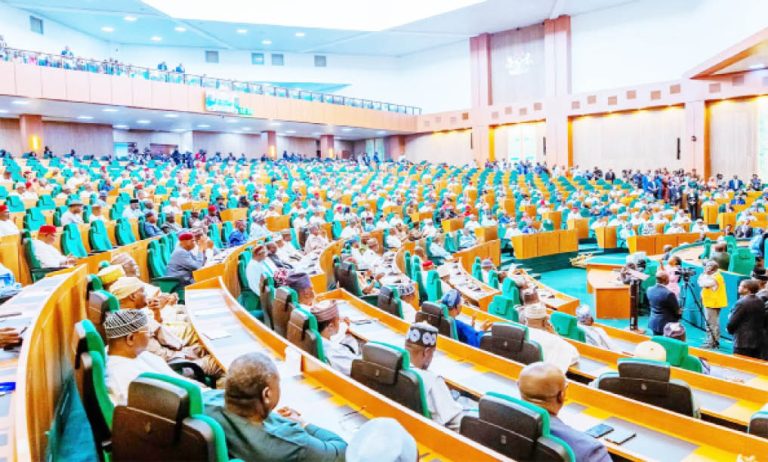
Bill To Make Voting Mandatory Advances In Nigerian House Of Representatives.
A significant step towards enhancing democratic participation in Nigeria was taken today as a bill proposing mandatory voting successfully passed its second reading in the House of Representatives. The legislation, aimed at ensuring greater voter turnout, has sparked widespread discussion about civic engagement in the country.
The bill, which seeks to make voting compulsory for eligible citizens, was debated during Thursday’s plenary session and received strong support from lawmakers. According to sources, the proposed law is intended to address Nigeria’s historically low voter turnout, which has been a concern in recent election cycles. By making voting a legal obligation, proponents argue it will foster a more inclusive and representative electoral process.

Leading the debate, the bill’s sponsors emphasised the importance of universal participation in strengthening Nigeria’s democracy. “Low voter turnout undermines the legitimacy of our elections,” one lawmaker stated. “This bill ensures every eligible Nigerian has a voice in shaping the nation’s future.” The legislation also includes provisions for exemptions, such as for those with valid reasons like illness or unavoidable commitments, though details are yet to be finalised.
The bill’s passage through the second reading marks a crucial stage in the legislative process, with lawmakers voting overwhelmingly in favour during a voice vote presided over by Speaker Tajudeen Abbas. It has now been referred to the relevant committee for further scrutiny and public consultation before it returns for a third reading.
Public reactions to the bill are mixed. Some citizens welcome the move, believing it will encourage greater accountability from elected officials. “If everyone votes, politicians will have to listen to all of us, not just a few,” said Aisha Mohammed, a market trader in Lagos.
However, “others express concerns about enforcement and potential penalties for non-compliance. “How will they make sure people vote without punishing those who can’t make it to the polls?” asked Chinedu Okoye, a university student in Abuja.
The bill draws inspiration from countries like Australia, where mandatory voting has been in place for decades, resulting in consistently high voter turnout. However, critics argue that Nigeria’s unique socio-economic and logistical challenges, such as rural access to polling stations, must be addressed to make the policy effective.
As the legislation progresses, the House of Representatives is expected to hold public hearings to gather input from stakeholders, including civil society groups and the Independent National Electoral Commission (INEC). The outcome of these consultations will shape the final version of the bill.
If passed into law, the mandatory voting bill could transform Nigeria’s electoral landscape, potentially increasing participation in future elections. For now, the nation watches closely as this bold proposal moves closer to reality.
