


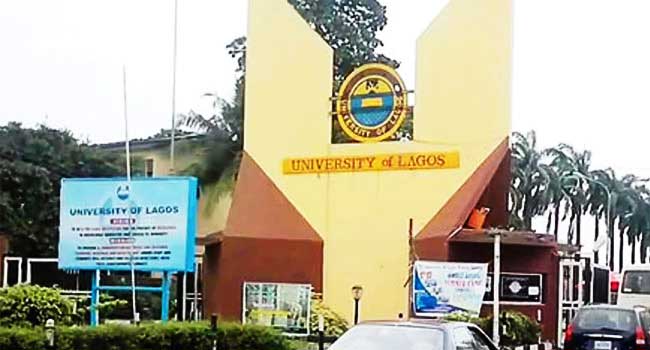
UNILAG Sees Surge In Transcript Requests Due To ‘Japa’ Trend, Says Vice-Chancellor.
The University of Lagos (UNILAG) has experienced a significant increase in demand for academic transcripts, driven by the growing ‘japa’ trend of Nigerians seeking opportunities abroad, according to Vice-Chancellor Professor Folasade Tolulope Ogunsola. Speaking at the 2024 International Week and 17th Annual Research Conference, themed “Inclusive Digital Transformation and the University Promise,” held on 23rd October 2024, Prof. Ogunsola highlighted the challenges and opportunities this phenomenon presents for the institution.
The ‘japa’ trend, a colloquial term for the mass emigration of Nigerians in search of better prospects overseas, has led to a notable rise in transcript requests, particularly from alumni who graduated decades ago. Prof. Ogunsola noted that many former students, some from as far back as 30 or 40 years ago, are returning to request their academic records to support applications for international education or employment. “We now get requests from people who graduated 30 or 40 years ago, which means we have to go through old paper records,” she explained, contrasting this with the smoother process for post-2010 graduates, whose records are stored digitally.

The Vice-Chancellor underscored UNILAG’s efforts to embrace digital transformation, which has alleviated some of the pressures caused by the increased demand. The introduction of a student information management system has streamlined processes for more recent graduates, though retrieving older paper-based records remains a challenge. Despite Nigeria’s electricity issues, which can damage digital equipment, UNILAG is committed to improving its infrastructure across its three campuses to meet these demands efficiently.
Prof. Ogunsola also addressed the broader implications of digital technology, particularly the role of artificial intelligence (AI) in education. She described AI as both an enabler and a challenge, noting that while it can retrieve vast amounts of information, its outputs depend heavily on the quality of prompts provided. “It’s essential to develop skills to evaluate the information AI provides,” she advised, urging students and staff to refine their ability to frame precise queries to ensure accurate results.
The surge in transcript requests reflects the broader socio-economic context in Nigeria, where economic challenges and limited local opportunities have driven many to seek prospects abroad. UNILAG’s response to this trend demonstrates its adaptability and commitment to supporting its alumni, even as it navigates the complexities of transitioning from paper-based to digital systems. The university’s ongoing investments in digital infrastructure are expected to further enhance its ability to meet the needs of both current students and alumni.
As Nigeria continues to grapple with the effects of emigration, UNILAG’s efforts to modernise its systems offer a positive example of how institutions can respond to changing societal demands. Prof. Ogunsola’s remarks highlight the importance of inclusive digital transformation in ensuring that universities remain relevant and responsive in a rapidly evolving global landscape.
