


BREAKING: Cambodia And Thailand Engage In Armed Conflict Over Border Dispute.
Tensions between Cambodia and Thailand have erupted into open conflict, marking a significant escalation in a long-standing border dispute. The clash, which began early Thursday morning, has resulted in at least 12 deaths, primarily Thai civilians, and numerous injuries, according to Thai authorities. Both nations have accused each other of initiating the violence, with heavy exchanges of gunfire, artillery, and air strikes reported along their shared border.
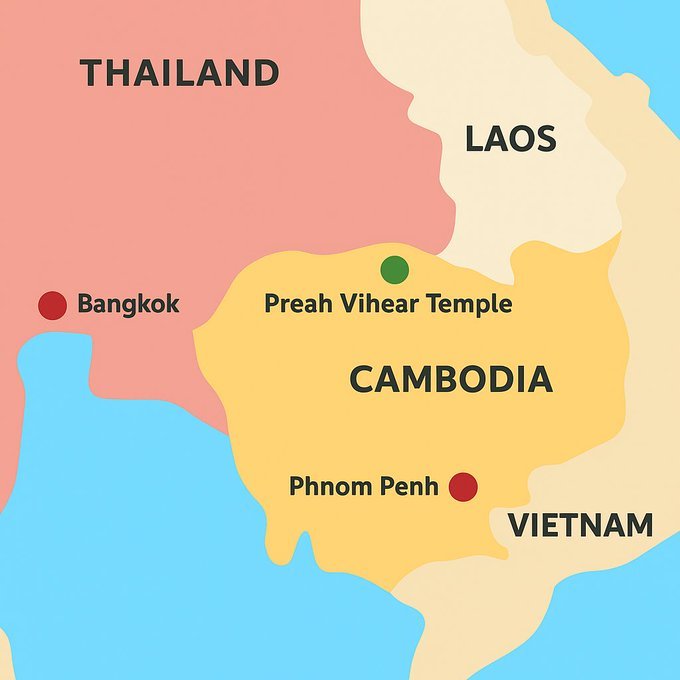
The conflict centres on a disputed area near the Ta Muen Thom temple, located on the border between Thailand’s Surin province and Cambodia’s Oddar Meanchey province. Thai officials claim Cambodian forces fired first, deploying heavy weapons, including BM-21 rocket launchers and artillery, which damaged civilian infrastructure, including a hospital and a petrol station. Cambodia, in response, alleges that Thai soldiers violated a prior agreement by advancing on the temple and opening fire, prompting Cambodian troops to act in self-defence.

Thai authorities have reported that the violence has led to the evacuation of 40,000 civilians from border areas, with the entire Thailand-Cambodia border now closed. Cambodian Prime Minister Hun Manet has called for an urgent United Nations Security Council meeting to address what he describes as “Thailand’s aggression.” Meanwhile, Thailand’s acting Prime Minister, Phumtham Wechayachai, described the situation as “delicate” and urged for a resolution in line with international law, insisting that no formal declaration of war has been made.
The roots of this conflict trace back over a century, originating from a 1907 border demarcation by French colonial authorities, which both nations have contested. The area around the Ta Muen Thom and Preah Vihear temples has been a recurring flashpoint, with significant clashes previously occurring in 2008 and 2011. Recent tensions were exacerbated in May when a Cambodian soldier was killed in a skirmish, followed by injuries to Thai soldiers from landmines, which Thailand claims were recently laid by Cambodia—a charge Phnom Penh denies.
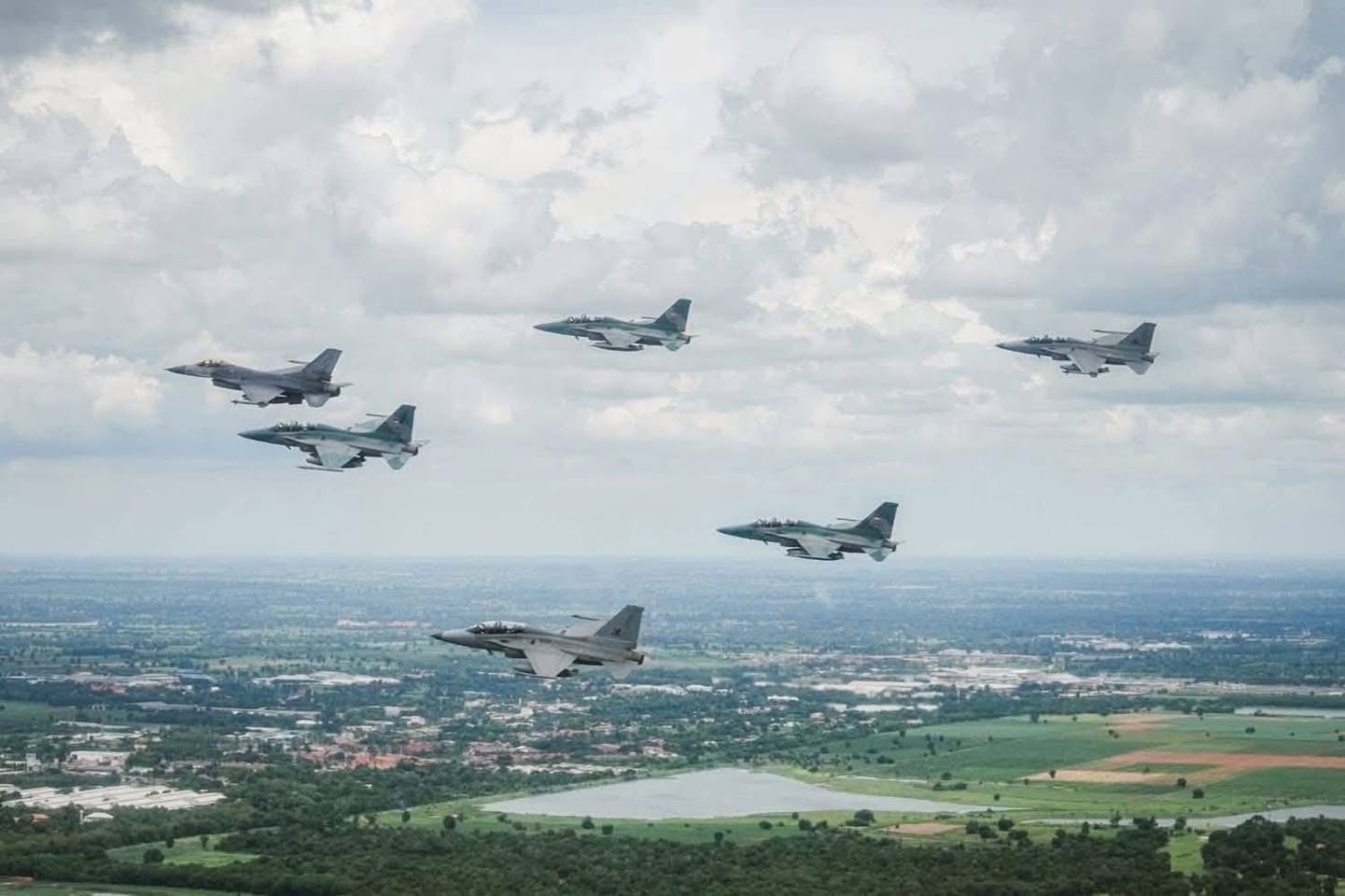
International concern is growing, with China expressing hope for de-escalation through dialogue and the United States and United Kingdom issuing travel advisories for their citizens near the border. Thailand has deployed F-16 fighter jets, striking two Cambodian military targets, while Cambodia has reported attacks on its positions. Both nations have downgraded diplomatic relations, recalling ambassadors amid mutual accusations of excessive force.
Analysts suggest that while the current fighting is unlikely to spiral into a full-scale war, the lack of strong leadership in both countries complicates de-escalation. Cambodia’s economy is under strain, and Prime Minister Hun Manet, whose father Hun Sen remains a powerful figure, faces pressure to assert national interests. In Thailand, political instability, compounded by the recent suspension of Prime Minister Paetongtarn Shinawatra over a leaked phone call with Hun Sen, adds further complexity.
The Association of Southeast Asian Nations (ASEAN) is under scrutiny to mediate, as the conflict threatens regional stability. Previous attempts at bilateral negotiations through a Joint Border Commission have yielded little progress, and Cambodia’s push for International Court of Justice involvement has been rebuffed by Thailand, which insists on resolving the dispute bilaterally.
As the situation unfolds, both nations have urged citizens to avoid border areas, and the international community watches closely, hoping for a swift resolution to prevent further loss of life and regional destabilisation.
