


Canada Introduces Measures To Shield Steel Industry From Foreign Imports.
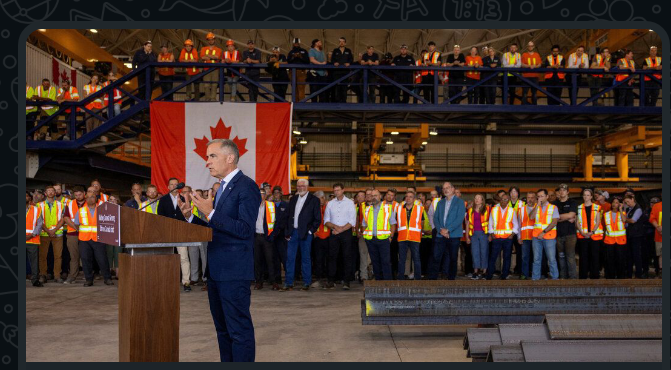
On Wednesday, Prime Minister Mark Carney unveiled a series of measures aimed at protecting Canada’s steel industry from an influx of foreign steel, particularly from China, amid escalating trade tensions sparked by U.S. tariffs. Speaking at a steel plant in Hamilton, Ontario, Carney outlined policies designed to safeguard domestic producers and ensure the resilience of Canada’s steel market.

The announcement comes in response to U.S. President Donald Trump’s imposition of a 50 percent tariff on steel imports, which has disrupted global markets and raised concerns about cheap steel flooding Canada. Carney noted that the U.S. trade actions are “transforming global steel market dynamics and supply chains,” with Canada poised to be significantly affected due to its heavy reliance on steel exports, over 90 percent of which are destined for the U.S.
To counter this, Carney introduced stricter import quotas and tariffs. Countries without free-trade agreements with Canada, including China, will face a 50 percent tariff on steel exports exceeding half of their 2024 shipment levels. For nations with free-trade agreements, imports surpassing 2024 volumes will also incur a 50 percent tariff. Additionally, a 25 percent tariff will be applied to all steel products containing metal melted and poured in China, targeting the practice of steel dumping, where foreign producers sell at unfairly low prices.
Carney emphasised the need to bolster domestic production, stating, “We must rely more on Canadian steel for Canadian projects.” He also announced a $1 billion investment through the Strategic Innovation Fund to support steel companies in developing new products and creating jobs, alongside $70 million to provide training and income support for up to 10,000 steelworkers affected by the trade disruptions.
The measures have been welcomed by industry leaders. Catherine Cobden, president of the Canadian Steel Producers Association, described the move as a “big step forward,” noting that Canada’s steel industry has faced a 30 percent drop in production since the U.S. tariffs were introduced. Walt Koppelaar, executive vice-president of Walters Group, a Hamilton-based steel manufacturer, expressed relief, highlighting that U.S. tariffs had slashed their exports to nearly zero.
However, Carney acknowledged challenges in ongoing trade negotiations with the U.S., admitting that a tariff-free deal seems unlikely. “We will continue to work constructively for a deal that works for Canadians,” he said, declining to elaborate on specifics. Critics, including Bloc Québécois Leader Yves-François Blanchet, have accused Carney of failing to deliver on his promise of robust trade negotiations, pointing to concessions like scrapping a digital services tax without tangible gains.
As Canada navigates this complex trade landscape, Carney’s government is also pushing to diversify trade partnerships and reduce reliance on the U.S. market. With additional U.S. tariffs on copper and other goods looming, these measures signal a strategic shift to protect Canada’s economic interests and strengthen its industrial base.
