


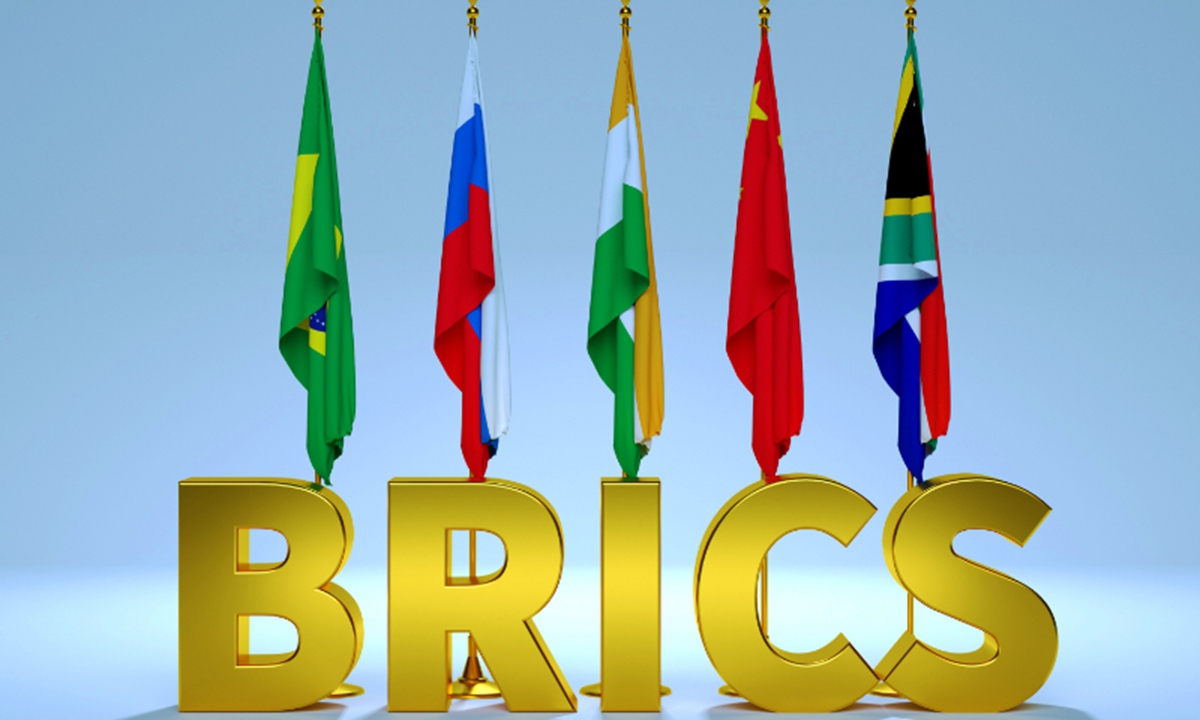
Lavrov Defiant As BRICS Pushes Ahead With De-Dollarisation Despite Trump’s Threats.
Russian Foreign Minister Sergey Lavrov has declared that the global shift away from the US dollar is “unstoppable,” dismissing threats from US President Donald Trump against BRICS nations. Speaking at a press conference following a meeting of the Shanghai Cooperation Organisation’s (SCO) Foreign Ministers in Tianjin, China, Lavrov asserted that the BRICS group—comprising Brazil, Russia, India, China, South Africa, and other partner nations—remains undeterred by Washington’s warnings, emphasising that “everyone, including Trump, understands” the irreversible momentum of de-dollarisation.

Lavrov’s remarks come in response to Trump’s recent threats to impose 100% tariffs on BRICS countries if they pursue alternatives to the US dollar in international trade. The US president has accused the group of undermining American interests, claiming that their efforts to use national currencies for trade threaten the dollar’s dominance as the global reserve currency. However, Lavrov rejected these concerns, stating, “It’s not our profession to be worried, so we’re not worried about anything.” He argued that the push for alternative payment systems stems from the US itself, particularly the Biden administration’s use of the dollar as a “weapon” to enforce sanctions, which he said caused “irreparable damage” to its credibility.
The BRICS group, which recently held its 17th summit in Rio de Janeiro, has been actively exploring ways to reduce reliance on the dollar. Discussions at the summit focused on enhancing the use of local currencies for cross-border trade and developing initiatives like the BRICS Cross-Border Payments Initiative and the New Investment Platform, which aim to facilitate transactions without US dollar dependency. Lavrov highlighted that these efforts are not anti-American but a pragmatic response to Washington’s “abuses” of its financial dominance. He pointed to statistics showing a declining share of the dollar in global trade as evidence of the trend’s inevitability.
Trump’s threats have sparked mixed reactions within BRICS. South Africa’s Foreign Ministry has clarified that the group’s use of national currencies does not aim to replace the dollar globally, while India’s External Affairs Minister, S. Jaishankar, has stated there is no policy to supplant the dollar entirely. Despite this, the BRICS Rio Declaration expressed concerns over unilateral tariff measures, without directly naming the US, and called for further development of financial mechanisms like the Contingent Reserve Arrangement, seen as an alternative to the US-dominated International Monetary Fund.
Lavrov also suggested that Trump’s hardline stance may be influenced by “improper pressure” from the European Union and NATO, particularly regarding the ongoing Ukraine conflict. He noted that Trump had previously acknowledged the damage done to the dollar’s status by his predecessor’s policies, making his current threats appear inconsistent. Meanwhile, China’s Foreign Ministry echoed Lavrov’s sentiments, with President Xi Jinping affirming deepened trust with Russia and opposition to US sanctions during a recent meeting.
As BRICS continues to expand—now including 10 full members and 10 partner countries—the group’s push for a multipolar financial order is gaining traction. Lavrov’s defiant tone signals that the bloc is prepared to weather US economic pressures, with Russia and its allies committed to reshaping global trade dynamics. For now, the de-dollarisation debate remains a flashpoint in US-BRICS relations, with the world watching closely for the next move.
